CheckNumber.AI
 · 4 min read
What Is Account Takeover Fraud? Key Mechanisms and Risk Signals
An authoritative overview of account takeover (ATO) fraud, explaining how attackers compromise accounts, how ATO differs from adjacent identity threats, and how identifier risk signals support detection workflows.
Account takeover fraud is a form of cybercrime where an unauthorized party compromises a user’s login credentials or recovery channels to seize control of an existing, legitimate account. Attackers typically exploit stolen password databases, social engineering, or mobile intercept techniques to impersonate the genuine account holder. For security and risk teams, understanding what is account takeover fraud requires examining how account identifiers—such as phone numbers and email addresses—are targeted during credential compromise and how platform-level signals can support fraud evaluation workflows.
How Account Takeover Operates
Account takeover attacks target established customer accounts with accumulated value, such as stored payment instruments, loyalty points, confidential internal data, or verified corporate access. Unlike attacks that fabricate entirely new profiles, account takeover relies on unauthorized entry into existing systems. Once an attacker compromises an account, they frequently modify linked account settings, such as the primary email address, notification settings, or linked phone numbers. This locks out the legitimate owner and delays detection. After securing access, the unauthorized actor may initiate fraudulent transactions, extract sensitive data, abuse promotional balances, or conduct secondary phishing attacks against other contacts within the service.
Common Attack Vectors Used in Account Takeover
Threat actors deploy several common methods to capture credentials or bypass access controls:
- Credential Stuffing: Automated bots test large databases of leaked username and password pairs across multiple websites. Because many users reuse passwords across different services, credentials compromised in one breach frequently unlock accounts on unrelated platforms. * Phishing and Social Engineering: Attackers craft deceptive communications, such as fraudulent security alerts or urgent billing notices, to trick account owners into entering their credentials into spoofed login interfaces. * SIM Swapping: In this vector, a threat actor convinces a mobile carrier to reassign a victim’s phone number to a SIM card in the attacker’s possession. This allows the attacker to intercept SMS-based one-time passcodes and bypass standard multi-factor authentication controls.
Distinguishing ATO from Adjacent Fraud Types
To design effective risk workflows, teams must distinguish account takeover fraud from related identity threats:
| Fraud Type | Primary Target | Characteristic Method |
|---|---|---|
| Account Takeover (ATO) | Existing legitimate accounts | Exploitation of stolen passwords, session tokens, or intercepted authentication channels |
| New Account Fraud | Onboarding funnels | Using stolen personal details to register unauthorized accounts |
| Synthetic Identity Fraud | Credit and onboarding systems | Combining real and fabricated details to create a fictional profile |
| While new account fraud focuses on bypassing initial onboarding verification, ATO targets existing customer relationships. Consequently, security teams must monitor ongoing identifier changes, unusual login locations, and profile updates rather than relying solely on onboarding checks. |
The Role of Identifier and Registration Signals in Detection
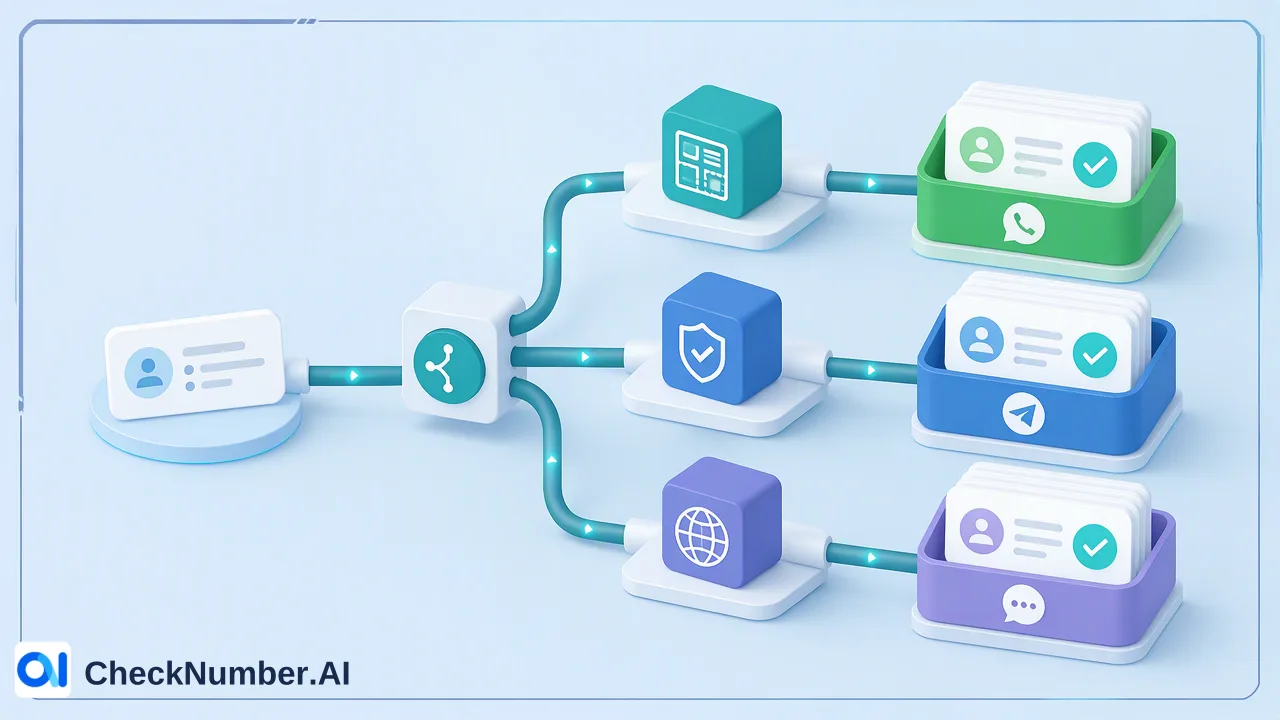
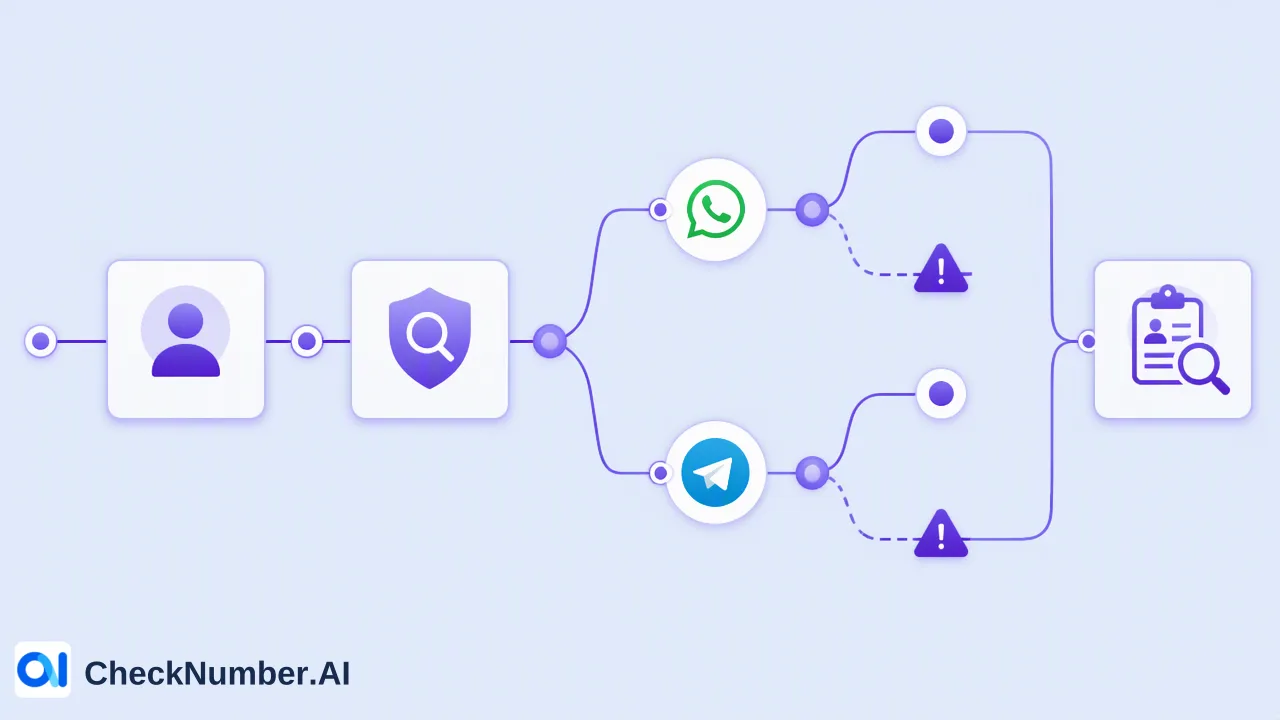
Detecting potential account takeover requires monitoring risk signals across account identifiers. CheckNumber.AI is a bulk phone-number and email list checking service that supports risk teams in reviewing account bases at scale. When assessing phone numbers linked to customer accounts, platform-specific registration signals provide contextual evidence at check time. For example, a WhatsApp Number Checker verifies whether phone numbers are registered with WhatsApp, while a Telegram Checker checks whether phone numbers are registered with Telegram. An unexpected update of a linked phone number to an identifier with anomalous platform signals can serve as an indicator that warrants customer-defined review or step-up authentication.
Integrating Verification Signals into Risk Workflows
Organizations typically handle account protection through layered defenses rather than single-point solutions. Bulk checking workflows allow risk and security teams to evaluate customer lists efficiently:
- Bulk File Audits: Teams can upload CSV or TXT lists to audit large batches of user contact data periodically. This supports internal reviews of dormant or high-risk accounts. * REST API Integration: Organizations can integrate automated checks via REST API into internal risk engines, querying identifier signals whenever a user requests an email or phone update. Integrating these signals informs decision-support systems and customer-defined escalation rules. Rather than providing absolute proof of identity, identifier signals provide reachability context alongside telemetry like IP reputation, behavioral analytics, and device fingerprinting.
FAQ
How do platform registration signals help in risk assessment?
Platform registration signals confirm whether an account identifier, such as a phone number, is registered on a specific messaging service at check time.
Can bulk identifier checking eliminate account takeover risk?
No verification check can eliminate fraud risk entirely. Bulk checking of phone and email lists provides reachability and registration signals at check time, serving as one input to help risk teams prioritize high-risk profiles and inform internal decision-support systems alongside behavioral and device telemetry.