CheckNumber.AI
 · 8 min read
The Complete Guide to Platform-Signal List Quality
A comprehensive guide on using documented platform-registration and account-related signals to evaluate list quality and segment outreach campaigns.
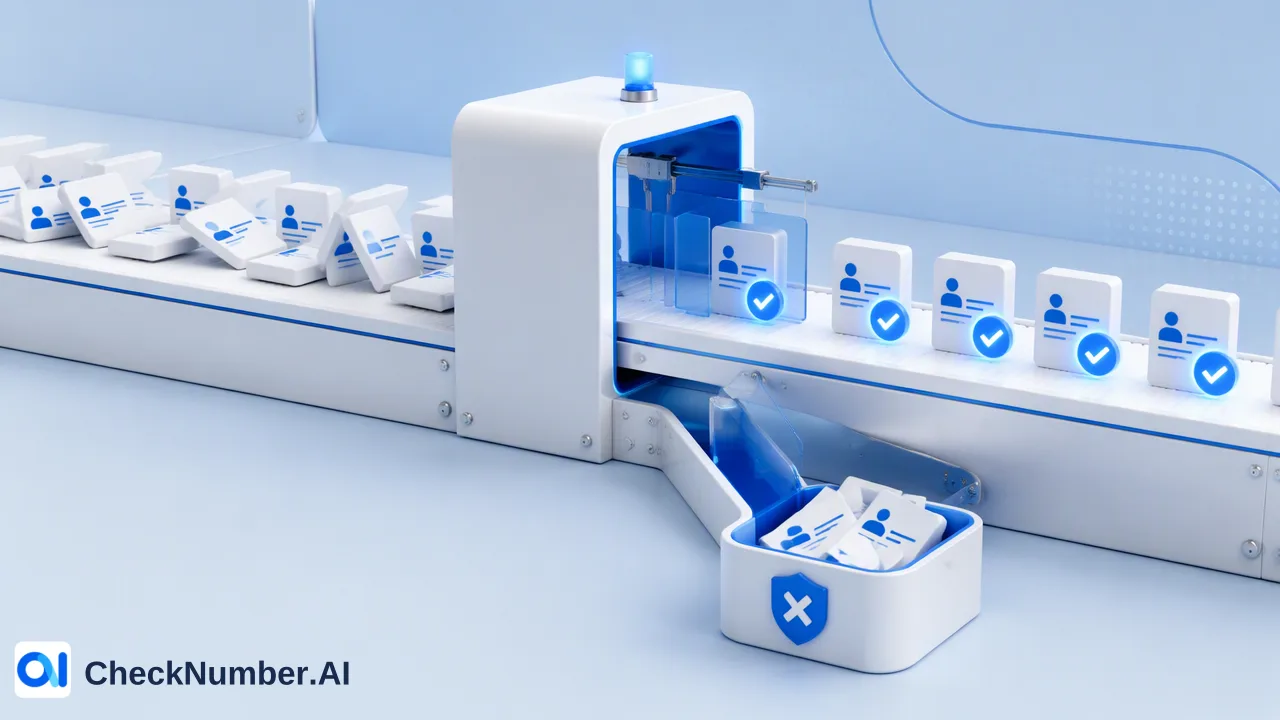
Platform-signal list quality is the practice of evaluating contact datasets against platform-registration signals to verify whether identifiers are registered with specific communication services at check time. This approach provides teams with essential context to prioritize specific messaging channels, structure workflows efficiently, and avoid dispatching communications to channels where an account does not exist.
Understanding Platform-Registration Signals
A platform-registration signal is a check-time indicator that confirms whether an identifier, such as a phone number or username, is registered with a specific communication service. When managing customer databases, organizations frequently handle contact records gathered across multiple touchpoints. However, an identifier that exists in a customer relationship management system may not be registered on every messaging platform. By evaluating whether a phone number is registered on networks like WhatsApp, Telegram, or Signal, organizations gain factual context regarding where that identifier can receive messages. It is important to evaluate what these signals communicate in practice:
- Platform-specific presence: The signal confirms that an account associated with the identifier exists on the target service at check time. * Reachability context: The data informs teams whether the channel is technically viable for direct message routing. * Decision support: The presence or absence of a registration serves as an operational input that helps teams choose appropriate engagement paths. Instead, it provides a bounded, verifiable data point about platform registration status to support informed data hygiene decisions.
Differentiating Verification Layers: Format, Validity, and Platform Signals
Maintaining a high-quality contact database involves several distinct verification layers. Confusing these layers can lead to flawed segmentation strategies and ineffective messaging campaigns. ### Format and Normalization Checks Format checks examine whether a phone number matches standardized structural conventions, such as country codes, area codes, and standard digit counts. Normalization workflows standardize records into clean formats, such as the standard international E.164 representation. While format checks verify that a number is properly structured, they do not verify platform registration or channel availability. ### High-Level Phone-Number Validity Phone-number validity assessments provide an evaluation of whether an identifier represents an assigned, valid phone number within telephone numbering plans. This check verifies general telephone validity, yet it remains distinct from platform-specific status; an assigned, valid phone number may or may not be registered on individual messaging networks. ### Platform-Registration Checks Platform-registration checks evaluate the identifier directly against specific third-party ecosystems, such as WhatsApp, Telegram, or Signal. These checks determine whether the number is registered to an account on that exact communication service. | Verification Layer | Primary Objective | Output Context | | :--- | :--- | :--- | | Format & Normalization | Validates structural digit sequence and standardization | Verifies string syntax and country prefix standards | | Phone-Number Validity | Assesses general phone-number validity | Confirms high-level telephone validity | By distinguishing between structural formatting, telephone validity, and platform presence, technical teams can structure a logical verification pipeline where records are validated before platform-specific routing decisions occur.
The Role of List Quality in Outreach Strategy
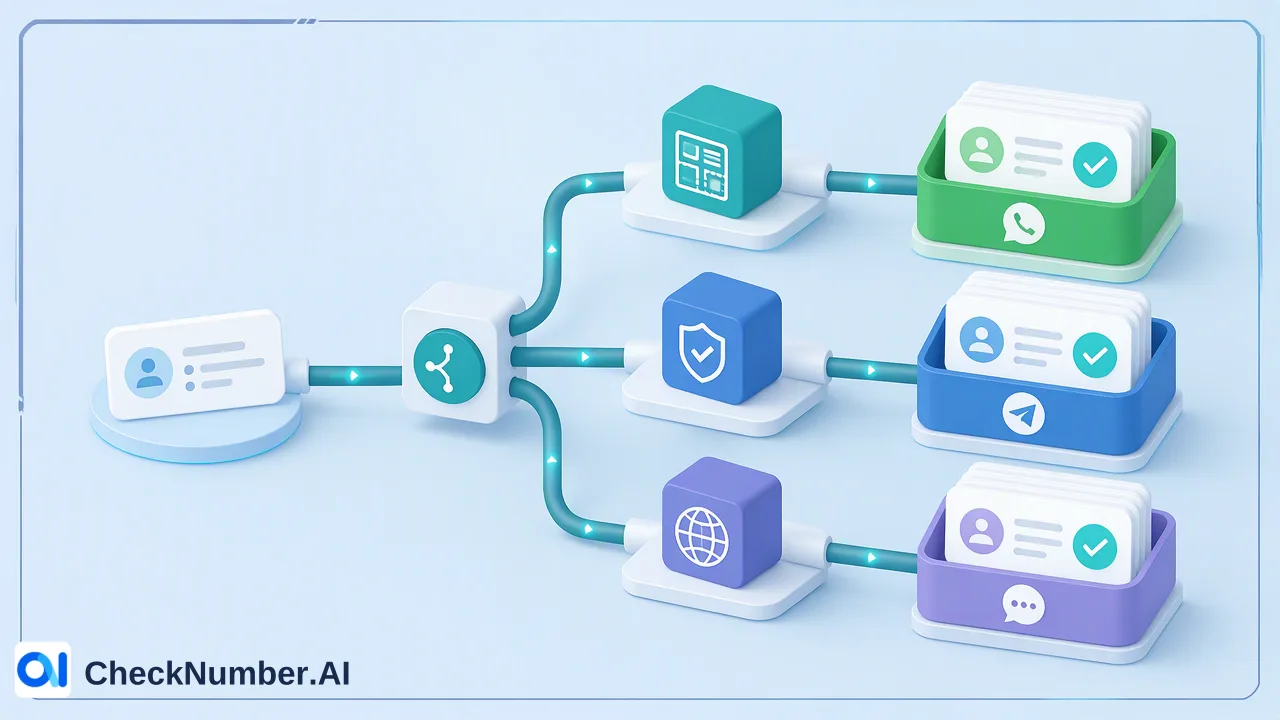
List quality directly impacts campaign resource allocation, operational hygiene, and messaging workflow efficiency. When teams dispatch communications across unverified channels, they risk sending messages to non-existent accounts, resulting in undelivered messages, wasted expenditures, and skewed analytics. Integrating platform-registration signals into list segmentation helps teams categorize contact records based on documented channel viability. Rather than treating an entire customer database as a monolithic list, organizations can segment identifiers into distinct, channel-specific cohorts:
- WhatsApp-Ready Cohorts: Phone numbers confirmed as registered on WhatsApp can be routed directly to WhatsApp messaging templates or customer care workflows. * Telegram-Active Segments: Contacts showing Telegram registration can be assigned to automated bot interactions or channel notifications. * Signal-Specific Outreach: Identifiers registered on Signal can be directed to communication strategies optimized for that platform. * Alternative or Fallback Lists: Contacts showing no registration on designated messaging apps can be routed toward fallback channels, such as email or traditional voice, rather than wasting platform-specific outreach credits. This workflow-driven segmentation supports operational efficiency. Teams avoid attempting communication on platforms where accounts do not exist, allowing technical infrastructure to focus exclusively on viable endpoints.
Bulk Workflow Capabilities and Processing Models
For organizations handling large volumes of records, running checks individually is impractical. CheckNumber.AI provides bulk checking workflows designed to process extensive contact datasets systematically. ### File-Based Batch Checking (CSV and TXT) Marketing and operations teams often work with contact lists exported from CRMs, spreadsheets, or marketing databases. Bulk workflows support direct uploads of CSV and TXT files. Once the file is processed through the selected checker, the output annotates each record with its corresponding platform-registration signal. Teams can then download the enriched dataset, filter by registration status, and import the segmented lists into their execution platforms. ### Programmatic Integration via REST API For technical teams requiring automated, recurring, or real-time pipeline operations, CheckNumber.AI offers REST API access. Programmatic integration allows developers to incorporate registration checks directly into onboarding funnels, data ingestion pipelines, or CRM record updates. Common integration architectures include:
- Pre-Campaign Ingestion: Lists scheduled for upcoming campaigns are checked via API during audience build phases. 2. Point-of-Entry Verification: Contact numbers collected through web forms or lead capture mechanisms are submitted to the API to determine platform presence early in the lifecycle. 3. CRM Enrichment Jobs: Automated background jobs periodically query the API to refresh reachability signals across existing contact records. Usage controls and rate parameters are maintained according to documented technical guidelines; organizations should consult the current API documentation for applicable limits and technical specifications.
Advanced Signal Enrichment for Granular Prioritization
Beyond foundational account presence, certain specialized checking capabilities provide additional contextual signals. These specialized checkers support deeper segmentation and prioritization for organizations requiring more granular decision data. ### Telegram Account Activity and Membership Signals For workflows involving Telegram, the Telegram Days Checker provides account presence verification alongside available activity or last-seen context. It also contributes account-identifier context and Premium-membership indicators when available. Similarly, the Telegram Username Activity Checker evaluates Telegram usernames directly, providing registration status, available public profile information, avatar data, activity context, and membership signals. These data points help teams identify accounts that have recent activity markers rather than those that have remained dormant. ### Demographic and Profile Enrichment Where supported, specialized tools such as the Telegram Age & Gender Checker evaluate Telegram account presence while delivering available profile, demographic, and activity enrichment. These attributes give teams contextual data to refine demographic segmentation models and tailor outreach strategies appropriately. ### Scoping Capabilities Appropriately Every checking product within the catalogue provides specific, non-transferable capabilities. For instance, demographic or activity signals documented for Telegram checkers do not apply to Signal Checker or WhatsApp Number Checker, which are dedicated strictly to platform-registration signals. Maintaining strict boundaries between product capabilities ensures data teams build segmentation models on accurate, documented indicators without making unwarranted assumptions.
Operational Best Practices for Data Hygiene
To maximize the utility of platform-registration signals, organizations should establish structured data management protocols. Implementing a disciplined sequence ensures datasets remain accurate and manageable over time. 1. Standardize Raw Inputs: Begin by normalizing all raw phone numbers into standardized formats with correct country codes to eliminate syntax discrepancies before submission. 2. Select Channel-Specific Checkers: Apply the specific checker relevant to the intended communication channel. Run WhatsApp Number Checker for WhatsApp campaigns, Telegram Checker for Telegram initiatives, or Signal Checker for Signal outreach. 3. Map Outputs to Routing Logic: Configure internal automation rules to direct confirmed registrations to platform-specific queues and divert non-registered identifiers to secondary channels. 4. Recognize Signal Boundaries: Treat registration data as an informative reachability signal at check time. 5. Maintain Periodic Review Schedules: Platform registrations are dynamic; users create, delete, and transfer phone numbers over time. Establishing routine checking intervals helps organizations keep their database reachability context current. By following this structured workflow, organizations maintain robust list quality, optimize channel selection, and establish clean, data-driven outreach pipelines.
FAQ
What is the difference between format checks and platform-registration signals?
Format checks verify that an identifier complies with structural numbering standards, such as standard length and prefix patterns. A platform-registration signal, by contrast, confirms whether that specific identifier is registered with a designated communication network, such as WhatsApp, Telegram, or Signal, at the exact time of the check. While format checks establish structural correctness, platform-registration signals provide reachability context for a specific platform.
How do platform-registration signals support campaign segmentation?
Platform-registration signals provide channel-specific reachability context, helping organizations sort records into designated outreach paths. For example, contacts with verified WhatsApp presence can be routed into messaging workflows designed for that platform, while records registered on Telegram or Signal can be directed to their corresponding communication paths. This prevents cross-channel routing errors and helps teams allocate resources according to platform availability.
What data formats are supported for processing lists in bulk?
Teams can upload lists using CSV or TXT file formats for bulk checking workflows, or they can integrate programmatically via REST API access to review identifiers directly within internal systems.