CheckNumber.AI
 · 5 min read
Best Practices for Segmenting a Verified Contact List
Learn practical contact list segmentation best practices to organize verified phone and email data by platform presence, profile context, and line type.

Contact list segmentation best practices focus on categorizing verified records by platform-specific reachability signals, contact types, and available profile context. Rather than treating an entire audience as a uniform dataset, teams use bulk verification outputs to route records to suitable channels, identify accounts with platform presence on services like Gmail, Yandex, or Telegram, and separate active identifiers from inactive or unregistered entries.
Establish Clear Baseline Categories Across Identifier Types
A successful segmentation strategy begins by separating raw contact data into primary identifier categories before applying deeper verification filters. Phone numbers and email addresses serve distinct technical functions and support different operational workflows. Applying bulk verification to separate lists allows teams to evaluate data hygiene independently across each channel. When processing records through CheckNumber.AI via CSV or TXT list uploads or REST API access, organizations receive structured outputs that reflect the status of each contact. The baseline practice is to partition records into clear functional tiers:
- Phone Numbers: Separated into sets evaluated for specific messaging networks or standard telecommunication channels. * Email Addresses: Categorized by provider-specific presence, distinguishing addresses that resolve on major providers from those that do not. * Invalid or Unreachable Records: Excluded from production routing and isolated for internal review. Establishing these baseline categories prevents cross-channel contamination and ensures that subsequent segmentation rules apply only to identifiers formatted and verified for the intended medium.
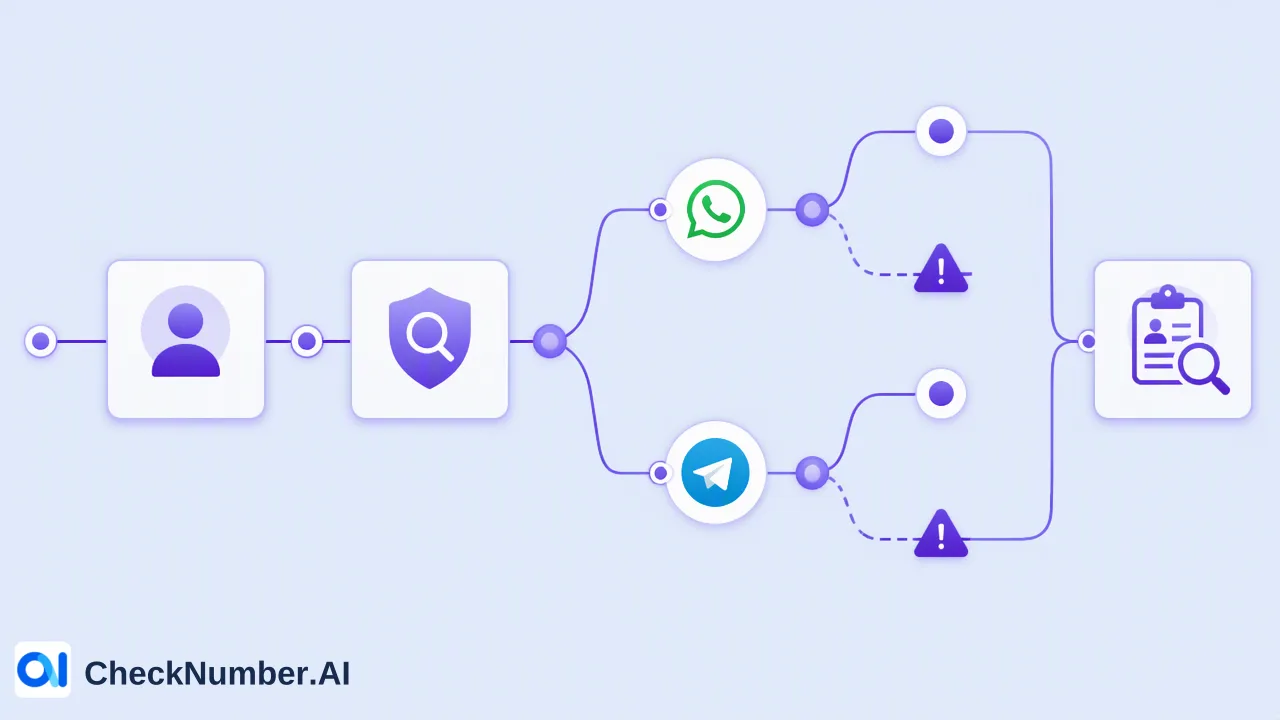
Segment Lists by Verified Platform Registration Signals
Once contacts are separated by identifier type, the next critical practice is segmenting records according to platform registration signals. Organizations can create discrete sub-lists based on verified account presence across target services:
- Email Platform Presence: By running bulk checks through services like the Gmail Account Checker or Yandex Account Checker, teams can confirm account presence on specific webmail platforms and allocate delivery resources accordingly. * Messaging Platform Presence: By utilizing tools like the Telegram Checker, teams can isolate phone numbers that possess an established account from numbers that are unregistered on the platform. Routing messages only to contacts with confirmed platform presence helps organizations focus communication resources on reachable endpoints while setting aside unregistered records for fallback channels.
Incorporate Activity and Profile Attributes for Granular Prioritization
Basic platform presence confirms that an account exists, but advanced segmentation often benefits from richer profile and activity context. When platforms expose secondary signals, incorporating these attributes into downstream segmentation rules helps teams prioritize high-value queues. For messaging environments such as Telegram, specialized tools provide additional signal layers that support operational categorization:
- Activity and Recency Signals: The Telegram Days Checker provides available activity or last-seen context alongside account identifiers. Contacts showing recent platform interaction can be grouped into responsive engagement tiers, while accounts with dormant activity markers can be routed to lower-priority queues. * Membership Attributes: Available Premium-membership context helps teams identify accounts with upgraded account tiers, which can inform specialized routing or VIP handling. * Public Profile and Avatar Availability: Tools like the Telegram Username Activity Checker and Gmail Avatar Checker verify platform presence while retrieving available public profile attributes or avatar data. Profiles displaying populated avatar or username information provide richer visual or operational data for customer support and account management interfaces. Applying these attributes allows organizations to move beyond binary registered-versus-unregistered segmentation into nuanced operational workflows.
Implement Periodic Re-Verification Schedules for Dynamic Segments
Segmented lists are not permanent; user statuses, account registrations, and identifier allocations change over time. A reliable contact segmentation strategy must incorporate routine data hygiene cycles to account for record decay. To keep segmented groups accurate and functional over extended operational lifecycles, teams should apply the following maintenance practices:
- Schedule Regular Cadences: Run bulk re-verification on dynamic contact segments before major quarterly or multi-channel campaigns to identify accounts that have lapsed or deregistered. 2. Automate Pipeline Updates: Integrate REST API verification endpoints into internal data pipelines so that new contact entries receive platform checks upon intake. 3. Isolate Dormant Records: When re-checking reveals that an account is no longer registered on a platform, automatically migrate that record out of active platform segments and into a general fallback segment. Maintaining structured re-verification intervals protects campaign resources, keeps CRM routing logic accurate, and ensures that teams base channel decisions on recent reachability data.
FAQ
Why is platform registration status important for list segmentation?
A platform registration signal indicates whether a specific phone number or email address is registered on a given platform at check time. Segmenting contacts based on platform account presence helps teams route communications to functional endpoints and avoid sending channel-specific campaigns to unregistered identifiers.
How can organizations use bulk verification results to improve routing?
Organizations can import verification outputs into internal routing logic or CRMs to separate records by channel readiness. For example, records confirmed on Telegram can be routed to messaging workflows, while records confirmed on Gmail or Yandex can be assigned to designated email infrastructure.
Why should teams re-verify segmented lists periodically?
Platform registrations, account statuses, and identifier assignments change over time. Regular re-checking of phone numbers and email lists helps maintain list hygiene by updating stale platform-presence records before new outreach or operational cycles begin.