CheckNumber.AI
· 4 min read
When Should You Recheck a Contact List?
Choose a full or incremental contact-list recheck from changed numbers, changed questions and the date the results will be used.
You do not need to rerun an entire contact list whenever a customer edits one row. But checking only changed rows can leave an old campaign audience resting on old observations. Choose the scope from what changed: the identifier, the question you want the checker to answer, and the time at which you plan to use the result.
Start from the next use of the list
Imagine a service team preparing an order-update campaign. It already holds a dated WhatsApp registration export and has added some customers since then. The team needs to decide which records require a new observation before it builds the audience.
Write down the intended use and selected signal first. Is the task still WhatsApp registration for the same customer list, or does the new campaign need a different platform? A registration result from one service cannot stand in for a result from another. Likewise, adding an activity question means selecting an appropriate activity product, not simply reusing a registration column under a new label.
Our bulk checking workflow gives you dated observations that your team can use in its own list process. CheckNumber does not supply a universal expiry date for every result. The useful age of a snapshot depends on the question, how the list changes and the consequences of relying on an older observation.
Choose an incremental pass when the changed rows are known
An incremental pass makes sense when you can identify the additions and corrections and the unchanged portion still fits the same purpose. A changed phone number needs its own observation. The old result belongs to the old number, even if both rows carry the same customer ID.
For example, consider a list of 4,000 records checked for the same platform last week. Since then, 180 new numbers have arrived and 20 existing customers have corrected theirs. If the remaining snapshot is suitable for this particular use, a 200-number pass addresses the known changes. These figures illustrate the scope decision; they are not a freshness recommendation or product limit.
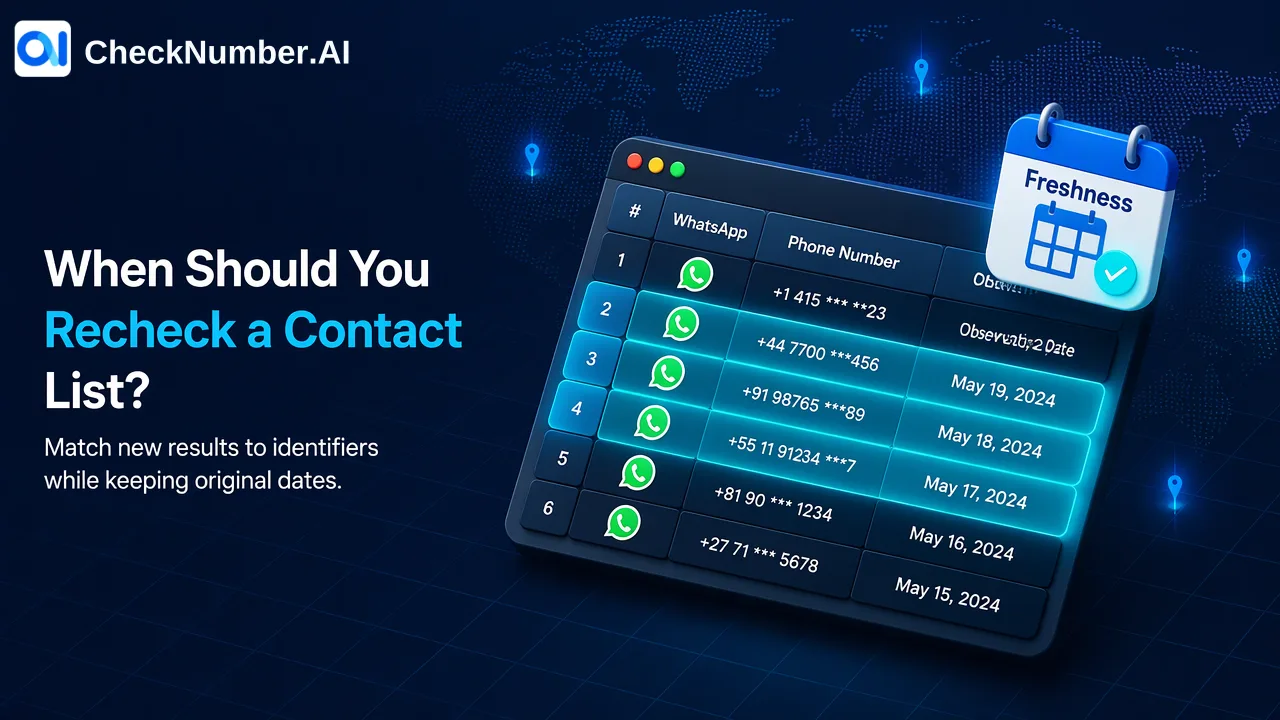
Retain a working copy of the original number, normalized number, selected checker and observation date. Match the new results by identifier, then reconnect them to the relevant customer records. Do not replace every date in the combined sheet with today’s date: unchanged rows still carry the earlier observation.
Unresolved rows deserve their own queue. A value that was unavailable previously may merit another check if today’s task needs it, even though the customer never edited the number. That is a reason to include the row, not a reason to call the earlier result negative.
Use a full pass when the old snapshot no longer fits
A full pass is often the clearer choice when the entire audience needs a comparable observation for a new use date, or when you cannot reliably separate changed records from unchanged ones. It can also be necessary when the selected question has changed across the list.
| Change since the previous run | Sensible scope to consider |
|---|---|
| Known new or corrected identifiers | Those identifiers, plus relevant unresolved rows |
| Different platform or signal needed for everyone | The whole audience for that new question |
| New market added to the campaign | Its applicable records after checking service coverage |
| Old export without reliable row-level dates | A fresh pass for the audience that needs a dated baseline |
| Same task, but an aging snapshot no longer suits the campaign | A full refresh of that campaign’s intended audience |
Now consider an older list being reused for a seasonal promotion. The team knows some numbers changed but has no dependable change history. Rechecking only visibly edited CRM rows would leave unknown changes outside the run. A full pass of the intended campaign audience gives the team a consistent new starting point, while preserving its original records for comparison.
A new market also deserves attention to preparation. Confirm the selected product’s coverage and prepare phone uploads as one country per file, with one number per line including its country code. Supported CSV or TXT workflows do not remove the need to choose the right service for those numbers.
Compare the final audience again before use
After either kind of refresh, reconcile the results with the audience you actually plan to use. Remove records that have since opted out, apply current contact preferences, and verify that a corrected number did not inherit the old number’s observation. A positive platform observation and permission for a particular message remain separate.
Keep unchanged results with their original dates, new observations with their new dates, and unresolved values visibly unresolved. If someone asks why a record was included, the sheet should answer which identifier was checked, for what question and when. These are customer-maintained columns rather than a promised export schema.
For your next run, select the smallest scope that genuinely answers the campaign’s question. Use CheckNumber’s products for the required observation, then make the full-versus-incremental decision from the list’s actual history.