CheckNumber.AI
 · 5 min read
Registration vs. Live Status: A Framework for WhatsApp Contact Prioritization
Learn how distinguishing basic WhatsApp registration from activity signals helps teams prioritize contact lists, support outreach timing, and maintain data hygiene.
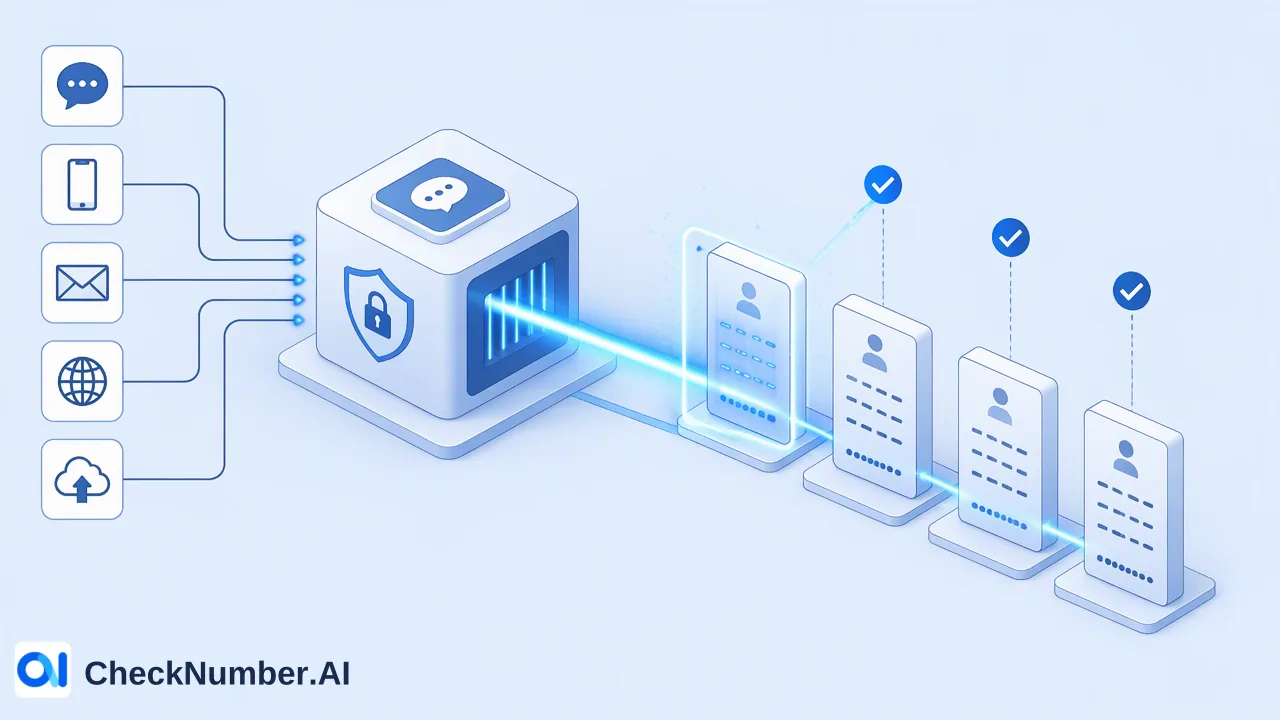
WhatsApp contact prioritization requires distinguishing between basic account registration and real-time activity signals. A standard registration check confirms whether a phone number is associated with an active messaging account at check time. In contrast, activity signals—such as last-seen context and business-account indicators—provide additional presence detail. By separating these two layers through automated list validation, organizations can filter unreachable numbers, segment audiences based on recent presence, and inform the timing of their outreach workflows.
The Challenge of Unstructured Contact Lists
High-volume communication programs often accumulate contact records across diverse acquisition channels, including lead generation forms, historical customer databases, and partner directories. Over time, these repositories suffer from progressive data decay as individuals change mobile carriers, abandon old SIM cards, or close messaging accounts. Attempting to verify contact presence manually across thousands of records is unscalable and inefficient for operational teams. Without automated verification, lists remain cluttered with obsolete or invalid entries. Furthermore, poor data hygiene practices frequently discard critical contextual metadata during basic cleanup passes. Sustainable list maintenance requires retaining original CRM attributes alongside real-time platform signals, creating a structured foundation for downstream segmentation and message scheduling.
Defining Registration vs. Activity Signals
Building an effective prioritization workflow begins with understanding the distinct technical scopes of account registration and platform activity. | Signal Dimension | Registration Check | Activity Context | | :--- | :--- | :--- | | Core Purpose | Confirms account presence | Evaluates recent presence context | | Data Observed | Account existence on platform | Last-seen indicators, business profiles | | Workflow Role | Baseline routing filter | Queue tiering and outreach timing | | Applicable Check | WhatsApp Number Checker | WhatsApp Days Checker | A standard registration signal answers a binary question: does this phone number possess an account on WhatsApp at check time? Services like the WhatsApp Number Checker or the real-time WhatsApp Advanced Checker evaluate this account presence signal across bulk uploads. This step eliminates disconnected lines and non-platform numbers from your operational queues. Conversely, activity signals provide operational depth. The WhatsApp Days Checker examines account presence while capturing available activity context, such as recent last-seen timestamps and business profile designations. Rather than merely confirming an account exists, this signal informs teams about when an account was recently observed, supporting nuanced contact tiering.
A Framework for Prioritizing Contact Queues
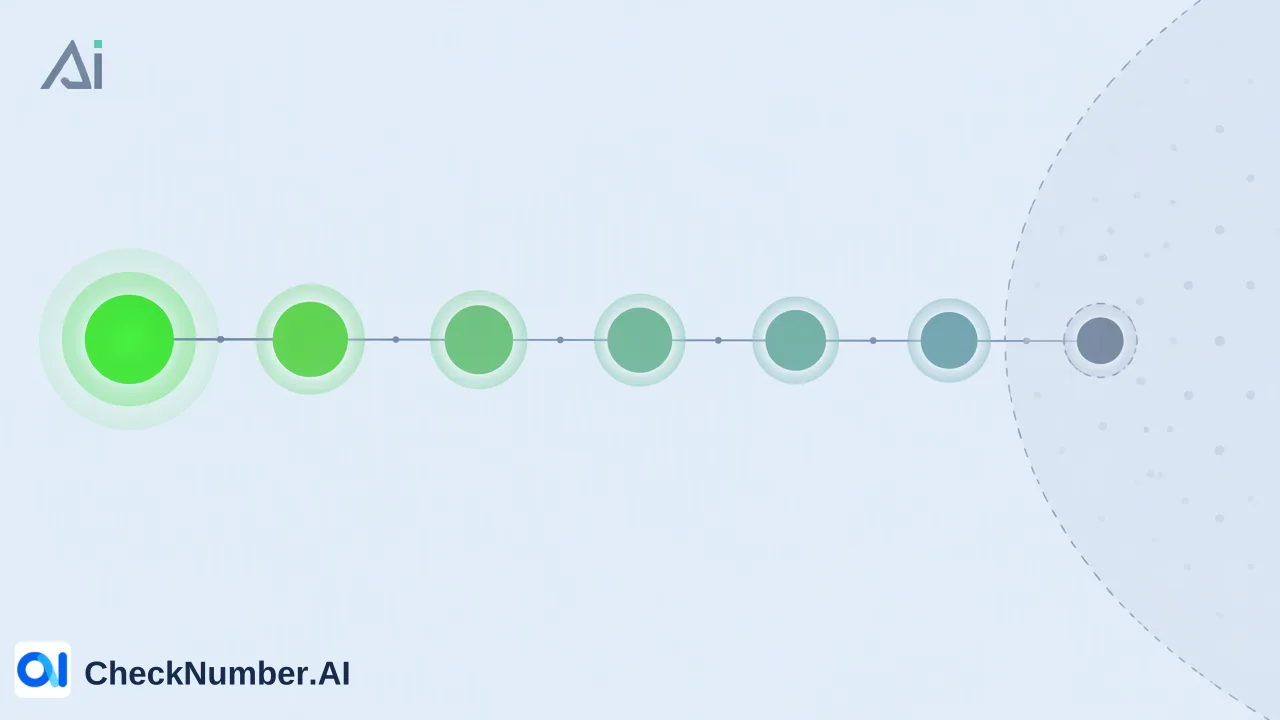
Once raw records are augmented with registration and activity signals, organizations can implement a tiered framework to structure outbound communication and agent workflows. ### Tier 1: Recently Observed Accounts Contacts associated with recent activity signals represent the primary priority tier. When records show recent last-seen timestamps, teams can schedule time-sensitive communications, customer service onboarding, or urgent transactional alerts with greater operational confidence. Evaluating WhatsApp live status detection signals helps managers direct agent bandwidth toward records showing timely engagement windows. ### Tier 2: Registered Dormant Accounts This tier consists of numbers confirmed as registered on WhatsApp but lacking recent activity signals. These contacts remain valid communication endpoints, but their usage frequency may be sporadic. Teams often route dormant contacts into lower-velocity engagement tracks, asynchronous updates, or secondary re-engagement flows rather than immediate live-agent queues. ### Tier 3: Unregistered and Invalid Numbers Numbers that fail basic platform presence checks should be removed immediately from active messaging queues. Flagging these records protects operational delivery metrics and prevents team resources from being spent on unreachable destinations.
Operationalizing List Hygiene Workflows
Integrating verification signals into continuous business workflows transforms static customer databases into responsive operational pipelines. CheckNumber.AI facilitates this through flexible bulk workflows supporting CSV and TXT file uploads as well as programmatic REST API integration. To operationalize list hygiene effectively, teams should establish clear data management stages:
- Pre-Campaign Ingestion: Ingest raw phone-number lists and submit them for automated bulk checking to separate registered numbers from unlinked lines. 2. Contextual Enrichment: For high-priority segments, apply activity-level checks using the WhatsApp Days Checker to attach available last-seen and profile context. 3. CRM Synchronization: Export the processed results—including verification timestamps, registration statuses, and activity categories—back into internal CRMs or marketing orchestration tools. 4. Periodic Re-verification: Schedule periodic list evaluations to account for changing registration states over time. By systematically distinguishing baseline registration from dynamic activity signals, businesses can optimize staff allocation, protect outbound sender metrics, and run more disciplined communication programs.
FAQ
What is the difference between a registration check and an activity check?
A registration check evaluates whether a phone number currently maintains an account on the WhatsApp platform. This provides a baseline reachability signal. An activity check adds contextual detail, such as last-seen presence indicators or business profile flags, which helps teams understand recent platform availability rather than simple existence.
Why do organizations prioritize contacts based on activity signals?
Relying strictly on account existence treats every registered number identically, regardless of whether the user accessed the platform recently or months ago. Activity signals give communication teams the context needed to organize queues, schedule follow-ups around common usage windows, and focus team attention on responsive segments.
How does bulk list checking support messaging campaign workflows?
Bulk checking allows teams to process large lists of phone numbers via structured CSV or TXT uploads or automated REST APIs. Removing unregistered records prior to campaign staging helps preserve sender reputation, minimizes wasted routing attempts, and provides structured attributes that import cleanly into CRM systems.