CheckNumber.AI
 · 5 min read
Building a High-Quality WhatsApp Contact Database: A Practical Guide to Hygiene and Segmentation
Learn how continuous hygiene, platform-registration signals, and segmentation help organizations maintain a reliable and actionable WhatsApp contact database.
A high-quality WhatsApp contact database relies on continuous hygiene, where lists are regularly cleaned and segmented to maintain accuracy. By utilizing real-time platform-specific signals, businesses can identify registered accounts and filter out unreachable numbers, ensuring that outreach efforts remain relevant and efficient. This proactive approach transforms contact management from a one-time collection task into a dynamic, data-driven maintenance cycle. Organizations managing large-scale customer relationship management (CRM) systems require reliable data to support their communication workflows. CheckNumber.AI provides bulk phone-number and email list checking services that help teams validate records at scale.
The Foundation of a Reliable WhatsApp Database
Contact lists naturally degrade over time due to account inactivity, user platform changes, or abandoned phone numbers. For organizations relying on messaging for customer engagement, the quality of a database is defined by the reliability and cleanliness of its data, rather than merely the total volume of records stored. When teams operate with stale data, they expend resources processing unreachable contacts, which complicates analytics and obscures true engagement metrics. Data engineering teams often face challenges when integrating disparate lead-generation sources into a centralized CRM. If these sources feed unverified numbers into the system, the overall database health declines. Maintaining a reliable foundation requires acknowledging that data decay is inevitable. A static database that is never updated will progressively lose its utility. High-quality contact management demands a shift in perspective: data is not a static asset but a dynamic resource that requires ongoing attention. By establishing a baseline of data cleanliness, organizations can ensure that their CRM systems contain actionable information. This foundational reliability supports downstream workflows, allowing marketing, sales, and support teams to operate with confidence. Without a commitment to continuous data quality, even the most sophisticated outreach strategies will be undermined by the presence of invalid or unreachable records.
Moving Beyond Static Collection
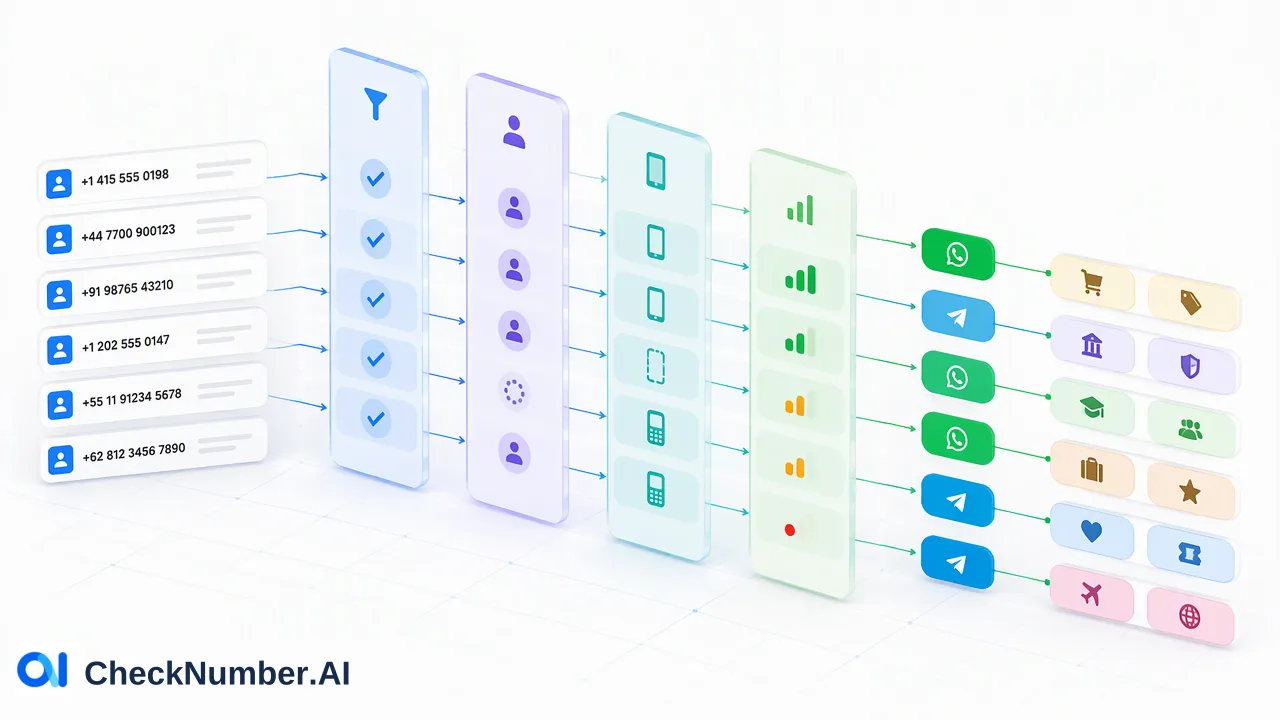
Simple contact collection methods, such as web forms or point-of-sale opt-ins, often lead to stale data if the records are not subsequently validated. Collecting a phone number is only the first step in building a database; organizations must also verify that the number is actually associated with the intended messaging platform. Moving beyond static collection requires implementing robust validation workflows. Teams often begin with format checks to ensure the data string meets expected patterns. However, format checks alone do not confirm if a user is reachable on a specific app. To gain actionable insight, organizations use platform-registration signals. This signal helps teams confirm whether phone numbers are registered with WhatsApp. By integrating platform-registration checks into their data pipelines, businesses can filter out numbers that are not registered on the platform before initiating campaigns. This distinction between basic formatting and actual platform presence is critical for maintaining a high-quality database that supports efficient outreach.
The Role of Continuous Hygiene
Data cleaning must be treated as a continuous maintenance cycle rather than a one-time administrative task. Because user statuses change frequently, a database that is clean today may contain degraded records next month. Continuous hygiene ensures that contact lists remain accurate over time, supporting ongoing operational efficiency. To facilitate this cycle, organizations utilize bulk checking workflows. CheckNumber.AI supports bulk checking of phone-number lists through CSV or TXT list uploads, as well as REST API access for automated pipeline integration. For teams requiring up-to-date status information, the WhatsApp Advanced Checker performs real-time checks to verify WhatsApp account registration for uploaded lists using a higher-detection-rate task. Real-time detection provides accurate status updates compared to relying on cached or historical data. By embedding these bulk verification processes into regular maintenance schedules, data engineering and CRM teams can systematically identify and remove unreachable records. This continuous approach to database hygiene helps organizations maintain a streamlined, highly relevant contact list that accurately reflects current platform registrations.
Segmentation for Relevance
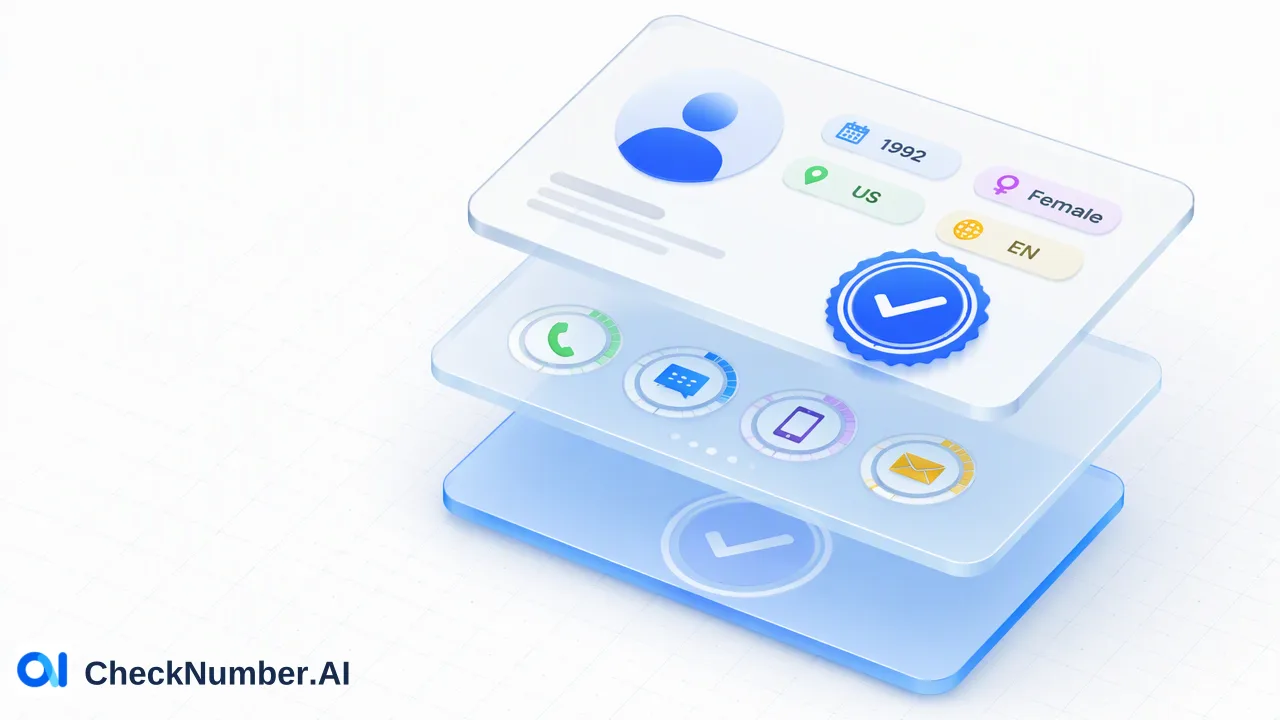
A clean database provides the foundation for effective communication, but segmentation is what drives outreach relevance. Segmentation involves categorizing contacts based on specific attributes, allowing teams to tailor their messaging strategies to different audience groups. Platform signals play a vital role in this process by allowing organizations to filter and group contacts based on account status and available profile data. Different checking tools provide distinct capabilities to support this categorization. The CheckNumber.AI WhatsApp Days Checker provides a platform-registration signal alongside available activity or last-seen context, as well as available business-account context. This activity signal supports prioritization, helping teams understand which accounts are actively present on the platform. Furthermore, the WhatsApp Age & Gender Checker provides available profile and demographic enrichment. By utilizing these profile and demographic enrichment capabilities, organizations can segment their lists more granularly. For example, teams can separate standard user accounts from business profiles, or group contacts based on activity signals to inform campaign timing. Applying these segmentation strategies ensures that outreach is directed toward relevant, reachable audiences, thereby maximizing the utility of the maintained contact database.
FAQ
Why does a WhatsApp contact list lose quality over time?
Contact lists degrade naturally as users change their phone numbers, abandon their accounts, or uninstall messaging applications. Without regular maintenance, a database accumulates stale records, reducing its overall reliability and cleanliness.
What is the difference between format checks and platform registration checks?
Format checks evaluate whether a phone number string matches expected numerical patterns. In contrast, a platform-registration check determines whether the number is registered with a specific service.
How often should organizations clean a contact database?
Data cleaning must be a continuous maintenance cycle. Because account statuses change frequently, organizations should regularly process their lists using bulk checking workflows to ensure the data remains accurate and actionable.
How do bulk checking services support database hygiene?
Bulk checking services allow teams to process large volumes of records efficiently. CheckNumber.AI supports bulk workflows via CSV or TXT list uploads and REST API access, enabling organizations to integrate continuous validation directly into their data pipelines.
What role do activity signals play in contact segmentation?
Activity signals offer context on account presence and last-seen status. This information helps teams segment their databases and supports the prioritization of outreach efforts based on platform activity.