CheckNumber.AI
 · 4 min read
What a Carrier Lookup Tells You About a Phone Number
A carrier lookup identifies the telecommunications operator, line type, and regional context of a phone number, supporting routing and list hygiene.
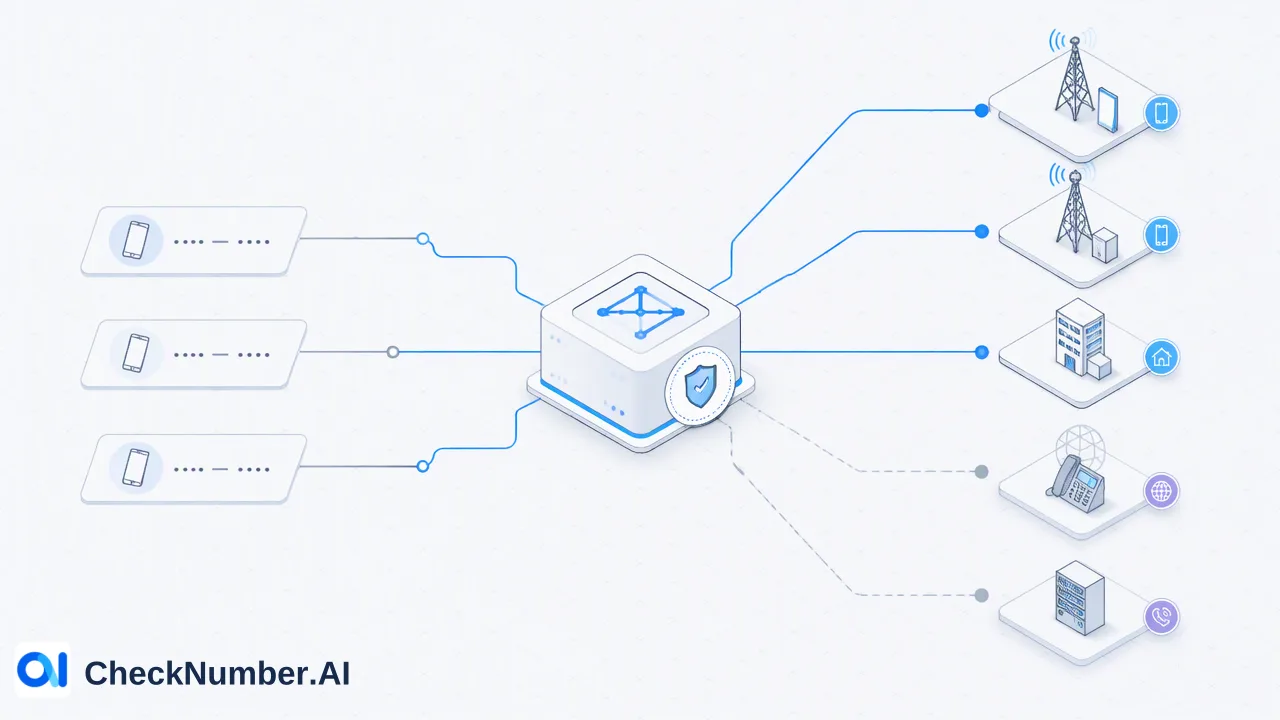
A carrier lookup is a technical diagnostic check that identifies the telecommunications operator, line type, country, and regional context associated with a specific phone number. Organizations use carrier intelligence to categorize contact databases, inform communication routing rules, and maintain data hygiene as telephone numbers transition across networks.
Defining Carrier Intelligence
Carrier intelligence refers to the network-level context tied to a telephone number. When organizations maintain customer or contact records, raw phone numbers alone do not reveal how a number is connected or which infrastructure provider handles its traffic. A carrier lookup examines network routing records to determine the current carrier of record, the technical line category, and the associated geographic origin. CheckNumber.AI provides carrier intelligence through dedicated tools, including the Global Carrier Checker across supported countries and the Advanced US Carrier Checker for United States and Canada numbers. These checks give teams objective network attributes that can be processed in bulk through list uploads or integrated into automated backend systems via REST API.
Key Data Points Returned in a Carrier Lookup
A comprehensive carrier lookup returns several technical fields that define how a phone number operates within global telecommunications networks:
- Telecommunications Operator: The specific network carrier or operating company currently servicing the number (e.g., major wireless networks or local exchange carriers). * Line Type Classification: Categorizes the connection as mobile, landline, or VoIP (Voice over IP). This distinction clarifies whether a number operates on a wireless cellular network, a fixed copper/fiber physical line, or a virtual cloud-based routing provider. * Country and Regional Context: Identifies the country code, domestic region, or local calling area tied to the prefix and exchange of the number. These technical data points help organizations structure their contact repositories, filter out unsupported channel endpoints, and organize data by geography and infrastructure type.
Managing Data Freshness and Number Portability
Telecommunications databases are inherently dynamic. Number portability regulations in many jurisdictions allow subscribers to retain their phone numbers when changing wireless carriers or migrating between fixed-line and digital voice providers. Consequently, a number that was originally issued by a traditional wireline provider may now operate on a mobile network, or a mobile number may have transitioned to a virtual VoIP service. Because carrier assignments shift, static records degrade over time. Periodic carrier checks support ongoing data freshness by updating carrier records before teams launch large-scale communication workflows or apply channel-specific routing logic.
Carrier Intelligence Compared to Platform Registration
It is essential to distinguish telecommunications carrier intelligence from platform-specific registration signals. A carrier lookup evaluates network-level infrastructure, such as whether a line is mobile or which company routes its voice and SMS traffic. In contrast, platform registration tools—such as a Telegram Checker—evaluate whether a phone number corresponds to a registered account on a specific third-party messaging network at check time. Both types of signals can inform operational workflows, but they operate at distinct layers of communication architecture and serve separate diagnostic purposes.
FAQ
How does a carrier lookup differ from a format or normalization check?
A format or normalization check evaluates whether a phone number matches standard structural patterns, such as length and country calling codes defined by international numbering standards. In contrast, a carrier lookup inspects the operational record of the number to identify the assigned service provider, line category, and geographic context.
Why does carrier data change over time?
Carrier data changes primarily due to mobile number portability and service migrations. Subscribers frequently transfer existing numbers between wireless providers, fixed networks, or voice-over-IP services, making static carrier records inaccurate over time.
How do line type classifications inform message routing workflows?
Line type classifications indicate whether an endpoint is assigned to a wireless network, a traditional landline exchange, or a virtual service. This technical context helps teams direct text-based traffic to mobile connections while routing voice-only requirements to fixed or virtual lines.