CheckNumber.AI
· 4 min read
What Does Telegram Premium Membership Mean in a Bulk Contact Check?
A Telegram Premium membership signal indicates an observed subscription status when CheckNumber makes that field available. It is separate from registration and last-online recency; it does not establish purchasing power, interest in your product, or permission to contact someone.
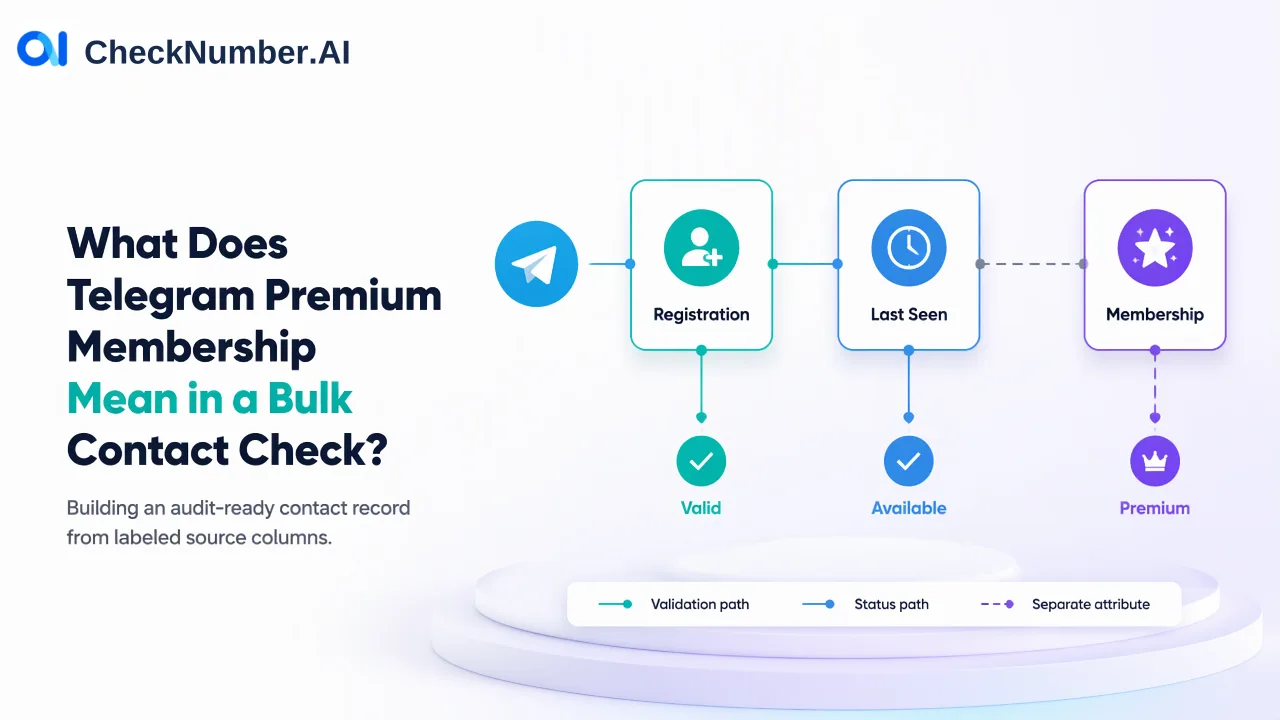
A Telegram Premium membership signal indicates an observed subscription status when CheckNumber makes that field available. It is separate from registration and last-online recency; it does not establish purchasing power, interest in your product, or permission to contact someone.
Answer the membership question first
Telegram Premium is Telegram’s optional subscription for additional features. In CheckNumber’s Telegram activity documentation, the member result is a membership signal when available. It is a different question from whether the supplied number has a Telegram registration or when the account was last seen online. A bulk contact check may place these observations in one export, but their presence in the same row does not make them interchangeable.
For a list owner, the safest working definition is narrow: “The checker returned a Premium membership observation for this Telegram check at this time.” Avoid changing that into “this lead is wealthy,” “this person buys subscriptions,” or “this account will answer.” Telegram’s own Premium FAQ describes product features and subscription access, not the business traits of a subscriber. Membership can change after a check, so the date is part of the meaning.
Read registration, activity and membership as separate columns
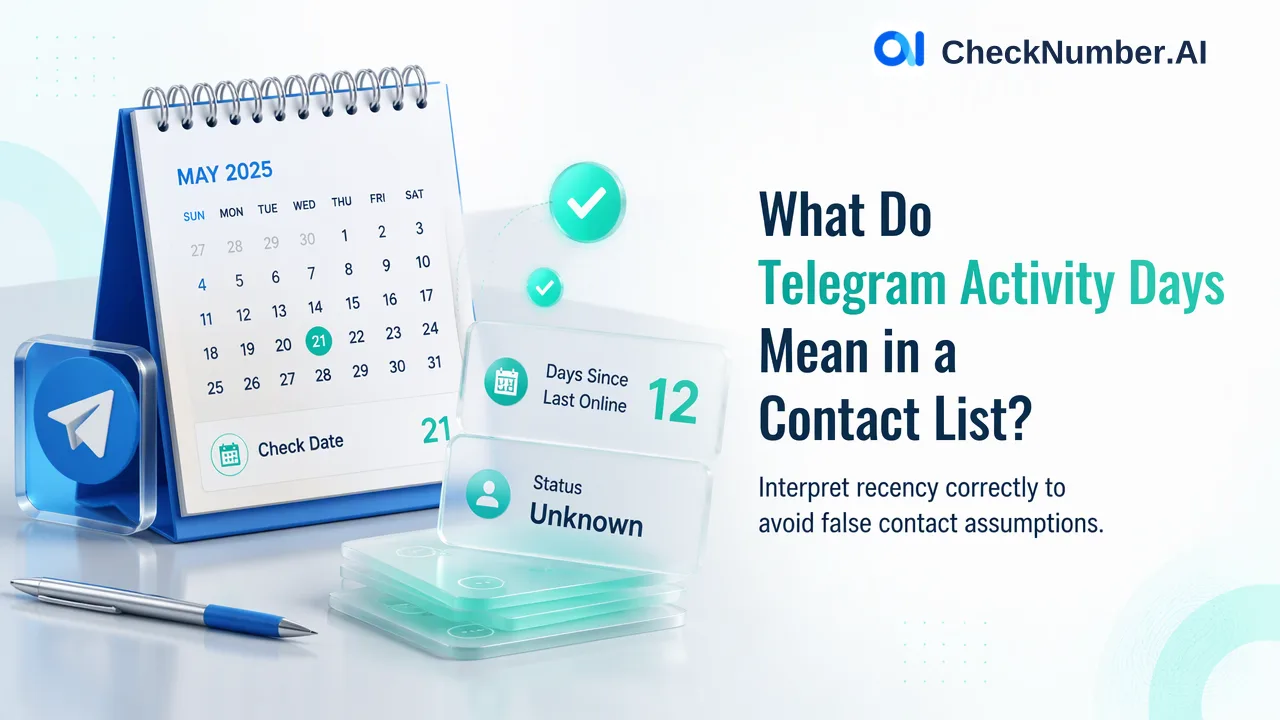
A useful contact review starts by naming the question behind each field. Registration addresses whether the supplied number returned a Telegram account signal for that product. Last-seen context and activity days describe an available observation of recency; the activity-day number means days since last online, not account age or frequency of use. Membership describes Premium status when the signal is available.
| Observation | Question it helps answer | What it cannot establish |
|---|---|---|
| Registration result | Did the named check return a Telegram registration signal? | Who owns the account or whether outreach is permitted |
| Last-seen or activity days | How recent is an available last-online observation? | Whether the person is online now or will reply |
| Premium membership | Did the check expose a Premium member signal? | Spending power, customer value or consent |
This separation prevents a common scoring mistake. A Premium result with no recent activity is not a “high activity” row. A recent activity observation without a membership result is not evidence that the account lacks a subscription unless the returned field explicitly says so. If a dashboard needs a combined view, build it from labeled source columns and keep the original values available for audit.
Handle absent and contradictory-looking rows without filling gaps
Suppose an illustrative export contains a registration signal and an activity-day value, but no usable member value. Record “membership unknown,” not “free user.” Conversely, a member value does not supply a missing last-seen date. Visibility and product-result availability can differ by row. Before turning a blank cell into a business label, inspect the actual result and current product documentation for that field.
A practical CRM record can keep the supplied identifier, checker name, check date, raw registration result, raw membership result, raw recency result and an interpretation label. For example: “Telegram Days, checked 13 November; member observed; activity unavailable; no activity segment assigned.” This is an example of record design, not an actual customer result. If the source export later changes, the team can update its interpretation while preserving what was originally observed. Keep “not returned,” “unknown” and an explicit negative separate if the export distinguishes them. Do not guess a complete response schema from the field names in an article.
Decide whether membership actually changes a workflow
A team maintaining an existing, permissioned contact list might use registration to decide which records need Telegram-specific review, then use available recency to order that review. Premium membership may be a descriptive segment if the business has a legitimate, tested use for it. It should not silently become a lead-score multiplier. A subscription badge is too weak to stand in for budget, purchase intent, identity or permission.
Before acting on a combined segment, ask two operational questions: What decision would differ if the membership column were absent? Could that decision still be justified with a documented signal and the team’s own consent record? If not, leave membership as reference data rather than building an outreach rule around it. Keep separate permission and preference records because neither Telegram registration nor Premium membership provides them.
For the next review, export the relevant Telegram check from CheckNumber’s Telegram product, label member and recency separately, and sample rows with missing values before setting any CRM rule. Use the Telegram activity checker documentation for the current field descriptions.