CheckNumber.AI
· 4 min read
How to Pilot a Bulk Contact Checker Before Buying at Scale
A useful pilot tests the exact signal and workflow your team needs, while keeping unsupported and unknown results visible.
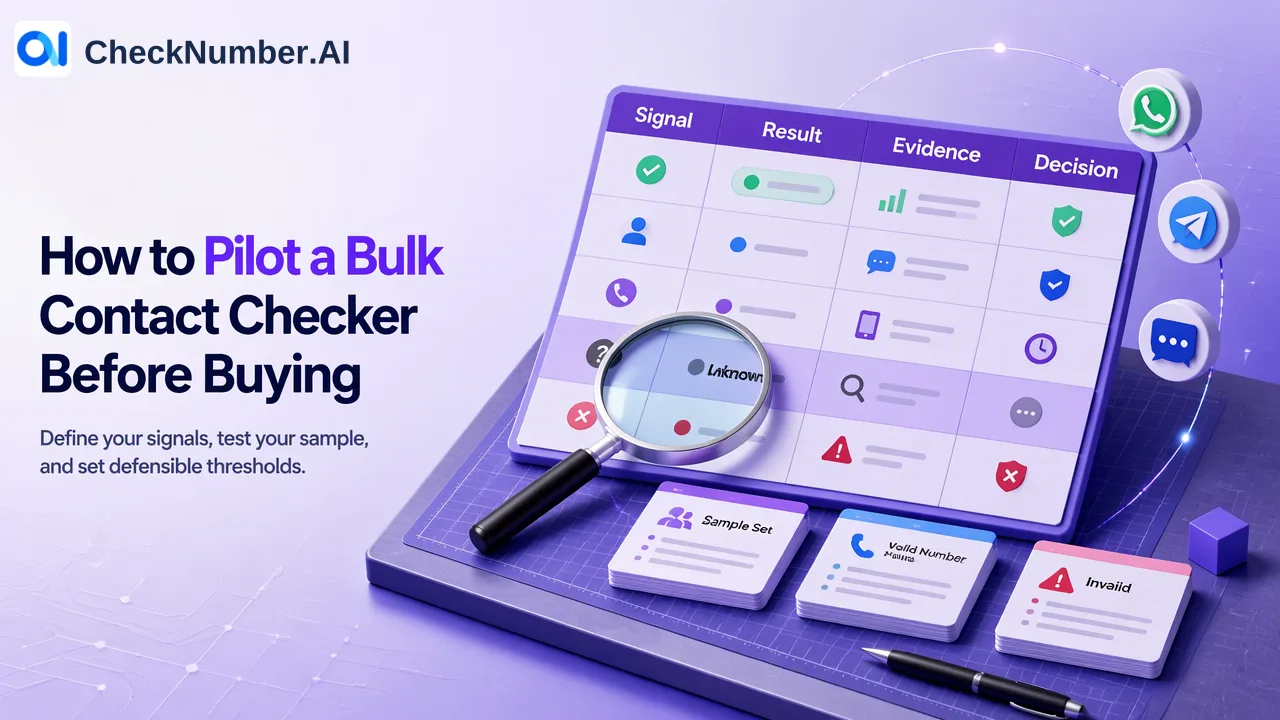
A bulk contact checker pilot should start with the decision the result must support, then test a representative, permitted sample against independent evidence for that same signal. Count coverage, unknowns, mismatches and the work needed to reconcile exports. A general accuracy claim is not a substitute for that review, because number format, platform registration, activity and email validation answer different questions.
Specify the signal before assembling a sample
Write a single operational question, such as whether a supplied number has a named platform registration signal at check time or whether an email address meets the selected validation checks. Do not score a format-only result as if it measured current platform presence. Provider comparisons describe several layers, but a buyer’s pilot needs a named target for each row.
Choose a customer-owned sample across the countries, acquisition sources and record ages that matter to the intended workflow. Include ordinary records, known exceptions, duplicates and malformed inputs. If one country or source dominates the entire sample, report its results separately rather than hiding a weaker segment in an overall percentage. Check each selected product’s current coverage and input rules before running it. For CheckNumber phone-list uploads, the documented preparation uses one country per file and one number per line with country code; a team should keep its original record identifier in its own mapping table.
Avoid using a convenience list of only obvious positive examples. Include a small set where your team already has independent, lawful evidence about the exact question. For platform registration, do not treat a past message response as permanent proof of current registration; note its date and limited meaning. For validity, use appropriate evidence for validity rather than inferring it from an account signal. Where no independent label exists, mark the row unlabelled instead of manufacturing a ground truth.
Keep four scorecard dimensions separate
Use a worksheet with a row ID, original input, selected product, country or provider where relevant, observation date, result category as documented, independent evidence, reviewer decision and exception note. Add only fields actually available in the selected checker export; keep your own labels in your own worksheet. A scorecard can then show four distinct dimensions.
| Dimension | Question for the pilot | Record explicitly |
|---|---|---|
| Coverage | Could the selected checker address the sample’s countries, providers and input types? | Supported, unsupported and not submitted rows |
| Interpretation | Does the result answer the defined signal question? | Named product, date and unclear observations |
| Reconciliation | Can the team map results to source records without losing exceptions? | Matched, mismatched and unmatched row IDs |
| Workflow usability | Can reviewers repeat the permitted run and explain their decisions? | Preparation work, review steps and open questions |
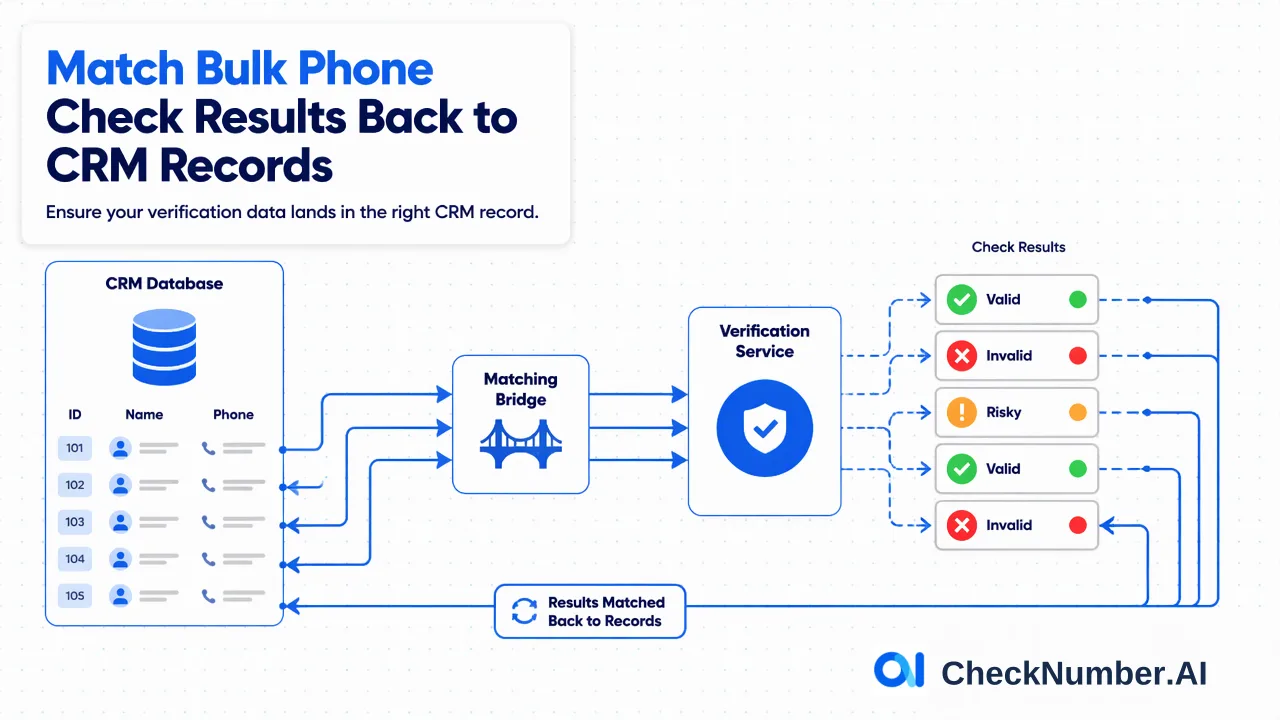
Count unknown and unsupported observations in their own denominators. Do not silently exclude them from a headline success percentage, and do not count them as negatives. If two records map to one normalized number, preserve both source records while deciding whether they should share a check result. This is a CRM join decision, not proof that two contacts are one person.
Set a go or no-go rule the buyer can defend
Before viewing the output, agree on conditions that reflect the actual task: required market or provider coverage, acceptable unresolved volume, ability to explain each result category and a workable join back to the source list. A go decision means the selected checker provides useful evidence within that scope and that the team can handle its exceptions. A no-go decision may mean that the needed signal is outside this product’s documented capability, the target segment is unsupported, or the unresolved records prevent the intended decision. The team can set its own thresholds, but should not describe them as a product guarantee.
Keep the pilot’s unmeasured outcomes explicit. A checker result does not validate the contact’s identity or ownership and does not demonstrate consent, delivery or response. Those questions require their own evidence and permissions. A format validator, for example, can identify plausible numbering patterns without conducting a live platform check, as illustrated by this offline validator’s description. Evaluating it against live account labels would misstate what was bought.
If the scorecard is promising, review the current CheckNumber documentation for the specific bulk product, prepare a permitted representative list and inspect its actual export before increasing usage. Save the pilot question, sample design and exception counts beside the decision so a later buyer can understand its limits.