CheckNumber.AI
 · 5 min read
Telegram Contact List Hygiene: Beyond Account Existence
Learn how multi-layered Telegram contact list hygiene—combining format normalization, platform registration, and activity screening—helps teams optimize outreach workflows.

Effective Telegram contact list hygiene requires a multi-layered verification strategy that extends beyond confirming basic account existence. A platform registration signal verifies whether an account exists at check time, but existence alone does not indicate whether an account is actively monitored, receptive to incoming messages, or aligned with campaign objectives. By combining phone format standardization, check-time platform registration signals, and available activity or profile enrichment, organizations can maintain cleaner databases, reduce wasted outreach efforts, and make informed data management decisions.
The Limitations of Basic Existence Checks
Many contact screening workflows stop after validating that a record exists on a given service. In communication channels like Telegram, however, an account existence check provides only a baseline signal. A record that returns positive for registration merely indicates that an account was created and remains registered on the platform at check time. Account existence does not correlate directly with current engagement, message responsiveness, or audience interest. Over time, individuals abandon accounts, swap phone numbers, or uninstall applications without formally deleting their profiles. Consequently, maintaining a list composed purely of registered numbers often leaves teams with significant blind spots. Sending messages to registered but inactive accounts wastes operational bandwidth and produces skewed performance metrics. Treating existence as an operational green light overlooks the decay that naturally occurs across contact lists. To build an efficient contact architecture, organizations must treat account presence as an initial filter rather than the definitive measure of contact readiness.
A Multi-Layered Framework for List Hygiene
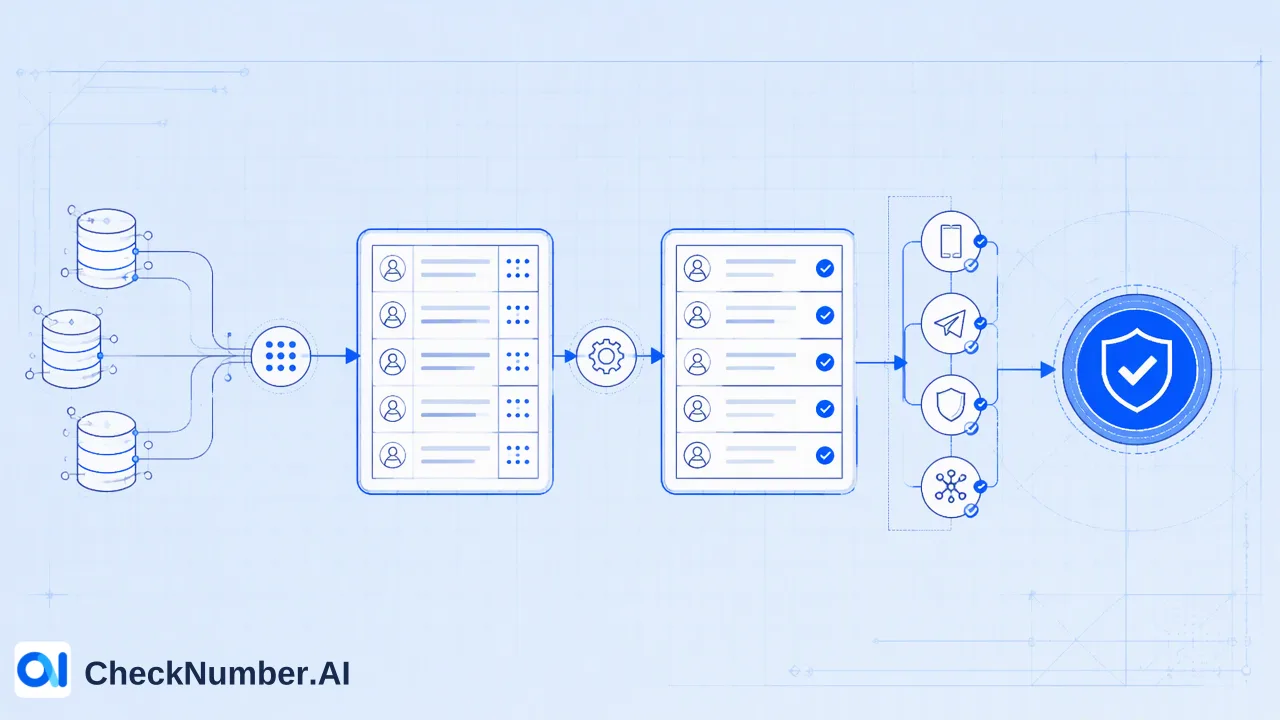
Achieving rigorous Telegram contact list hygiene requires a sequential, multi-layered approach. Each layer addresses a distinct dimension of data quality, ensuring that unviable records are identified early in the screening process. 1. Format Normalization: Standardizing raw phone numbers into consistent international structures (such as standardized country codes and digit counts) is a necessary preliminary step. Distinguishing format and normalization checks from network-level or platform-specific validation prevents processing errors during downstream screening. 2. Platform Registration Verification: Using dedicated checking tools, such as Telegram Checker for phone records or Telegram Username Registration Checker for handles, confirms platform presence at check time. This platform registration signal confirms that the destination identifier is recognized by Telegram, avoiding attempts to reach unregistered numbers. 3. Activity and Presence Evaluation: Once registration is confirmed, examining activity attributes provides context on how recently an account has interacted with the network. Identifying prolonged inactivity helps teams filter out dormant accounts before launching outreach campaigns. 4. Profile and Context Enrichment: Evaluating supplemental profile attributes provides deeper insight into account types and attributes, aiding list segmentation. By executing these stages systematically, organizations prevent list decay and ensure resources focus on reachable, context-rich contacts.
Leveraging Activity and Profile Signals
Moving beyond binary registration requires incorporating nuanced activity and profile indicators into operational databases. CheckNumber.AI offers specialized tools designed to extract these deeper data points across bulk phone-number and username datasets via CSV or TXT list uploads and REST API workflows. Different tools surface distinct, non-transferable data attributes:
| Tool | Input Identifier | Documented Signals & Attributes |
|---|---|---|
| Telegram Days Checker | Phone Number | Platform registration signal, activity signal (last-seen context), account identifier signal, membership signal (Premium context) |
| Telegram Username Activity Checker | Username | Platform registration signal, activity signal, public profile enrichment (including avatar data when available), account identifier signal, membership signal |
| Telegram Age & Gender Checker | Phone Number | Platform registration signal, activity signal, profile enrichment, demographic enrichment, account identifier signal, membership signal |
| Telegram Username Profile Checker | Username | Platform registration signal, activity signal, profile enrichment, demographic enrichment, account identifier signal, membership signal |
| Incorporating these signals into routing logic allows teams to establish sensible prioritization thresholds. For instance, accounts with recent activity signals or verified Premium membership can be routed to primary engagement queues, while records showing extended dormancy can be scheduled for re-verification or removed from operational lists. |
Maintaining Data Compliance and Privacy
Data maintenance is not a one-time exercise; it is an ongoing requirement to prevent list decay and support responsible data governance. Phone numbers are frequently reassigned by telecom carriers to new subscribers. When a number changes hands, previous platform accounts may be deleted, reset, or transferred, making historic records unreliable. When conducting screening and hygiene workflows, organizations must manage contact data responsibly. Organizations should treat registration and activity signals purely as technical decision-support signals rather than conclusive verification of individual identity or regulatory compliance. Implementing scheduled list audits—purging non-registered numbers, flagging dormant accounts, and respecting customer preferences—ensures databases remain clean, structured, and compliant with internal data retention standards.
FAQ
Why is account existence not enough for Telegram outreach planning?
A registration check confirms only that a phone number or username is associated with a Telegram account at the exact moment of the query. It does not provide information regarding whether the user frequently opens the application, reads incoming messages, or wishes to engage. Relying solely on existence can result in outreach directed at abandoned or dormant profiles.
What is the difference between a registration signal and an activity signal?
In contrast, an activity signal provides contextual data, such as last-seen timing indicators or account presence duration, which helps teams evaluate recent usage patterns before initiating contact.
How can teams use profile enrichment for contact list segmentation?
Profile enrichment surfaces available public data attributes, such as public profile details, demographic indicators, or Premium membership context. Organizations can use these signals as inputs to categorize lists, prioritize high-value segments, and tailor operational workflows without making unverified assumptions about personal identity.