CheckNumber.AI
 · 6 min read
Optimizing Southeast Asian Messaging Campaigns: A Guide to Regional User Behavior and Localized Outreach
Effective messaging in Southeast Asia requires localized strategy, rigorous data hygiene, and channel segmentation based on regional platform-registration signals.

Optimizing messaging campaigns across Southeast Asia requires abandoning uniform, one-size-fits-all strategies in favor of localized channel selection and rigorous contact data hygiene. Because regional communication habits and platform adoption vary substantially by country, maintaining clean contact data and segmenting phone lists using check-time platform-registration signals helps teams align their outreach with the specific messaging channels preferred by regional audiences.
The Challenge of Fragmentation in Southeast Asian Messaging
Southeast Asia encompasses a diverse group of markets, including Indonesia, Vietnam, Thailand, Malaysia, the Philippines, and Singapore. Across these jurisdictions, digital communication habits do not follow a centralized pattern. Instead, user adoption is deeply tied to local commercial conventions, telecommunication infrastructure, and platform popularity. In some markets, users coordinate commerce and social activities through open chat networks, while in others, rich communication services or specific localized chat applications dominate daily communications. Organizations that deploy generic cross-border messaging campaigns often experience poor campaign performance because their contact lists are routed through channels that target recipients do not actively consult. Understanding the localized environment of each country is therefore an operational prerequisite for cross-border engagement. Local consumer behavior also influences how individuals interact with inbound commercial communication. Audiences in certain markets expect direct conversational commerce through messaging apps, while audiences elsewhere favor transactional notifications via standard carrier channels or dedicated rich-messaging protocols. Recognizing these country-level differences allows marketing teams to tailor not only their channel selection but also their engagement cadences to match local expectations.
Why Data Hygiene is the Foundation of Localized Outreach
Executing regional campaigns without foundational data hygiene introduces operational waste and degrades campaign analytics. Contact databases collected across Southeast Asian markets frequently contain formatting inconsistencies, outdated mobile numbers, invalid dialing prefixes, or unallocated lines. Systematic data hygiene addresses these vulnerabilities by establishing validation workflows prior to campaign deployment. Phone-number validation begins by verifying line formatting, country dialing codes, and regional network contexts. Utilizing carrier intelligence tools helps teams identify the carrier, line type, country, and regional context for phone numbers across supported territories. This step helps technical teams separate fixed lines from mobile devices capable of receiving digital messaging. Furthermore, data hygiene must reflect the specific interaction patterns of regional users. Because mobile users in Southeast Asia frequently change SIM cards or maintain multiple mobile subscriptions, contact records age quickly. Regular list auditing helps organizations filter obsolete numbers from active CRM databases, supporting clean delivery workflows and providing reliable foundational data for downstream channel routing.
Segmenting Audiences via Platform-Registration Signals
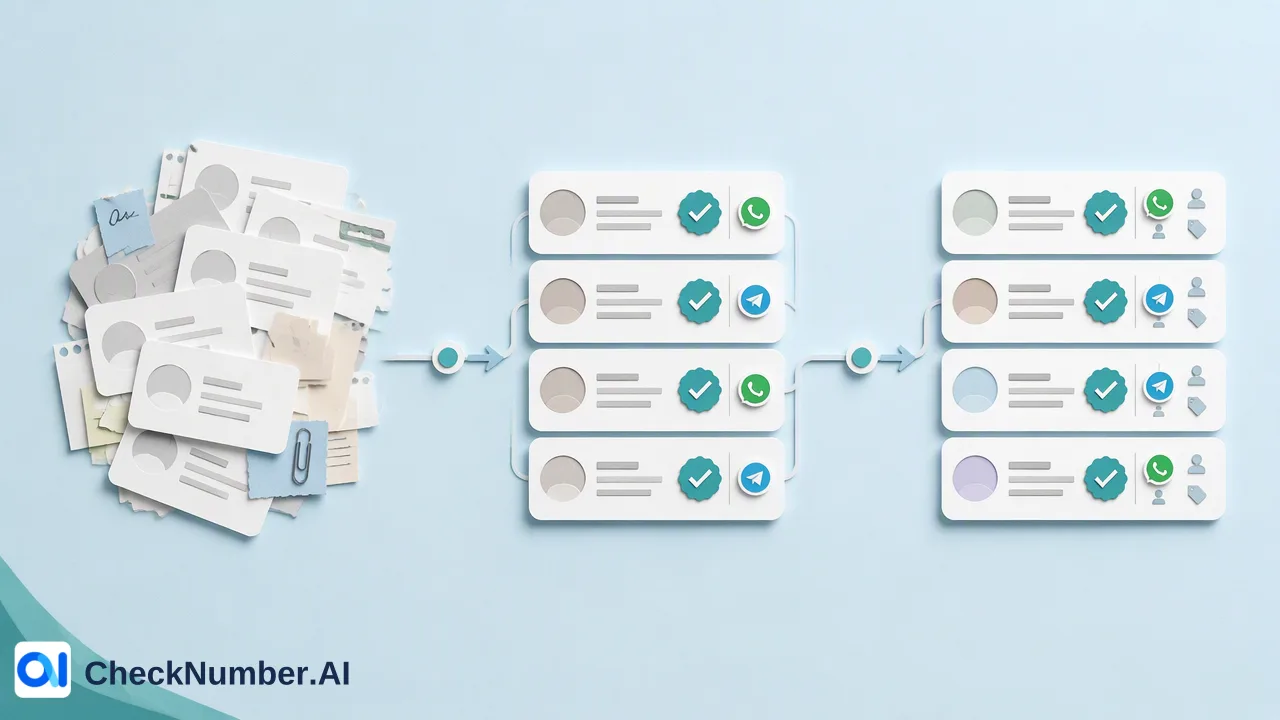
Once raw contact lists are cleansed of invalid records, organizations can apply platform-specific segmentation to determine appropriate outreach channels. A platform-registration signal indicates whether a given phone number is registered on a specific messaging network at the time of the check. These signals provide reachability context at check time, helping teams route messages to channels where accounts actually exist. CheckNumber.AI provides bulk list checking workflows that support audience segmentation across several major messaging ecosystems:
- Telegram Verification: The Telegram Checker verifies whether phone numbers are registered with Telegram. For workflows requiring deeper context, Telegram Days Checker evaluates account presence alongside available activity or last-seen indicators, account identifiers, and Premium membership context. - iOS Ecosystem Segmentation: The iMessage Checker identifies iMessage-registered numbers in bulk, supporting iOS ecosystem audience segmentation and informing iMessage outreach or customer support planning. - Rich Messaging Planning: The RCS Checker identifies phone numbers that support RCS or Google Messages, informing rich-messaging channel allocation for Android-heavy markets. | Verification Service | Primary Check Signal | Strategic Campaign Application | | :--- | :--- | :--- | | Telegram Checker | Telegram account registration | Validates account presence for community and direct messaging | | Telegram Days Checker | Registration, last-seen, Premium context | Informs audience prioritization based on available presence signals | | iMessage Checker | iMessage network registration | Supports Apple ecosystem audience segmentation and outreach planning | | RCS Checker | RCS and Google Messages support | Directs rich-messaging workflows in mobile-first markets | | Global Carrier Checker | Carrier, line type, and location | Confirms mobile line viability and carrier attribution | These check-time signals provide objective technical reachability context.
Best Practices for Regional Campaign Execution
Translating regional market insights and platform signals into operational success requires structured execution across technical and creative workflows. First, teams should integrate bulk list verification into regular CRM hygiene schedules. CheckNumber.AI supports bulk workflows through CSV or TXT list uploads as well as REST API access, making it feasible to qualify large contact databases periodically or evaluate inbound leads dynamically. Running regular batch checks on campaign lists helps marketing operations discard unregistered records before allocating budget to platform-specific broadcast tools. Second, organizations must align messaging formats and styles with local expectations. A promotional message that resonates in Singapore may require adaptation for audiences in Indonesia or Vietnam. Tone, formality, promotional framing, and language localization should reflect native market customs to foster engagement and brand credibility. Third, multi-channel fallback strategies should be structured around verified signals rather than guesswork. When a contact record demonstrates presence on Telegram or supports RCS, campaigns can prioritize those interactive environments. If a record lacks registration on specialized chat platforms, routing logic can fall back to standard mobile messaging channels informed by carrier lookup data. This tiered routing model respects user ecosystem habits while protecting marketing efficiency across fragmented Southeast Asian markets.
FAQ
Why is a uniform messaging approach ineffective across Southeast Asia?
Southeast Asia represents a fragmented digital ecosystem where communication habits, consumer preferences, and dominant messaging applications differ by country. Outreach strategies that rely on a single channel across the entire region risk directing resources toward platforms that local audiences rarely use for commercial interaction.
How do platform-registration signals inform campaign segmentation?
By verifying account presence across supported platforms such as Telegram or iMessage, marketing and operations teams can segment lists into platform-specific cohorts before launching regional campaigns.
What role does data hygiene play in regional messaging workflows?
Data hygiene serves as the baseline filter for regional contact databases. Routine list validation filters out malformed, inactive, or unallocated numbers, supporting higher delivery efficiency, protecting sender reputation, and providing clean inputs for regional segmentation.