CheckNumber.AI
 · 4 min read
From Raw Lists to Qualified Leads: A Framework for Social Media Contact Hygiene
A practical framework for qualifying raw social media contact lists into actionable leads through systematic standardization, cleaning, and platform reachability signals.

Social media contact list hygiene is the structured process of transforming unverified contact data into qualified marketing leads through syntax standardization, duplicate removal, and platform-specific verification. Rather than relying on raw list volume, teams use check-time reachability signals to identify which phone numbers or email addresses are registered on target messaging and social networks. This workflow helps organizations reduce wasted campaign spend, streamline CRM records, and focus marketing engagement on reachable, relevant audiences.
The Challenge of Raw Contact Volume
Lead generation initiatives often focus on top-of-funnel list acquisition, accumulating thousands of phone numbers and email addresses across disparate landing pages and events. However, raw database volume rarely translates into marketing value. Without rigorous screening, raw lists accumulate inactive accounts, formatting irregularities, transcription errors, and invalid identifiers. When marketing and sales teams conduct outreach across unverified records, operational efficiency drops. Establishing high-performance marketing requires treating contact lists as dynamic assets that require systematic qualification before launching outreach.
Establishing a Data Hygiene Framework
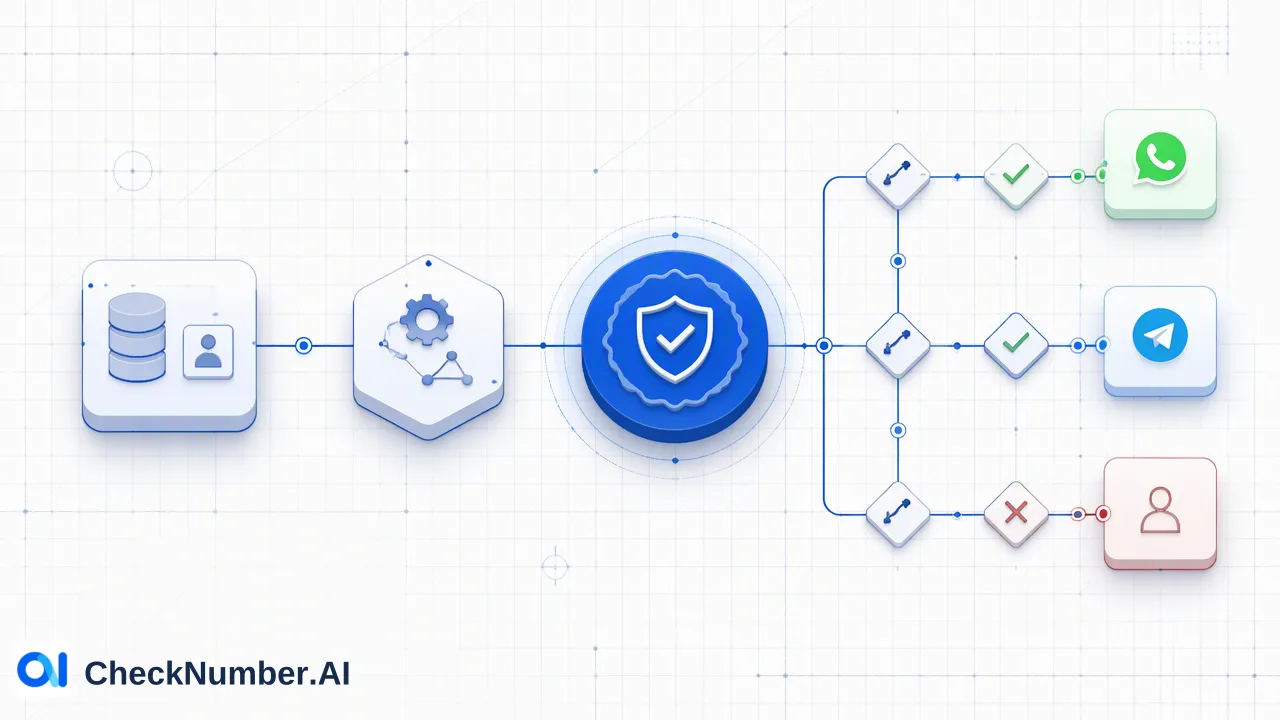
A sustainable hygiene framework standardizes and cleans records before data reaches marketing databases. The process begins with structural normalization, formatting international phone numbers according to standardized dialing patterns and validating email string conventions. Once entries match target syntax standards, deduplication logic removes redundant rows across CRM partitions. Standardizing custom fields, account source tags, and campaign identifiers establishes consistent data management across cross-functional teams. This baseline standardization ensures that downstream verification queries receive uniform, properly structured data inputs.
Leveraging Platform-Specific Reachability Signals
Generic phone or email syntax validation confirms only that a string follows technical specifications; it cannot confirm whether an account exists on a target social channel. Platform-specific verification bridges this gap by checking whether an identifier is registered with specific messaging networks or email providers. For example, teams managing messaging workflows can evaluate phone numbers via dedicated Telegram registration checks to confirm account presence before allocating outreach resources. Similarly, contact databases targeting email channels can verify addresses using Gmail or Yandex registration checks.
Prioritizing Leads Through Behavioral and Profile Context
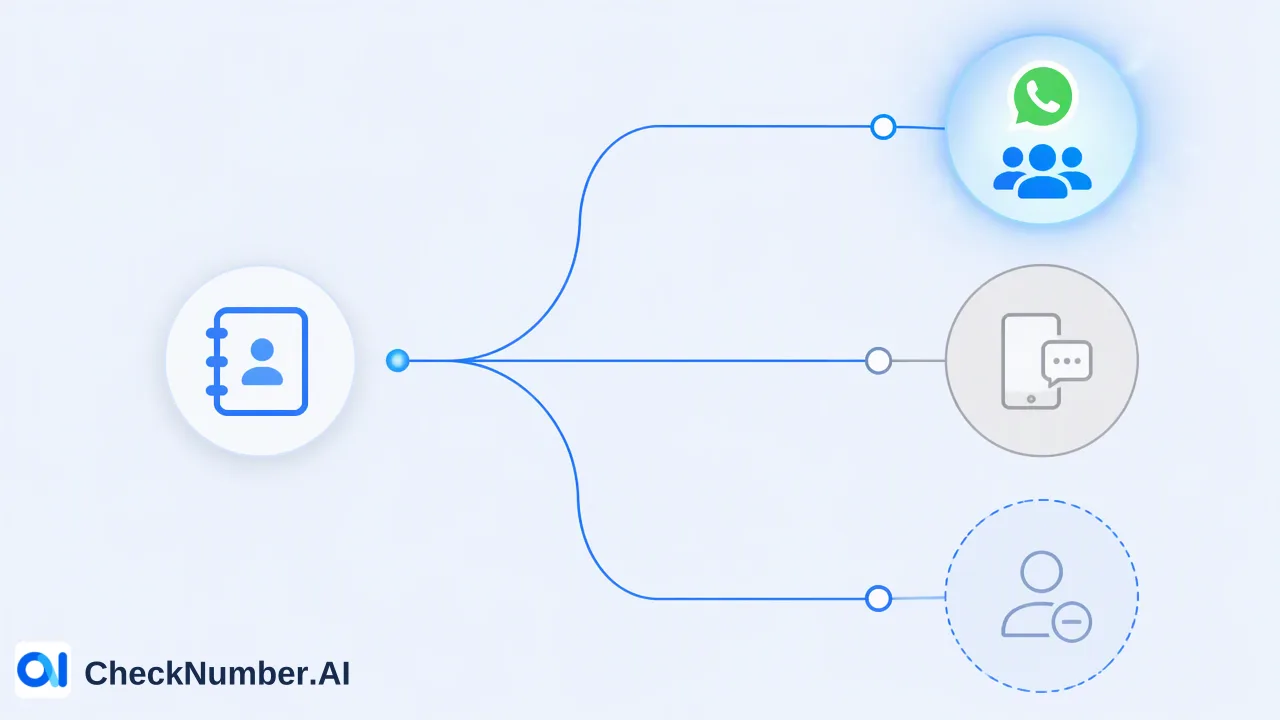
Once reachability signals confirm platform presence, organizations can segment records to prioritize engagement. Certain platform signals provide supplementary operational context alongside registration status. For example, specialized Telegram checks can return available last-seen context, account-identifier presence, or Premium-membership indicators, while email profile checks can confirm avatar availability. Teams use these signals alongside internal behavioral metrics, such as interaction recency or form response history, to build tiered qualification rules:
- Tier 1 (High Priority): Registered platform presence paired with recent activity signals or high interaction intent. - Tier 2 (Nurture Segment): platform account presence without recent behavioral signals, suited for low-frequency nurturing. - Tier 3 (Suppression List): Identifiers confirmed as unregistered on the target platform or repeatedly bouncing across basic checks. This tiered routing supports targeted campaign deployment and helps sales teams spend time only on viable prospects.
Maintaining a Continuous Maintenance Cycle
Data hygiene is an ongoing operational discipline rather than an isolated, one-time project. Contact lists naturally decay as prospects change mobile providers, abandon secondary inboxes, or reassign usernames. Retaining list hygiene requires embedding verification checks into daily data operations. Bulk checking services support this lifecycle through flexible operational interfaces. Technical teams can integrate REST API endpoints into lead capture forms for real-time validation, while CRM administrators can perform periodic list audits using bulk CSV or TXT file uploads. Establishing automated cadence reviews keeps CRM datasets clean, protects sender reputation, and ensures marketing pipelines reflect actionable opportunities.
FAQ
Why is raw contact volume misleading for social media marketing?
Lists compiled from web forms, event sign-ups, or inbound campaigns frequently include obsolete records, syntax errors, and disconnected accounts. Prioritizing raw volume over verified reachability skews campaign metrics, increases outreach costs, and risks domain or sender reputation penalties when sending messages to nonexistent destinations.
How do platform-registration signals differ from standard format checks?
A standard format check evaluates only whether an input matches expected structural rules, such as E.164 phone formatting or RFC email syntax. In contrast, a platform-registration signal queries whether that specific identifier is actively registered on a given service, such as Telegram or Gmail, at the precise moment of verification.
How often should an organization perform contact list hygiene?
Contact data degrades over time due to churn, account deactivations, and identifier reassignments. Teams typically implement list hygiene continuously at point-of-capture via REST API checks, supplemented by periodic bulk batch reviews using CSV or TXT file uploads before major outbound campaigns or scheduled CRM syncs.