CheckNumber.AI
 · 5 min read
Optimizing SMS Spend: Best Practices for List Hygiene and Segmentation
Practical strategies for optimizing SMS messaging budgets by leveraging data-driven list hygiene, carrier intelligence, and audience segmentation using CheckNumber.AI tools.

Reducing SMS costs requires proactive list management and data-driven segmentation. By utilizing bulk checking services to identify carrier line types, check email registration signals, and prioritize high-value audience segments, businesses can help reduce waste from their outreach lists. Implementing these data-driven checks before deployment supports focusing messaging budgets on relevant and actionable contact records. Rather than sending messages blindly to outdated databases, organizations can use contact intelligence to inform routing decisions and prioritize high-value records for specific messaging campaigns.
Prioritize List Hygiene to Reduce Waste
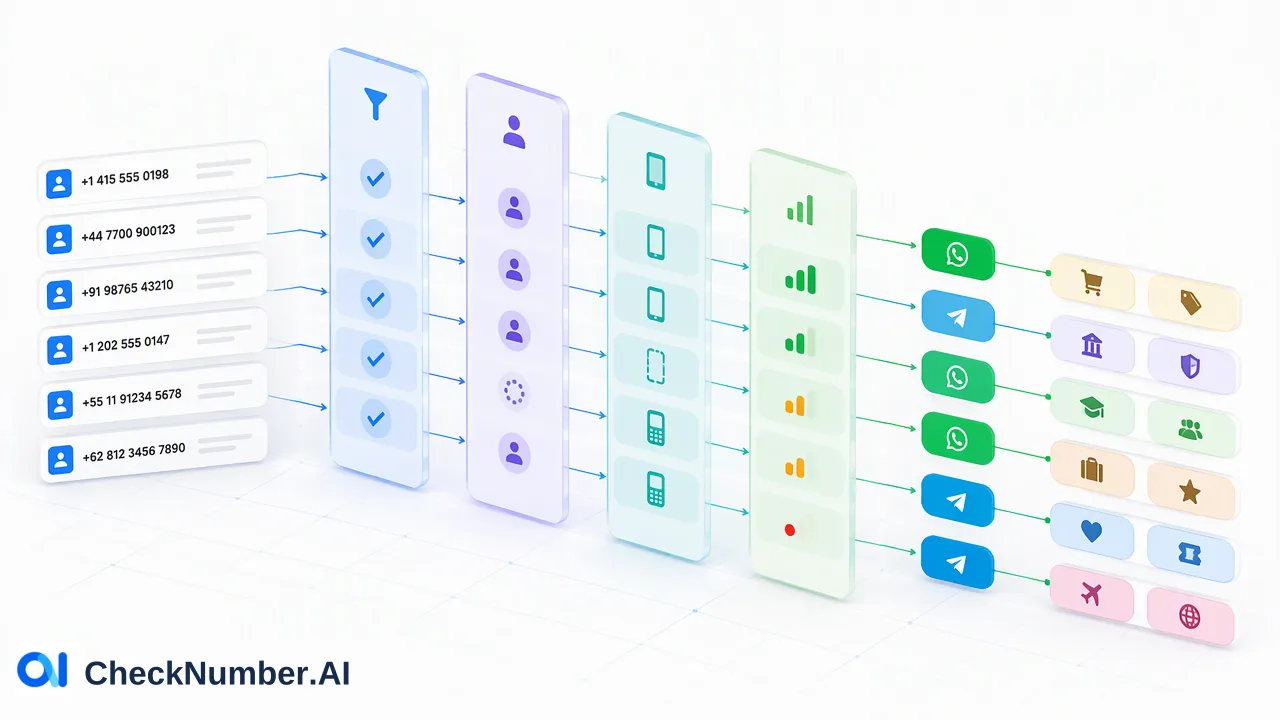
Effective list hygiene is the foundation of any cost-optimized messaging strategy. List hygiene is the process of cleaning and maintaining contact lists to help focus targeting on relevant records. When organizations send SMS messages to unsupported numbers, they incur unnecessary carrier fees and API costs. To address this, the core workflow involves bulk checking of supported phone-number or email lists. By processing contact databases through CheckNumber.AI before launching a campaign, teams can identify which records are worth messaging. Bulk workflows support CSV or TXT list uploads and REST API access, making it straightforward to integrate these checks into existing data pipelines or marketing platforms. How to implement bulk list hygiene:
- Export current lists: Gather your existing contact databases into standard CSV or TXT formats.
- Process via API or upload: Use REST API access for automated, programmatic checking, or manually upload files for periodic batch reviews.
- Filter the output: Remove records that lack documented registration signals, helping direct your SMS budget toward numbers that support your campaign goals. Regularly applying these bulk checks helps teams review their data quality and supports a more efficient allocation of outreach resources.
Leverage Carrier Intelligence for Routing Efficiency
Not all phone numbers cost the same to message, and sending SMS to incompatible line types—such as landlines or specific VoIP numbers that cannot receive text messages—directly inflates campaign costs. Carrier intelligence provides regional and line-type context, which can inform routing and cost-management decisions. The Global Carrier Checker is designed to identify the carrier, line type, country, and regional context for phone numbers across supported countries. By understanding the underlying infrastructure of a phone number, businesses can make informed decisions about how to route their communications. Practical applications of carrier intelligence:
- Regional routing: Use country and regional context to group numbers by geographic location, allowing teams to optimize send times and navigate varying international SMS rates.
- Carrier-specific strategies: Different carriers may have different pricing structures or routing requirements. Identifying the carrier helps teams adjust their messaging strategies to align with the most cost-effective paths. Integrating carrier and location signals into your workflow supports better prioritization and helps avoid the hidden costs associated with incompatible or high-cost destinations.
Segment Audiences Using Platform Signals
Beyond basic line-type identification, understanding the potential value of a contact can further optimize messaging spend. Audience value signals help prioritize high-value records for specific messaging campaigns, allowing businesses to allocate their budget where it is most likely to yield engagement. The High-value Users Checker flags high-value audience signals across uploaded phone-number lists for prioritization and review. This platform signal provides an additional layer of context, helping teams distinguish between standard contacts and those that exhibit high-value characteristics based on platform presence. Workflow for audience segmentation:
- Upload the target list: Submit your phone-number list through the bulk checking interface.
- Retrieve audience signals: The system processes the input and returns audience value signals for the supported numbers.
- Prioritize outreach: Segment your campaign into tiers. Allocate the primary SMS budget to the high-value segment, while using lower-cost channels or secondary messaging strategies for the remaining records. By focusing premium SMS outreach on high-value segments, organizations can optimize their return on investment and reduce the overall cost per meaningful interaction.
Check Email Registration Signals to Streamline Multi-Channel Outreach
While the primary goal may be to reduce SMS costs, a comprehensive contact strategy often involves multiple channels. If a phone number is deemed too expensive to message or belongs to an unsupported line type, falling back to email can be a cost-effective alternative. However, this requires confidence in the email data. Email Validation checks registration signals across supported email providers. This capability provides an email provider registration signal, which informs teams whether an email address is associated with a registered account on the supported platform. Integrating email checks into SMS cost reduction:
- Cross-channel fallback: When carrier intelligence flags a phone number as a landline, shift that contact to an email campaign.
- Pre-campaign validation: Before executing the fallback strategy, run the email addresses through the Email Validation tool to confirm registration signals.
- Unified contact intelligence: Combining phone and email signals gives teams context for a holistic outreach strategy, supporting the routing of communication efforts through the most efficient and cost-effective channel available. Using email registration signals alongside phone intelligence supports a flexible, multi-channel approach that mitigates the financial impact of strict SMS-only campaigns.
FAQ
How does carrier intelligence help reduce SMS costs?
Carrier intelligence provides regional and line-type context, which can inform routing and cost-management decisions. By using the Global Carrier Checker to identify the carrier, line type, country, and regional context for phone numbers, businesses can filter out incompatible numbers, such as landlines, and optimize their routing strategies.
Why is bulk list checking important for messaging budgets?
Bulk checking of phone numbers and emails allows businesses to refine their outreach lists before sending messages. By utilizing bulk workflows that support CSV or TXT list uploads and REST API access, teams can identify and remove unsupported records, which helps focus the messaging budget on relevant contacts.
Can audience value signals improve campaign efficiency?
Yes, audience value signals help prioritize high-value records for specific messaging campaigns. The High-value Users Checker flags these signals across uploaded phone-number lists, giving teams the context needed to allocate their SMS budget toward the most promising segments.
How do email registration signals support SMS cost reduction?
When SMS outreach is too costly or targets an unsupported line type, teams can use email as a fallback channel. Email Validation checks registration signals across supported email providers, helping teams verify the presence of an email account before shifting their outreach efforts to that channel.