CheckNumber.AI
 · 4 min read
How to Screen Contact Lists for RCS Support: A Guide for Messaging Campaigns
Learn how RCS support screening for bulk contact lists helps messaging teams verify rich communication capabilities, segment audiences, and optimize delivery workflows.
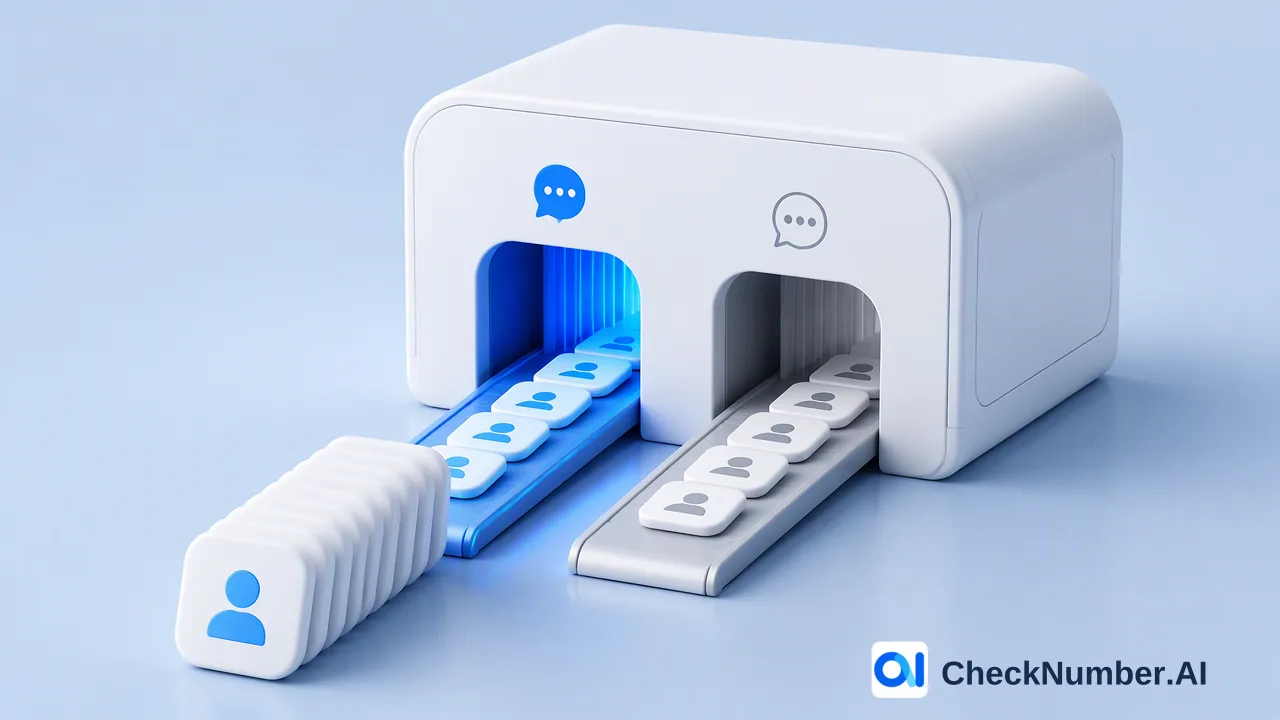
RCS support screening for bulk contact lists is the process of evaluating phone databases to verify which numbers are registered for Rich Communication Services (RCS) or Google Messages prior to launching an outreach campaign. Because RCS functionality depends on specific device, carrier, and client configurations, standard phone number validity does not indicate rich messaging availability. By performing bulk pre-send verification, organizations can categorize contact records, allocate campaign budgets across rich media and standard SMS channels, and direct rich interactive content exclusively to supported handsets.
The Role of RCS in Modern Messaging
Rich Communication Services (RCS) represents an evolution over conventional Short Message Service (SMS) protocols. Designed to bring modern interactive capabilities to native mobile messaging, RCS enables features such as high-resolution image and video delivery, verified sender branding, read receipts, and typing indicators. However, RCS availability is not universal across all mobile subscribers. While SMS operates across virtually every cellular device connected to a mobile network, RCS requires specific client software (such as Google Messages), compatible handset hardware, and mobile network operator support. Because of these prerequisites, marketing and technical teams cannot assume that every reachable mobile phone number can process an RCS payload. Screening lists specifically for RCS capability helps teams identify which recipients can receive rich interactive assets before dispatching high-bandwidth campaigns.
Why Bulk Screening is Essential for Campaign Efficiency
When managing large subscriber databases, attempting to deploy rich messaging campaigns without prior verification introduces operational friction. Rich communication channels often carry distinct routing logic, operational overhead, and asset requirements compared to legacy text messaging. Dispatching rich media payloads to numbers that lack RCS registration can lead to failed transactions or unoptimized fallbacks. Performing RCS support screening for bulk contact lists allows organizations to audit high-volume databases systematically. Bulk checking services like CheckNumber.AI support large-scale list processing using CSV or TXT uploads alongside REST API access. This workflow evaluates numbers against the RCS platform to supply a point-in-time platform-registration signal. In turn, campaign operations teams can precisely segment audiences, align messaging budgets, and prevent allocating rich content resources to incompatible devices.
Preparing Your Data for RCS Screening
Accurate platform verification requires proper list hygiene before initiating a check. Teams should distinguish between initial data formatting and platform-specific registration checks. Formatting and normalization routines ensure that country codes, area prefixes, and subscriber digits conform to standardized telecommunication standards, resolving common data entry anomalies. Once formatting is normalized, the contact list can be submitted for bulk RCS screening. Organizations should also establish protocols for re-screening historical lists. Mobile subscribers regularly change carrier plans, switch between operating systems, or migrate across devices. Re-evaluating historical contact databases prior to major marketing initiatives informs routing systems of recent platform migrations, helping maintain high hygiene standards across CRM databases.
Categorizing Contacts by RCS Support Status
Following an RCS screening check, databases should be partitioned into actionable audience segments based on the returned platform signal:
- RCS-Supported Contacts: Numbers confirming active registration with RCS or Google Messages. These records can be scheduled for interactive conversational templates, carousel elements, high-resolution media, and rich action buttons. * Non-RCS Contacts: Numbers where an active RCS registration signal was not detected at check time. These records should be directed to alternative channels, such as standard SMS or email workflows. It is critical to note that an inactive RCS status does not imply that the phone number is invalid, disconnected, or unreachable on other communication rails. The line may remain fully active for cellular voice calls and plain SMS messaging. Categorization simply informs channel selection, supporting deliberate content distribution without discarding viable customer contacts.
FAQ
Why do organizations need to re-screen contact lists before new campaigns?
Contact capabilities change over time as subscribers switch mobile operating systems, upgrade devices, or change mobile network operators. An individual who lacked RCS support during a previous campaign may have since activated a compatible client, while another user may have moved to a configuration without RCS support. Re-screening historical lists provides an updated platform-registration signal for accurate audience planning.
Is an RCS support check the same as general phone number validity?
No. Format normalization and general telecommunication validity checks only evaluate whether a number adheres to standard numbering plans or active carrier routing. An RCS check specifically evaluates whether that number is actively registered with RCS or Google Messages. A phone number can be fully operational for voice calls and standard SMS while remaining entirely unsupported for RCS.