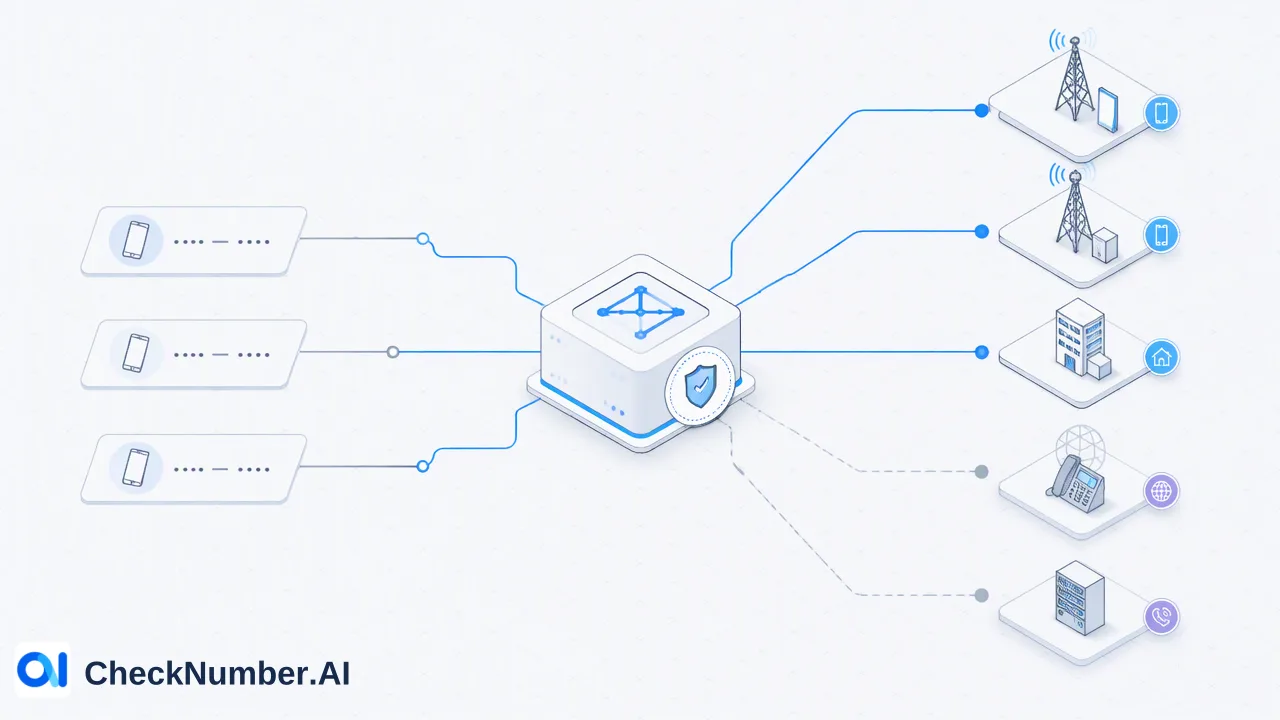
CheckNumber.AI
 · 5 min read
Segmenting Professional Contact Lists: A Framework for Career-Stage Targeting
A strategic framework for professional contact list segmentation based on career maturity, role milestones, and platform signals rather than age demographics.
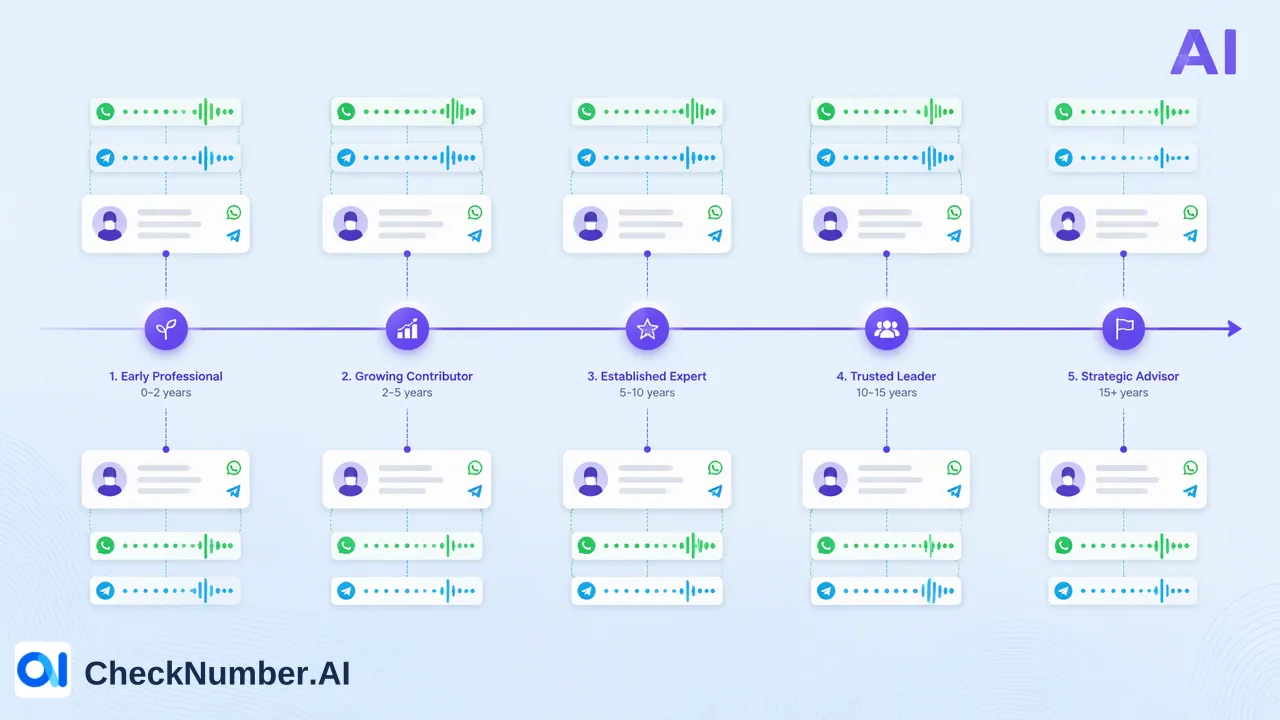
Professional contact list segmentation is most effective when structured around career stage and professional maturity rather than chronological age. Categorizing professionals by their organizational responsibilities, functional expertise, and seniority milestones helps organizations deliver relevant messaging tailored to operational priorities, such as skill acquisition for early-career professionals or governance for senior leadership. Pairing these maturity tiers with check-time platform-registration and activity signals gives organizations clearer context on channel availability, supporting data hygiene and sustainable campaign engagement.
The Limitations of Age-Based Segmentation in B2B Data
Relying on chronological age to segment professional contact lists introduces significant distortion into business communication. Unlike consumer markets where age may correlate with life events or lifestyle categories, B2B decision-making depends primarily on organizational context, technical domain, and fiscal responsibility. A professional in their early thirties might be an entry-level career changer, a specialized technical contributor, or a founding executive with budget authority. Applying broad generational labels or arbitrary age brackets risks misclassifying their actual business needs. Junior professionals targeted with executive messaging may find the content unactionable, while senior decision-makers receiving foundational explainers may disengage. Focusing on professional maturity and current operational scope ensures that communication addresses the actual challenges contacts encounter in their daily workflows.
Defining a Career-Stage Framework for Professional Contacts
A structured career-stage framework categorizes contacts by organizational impact, strategic authority, and core responsibilities rather than tenure alone. Mapping content and outreach approaches to specific career milestones helps organizations maintain message alignment:
- Early-Career and Foundational Contributors: Contacts in entry-level, apprentice, or coordinator roles prioritize functional execution, practical skill-building, process mastery, and day-to-day tool adoption. Content centered on tutorials, workflows, and fundamental best practices resonates best. * Mid-Career and Technical Specialists: Senior individual contributors, managers, and functional leads evaluate operational efficiency, workflow integration, team productivity, and comparative tool performance. Relevant resources include technical documentation, implementation blueprints, and tactical case studies. * Strategic and Executive Leadership: Department heads, vice presidents, and C-suite executives focus on risk management, governance, cross-departmental alignment, resource allocation, and organizational strategy. Content for this group requires concise strategic insights, high-level impact summaries, and governance frameworks. Organizing contact databases according to these distinct tiers establishes objective boundaries for communication campaigns, reducing list fatigue and improving recipient engagement.
Enhancing Professional Contact List Segmentation with Platform Signals
Firmographic and demographic attributes define who a contact is, but they do not confirm whether a contact is reachable on a given communication channel. Integrating check-time platform signals with enriched profile attributes bridges this gap. Bulk checking services like CheckNumber.AI support this workflow by evaluating phone-number and email lists across communication networks. For example, the LinkedIn Email Profile Checker checks LinkedIn registration for email identifiers and provides professional and demographic profile enrichment, including location context and career details. Similarly, checkers for messaging platforms such as WhatsApp and Telegram provide check-time platform-registration signals, with Telegram Days Checker offering available account-presence and activity context. | Signal Type | Input Identifier | Output Context | Workflow Value | | :--- | :--- | :--- | :--- | | Professional Enrichment | Email | LinkedIn registration, profile attributes, location | Refines career-stage classification and role alignment | | Activity Signal | Phone Number | Telegram last-seen or activity context | Informs contact prioritization for active channels | These platform-registration signals indicate channel presence at the time of inspection.
Maintaining Data Hygiene for Long-Term Accuracy
Professional contact lists decay as individuals transition between roles, change organizations, or abandon secondary communication channels. Maintaining segmentation accuracy requires consistent data hygiene practices and flexible schema design. To preserve data integrity, organizations should maintain a unified data schema that tracks three primary fields alongside core contact records:
- Data Source Origin: The original capture channel or import batch for the record. 2. Platform Status: Check-time platform-registration status, activity signals, and timestamp details. 3. Maturity Segment: The assigned career stage based on enriched job titles, functions, and responsibilities. Using bulk CSV or TXT uploads or automated REST API endpoints allows teams to periodically refresh platform status fields across large databases. Organizations can then apply iterative testing to evaluate engagement metrics—such as open rates, click-through rates, and unsubscribes—across each career-stage bucket. If mid-tier managers show higher engagement with strategic briefs than operational guides, teams can dynamically calibrate segment thresholds without corrupting underlying profile data.
FAQ
Why is career-stage segmentation preferred over age-based segmentation?
Age brackets do not reliably indicate a professional’s purchasing power, operational responsibilities, or business challenges. Two professionals of the same age may hold vastly different roles, ranging from individual contributors to corporate directors. Segmenting by career stage and maturity aligns messaging with day-to-day business problems, strategic priorities, and organizational authority, resulting in more relevant communication.
How do platform-registration signals support professional contact list segmentation?
Platform-registration signals confirm whether a specific identifier is associated with an account on a given communications channel at check time. This context helps teams route outreach to active communication channels and filter dormant records before deploying resources.
How can teams integrate professional enrichment data into existing contact lists?
Organizations can integrate professional enrichment data by appending standardized role attributes, such as job function, industry, and seniority level, to existing records using bulk checking services or REST APIs. Maintaining these attributes alongside platform status fields in a unified schema ensures that contact records remain actionable across marketing and outreach platforms.