CheckNumber.AI
 · 4 min read
Registration vs. Purchase: Why Platform Account Status Isn't a Proxy for Customer Activity
Platform registration signals show reachability at check time, while internal CRM records track purchase history and customer engagement.
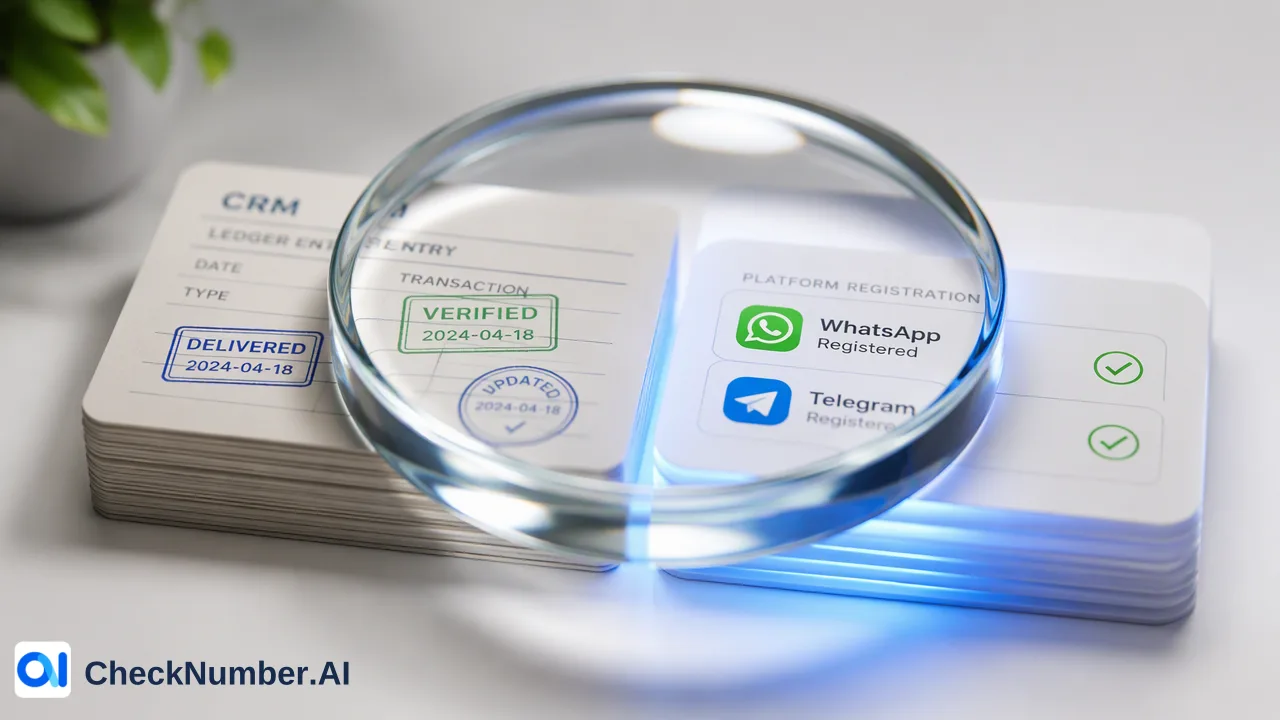
A phone number’s registration status on a platform confirms account existence at the time of the check, but it does not represent purchase history or user engagement. High-performing data architectures keep these layers distinct, using platform checks to evaluate channel presence before directing outreach based on internal business records.
Understanding Platform Registration Signals
Evaluating customer databases across communication channels requires clarity regarding what external data signals confirm. When teams query a phone number against communication networks or messaging ecosystems using tools like CheckNumber.AI, the response provides an account-presence signal. This lookup verifies whether the identifier is currently associated with a valid account on that designated platform at the moment of verification. While this verification is valuable for determining delivery feasibility, confusion arises when organizations treat presence as synonymous with transactional interest. An individual may register an account on a digital storefront or messaging application once, but never complete a transaction. Conversely, high-value purchasers may change contact details, leaving dormant profiles behind. By treating platform signals as channel-reachability metrics rather than intent scores, operations teams avoid inaccurate segmentation.
Platform Signals as Enrichment, Not CRM Replacement
Internal CRM databases store transaction histories, customer support interactions, lifecycle stages, and explicit purchase timestamps. These proprietary records constitute first-party truth regarding who buys, how frequently they order, and what volume they generate. External verification checks cannot reconstruct this operational context. Instead, platform registration data serves an enrichment role. Adding external presence checks to internal contact lists helps teams answer concrete routing questions:
| Data Layer | Primary Information Provided | Best Workflow Application |
|---|---|---|
| Internal CRM Records | Historical transactions, order frequency, customer lifetime value | Determining audience segments and purchase readiness |
| Platform Registration Checks | Account existence and channel presence at check time | Routing outbound notifications to valid destinations |
| Formatting & Syntax Checks | Standardized number syntax and country code structure | Pre-processing lists before enrichment lookups |
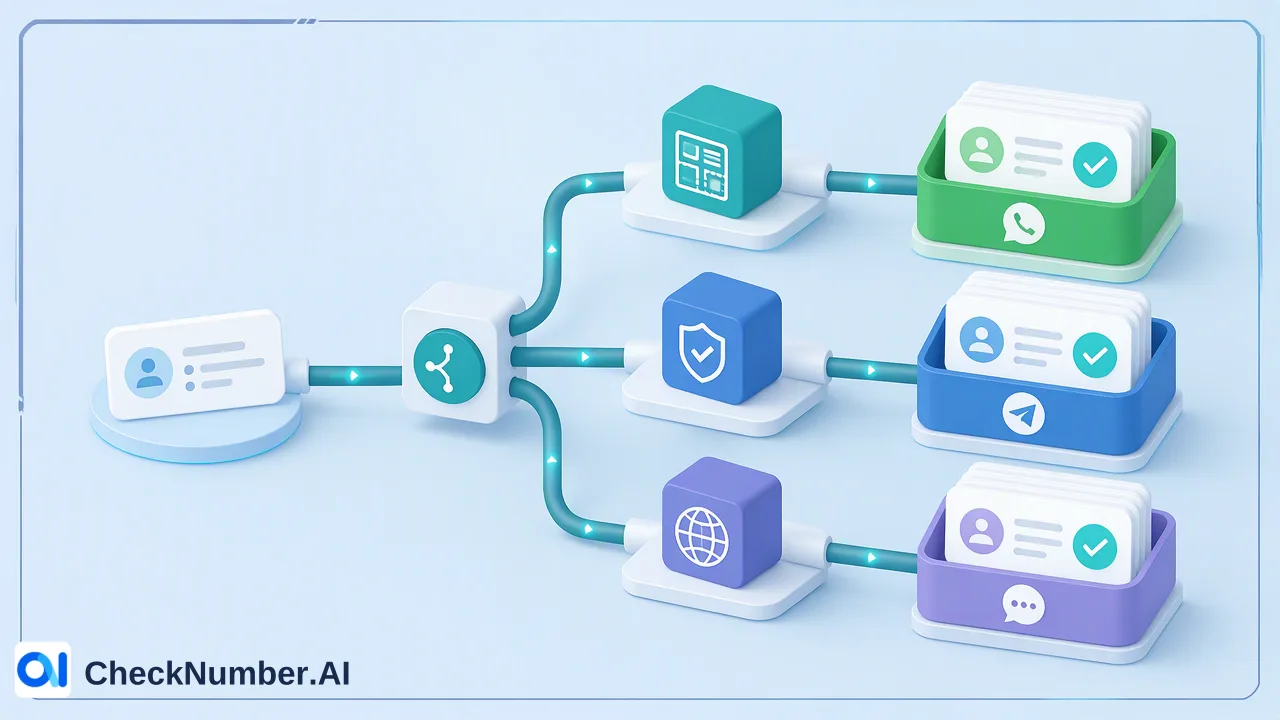
| When these streams operate together, teams maintain clean customer segmentation. A retail brand, for example, can filter its CRM for customers who purchased within the last ninety days, then run a WhatsApp Number Checker or Telegram Checker via CheckNumber.AI to identify which of those confirmed buyers can receive direct mobile updates. |
Data Hygiene and Verification Workflows
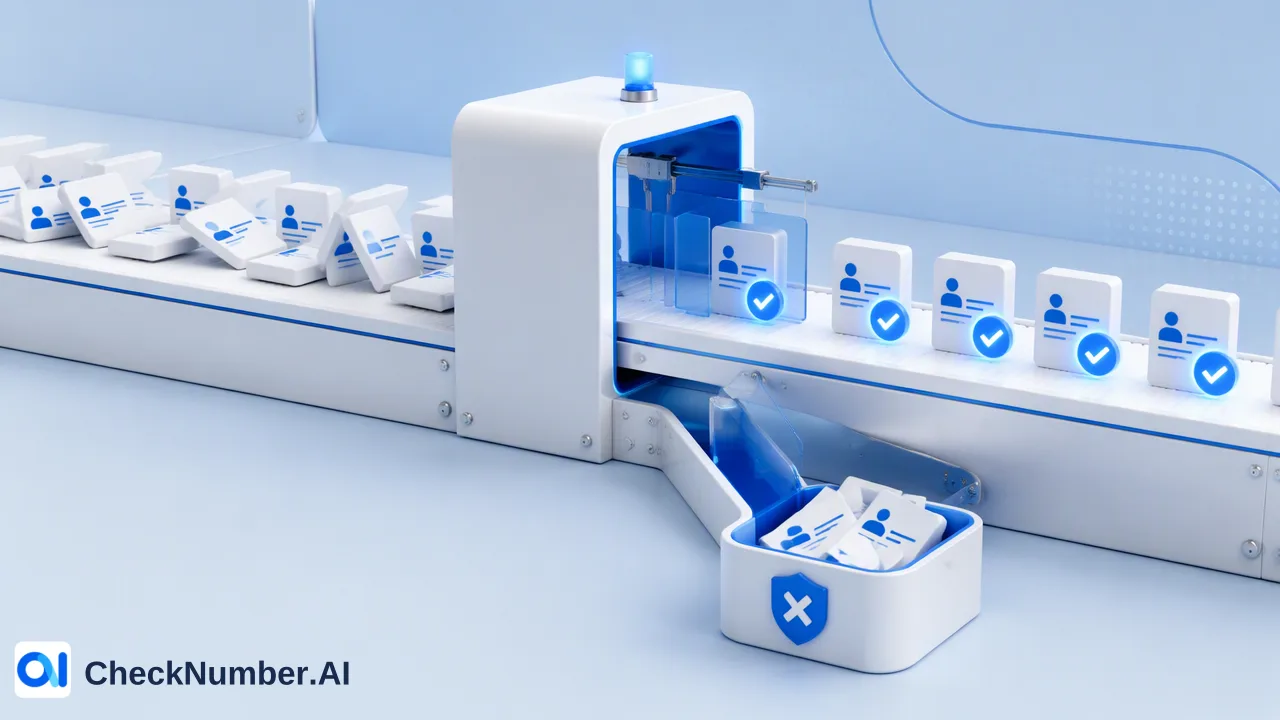
Effective data processing follows an ordered sequence. Before evaluating channel presence, organizations must clean and standardize their contact lists. Basic phone number normalization addresses missing country prefixes, non-numeric punctuation, and malformed area codes. Running checks against unstandardized lists increases processing overhead and distorts matching results. Once raw lists undergo normalization, teams can upload records in bulk using CSV or TXT formats or connect directly through a REST API. For communication platforms such as Telegram, specialized modules provide deeper account context. Products such as the Telegram Days Checker review account presence alongside available activity or last-seen timing, while the Telegram Age & Gender Checker provides available profile context. These capabilities help marketing and operational teams refine list distribution without confusing profile presence with documented sales intent.
FAQ
Does a registered account indicate an active customer?
A platform registration signal confirms that an account exists associated with that phone number at check time. It does not measure recent platform usage, transaction frequency, or customer intent. Teams should combine account-presence signals with internal interaction telemetry to assess overall activity.
How can teams combine platform checks with CRM data?
Organizations typically ingest platform registration results as enrichment attributes alongside customer records. The CRM retains transaction timestamps, order values, and service tickets, while the platform signal informs channel availability for messaging campaigns or direct communications.
Why should businesses separate platform status from purchase intent?
Platform accounts often outlive commercial interest. A user may establish an account on an app or messaging service and subsequently abandon it without closing the profile. Relying on platform presence alone can misdirect marketing spend toward inactive recipients who have no recorded buying intent.