CheckNumber.AI
 · 4 min read
No-Code Routing After a Number Check: Automated Lead Workflows
Learn how to build an automated no-code lead routing workflow using phone number and email list verification signals to segment inbound records efficiently.
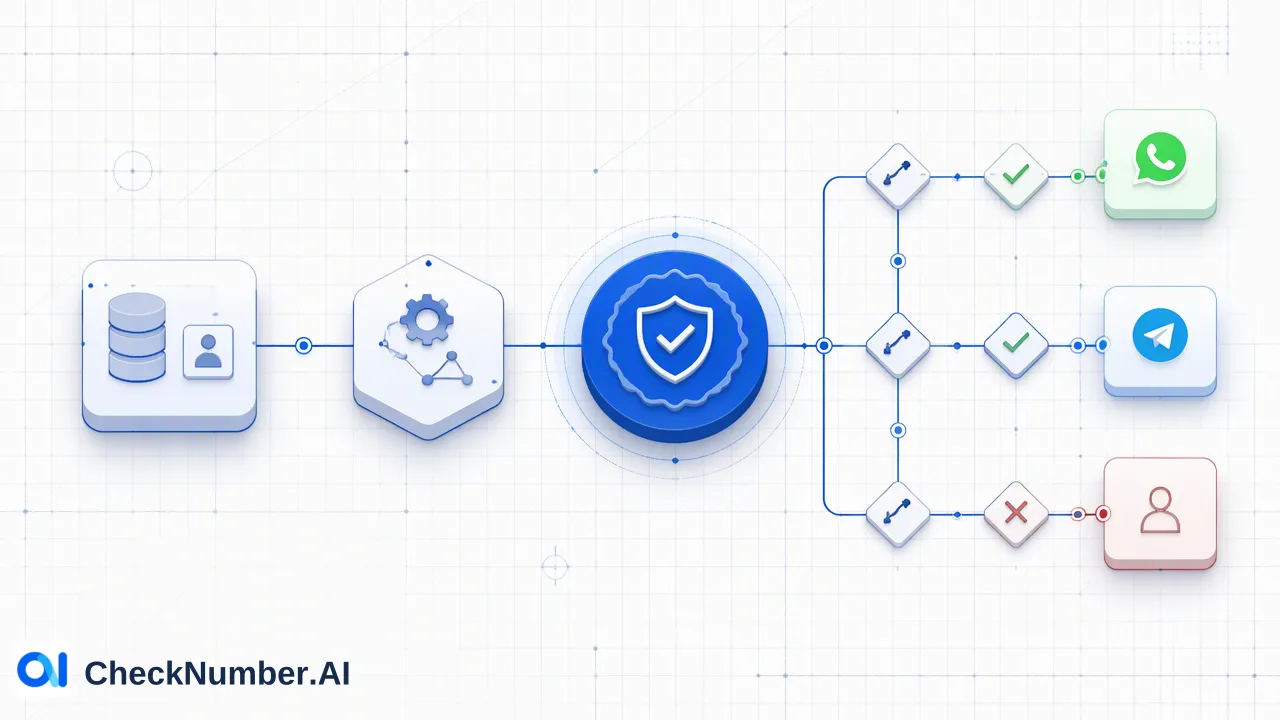
Phone verification no-code routing connects customer relationship management (CRM) platforms and visual workflow automation tools to verification services via REST API. When a new contact record enters the database, the automation triggers a verification check against phone or email data. The workflow receives the returned platform registration signal or validity status at check time, attaches corresponding operational tags to the lead profile, and conditionally routes the record to designated sales, support, or review queues without requiring custom backend code.
The Role of Automated Verification in Lead Management
Manual data inspection creates operational bottlenecks when inbound lead volume expands. Marketing campaigns, web forms, and lead generation funnels frequently introduce unstructured, unverified, or misformatted contact entries. When sales teams attempt outreach without prior data checks, operational resources are spent on unreachable lines or misallocated queues. Automating verification at the entry stage reduces manual data handling and enforces consistent pipeline governance. CheckNumber.AI operates as a bulk phone-number and email list checking service, providing REST API access alongside file upload workflows. By embedding automated API queries directly into inbound pipeline mechanics, organizations ensure that data signals are evaluated before team assignments occur. This early evaluation establishes structured routing baselines, preventing unreviewed contacts from idling in general sales inboxes or misdirecting campaign workflows.
Designing the No-Code Workflow
Constructing an automated routing architecture involves connecting an inbound data collector, a no-code logic connector, and the verification endpoint. The architecture operates through a standard sequence of triggers, actions, and conditional branches:
- Trigger: Inbound Lead Creation The workflow initiates whenever a new contact or lead record is created in a CRM, web form collector, or marketing automation database. 2. Action: Automated REST API Verification Check The visual automation tool extracts the phone number or email string from the record and dispatches an HTTP request to the CheckNumber.AI REST API. 3. Decision: Conditional Branching and Tagging Upon receiving the check response, the automation evaluates the returned data against internal filtering rules. The system writes operational status tags back to the lead record (such as platform presence or verification completion) and routes the contact to the appropriate representative, campaign sequence, or compliance hold queue. This structured sequence prevents human triage delay and standardizes record processing across every inbound contact channel.
Routing Logic Based on Platform Signals
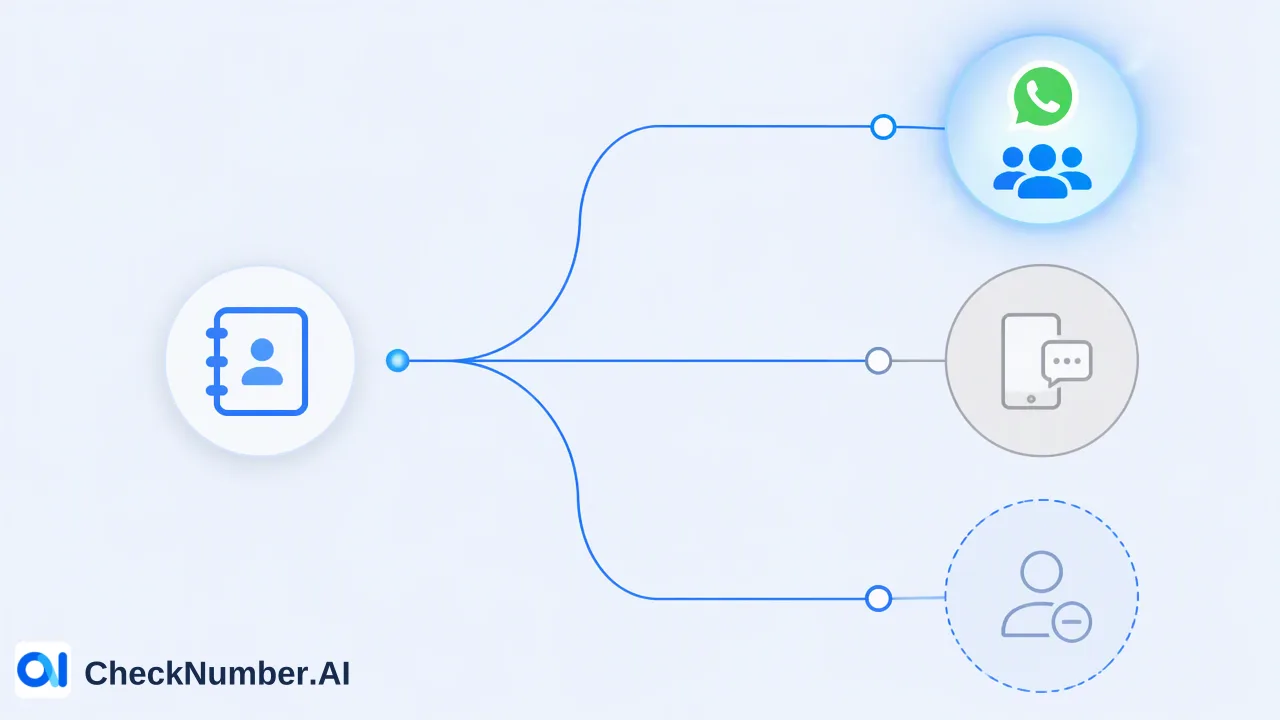
Different communication channels require distinct operational routing logic. Platform-specific checkers, such as the WhatsApp Number Checker and Telegram Checker, provide reachability context by determining whether a phone number is registered with that respective platform at the time of the check. Organizations can establish conditional routing rules based on these check-time platform signals:
| Verification Signal | Workflow Action | Routing Destination |
|---|---|---|
| WhatsApp Registered | Apply channel tag; update preferred messaging property | Specialized WhatsApp outreach sequence or regional sales team |
| Telegram Registered | Apply platform tag; assign to direct messaging queue | Community engagement team or direct messaging rep |
| Not Registered on Target Platform | Retain default phone status; flag alternate channel requirement | Standard voice calling queue or email nurture sequence |
| Treating platform registration as reachability context rather than identity proof ensures pipeline governance remains accurate and compliant. |
Optimizing Your Lead Pipeline
Implementing automated verification signals within a no-code infrastructure improves pipeline hygiene and team coordination. Verification data provides objective inputs that inform downstream workflow decisions, ensuring that inbound records meet operational requirements before entering active sales stages. Automating these evaluations guarantees the consistent application of routing criteria across large contact volumes. Teams avoid subjective sorting and reduce lag between lead submission and initial contact. Because bulk checking and REST API integration support scalable contact evaluation, organizations can process high-volume lists or individual records with equal consistency, keeping internal pipelines organized, segmented, and actionable.
FAQ
What is no-code routing in lead management?
No-code routing is an architectural approach that uses visual automation builders to direct incoming lead records through specific business logic, stage transitions, and team assignments based on predefined attributes and verification signals, eliminating the need to write and maintain custom software integrations.
How does a platform registration signal help with lead routing?
Teams use this check-time presence signal to route records into platform-specific outreach tracks or assign them to specialized representatives equipped for those channels.
Can organizations automate verification for both phone numbers and email lists?
Yes. CheckNumber.AI supports bulk checking workflows across both phone numbers and email lists through REST API access and file uploads, allowing automation platforms to submit either identifier type and direct incoming records according to channel-specific validation rules.