CheckNumber.AI
 · 3 min read
Optimizing Messaging Spend with Pre-Send Phone Verification
Learn how pre-send phone verification and platform registration checks help teams refine contact lists, route across channels, and optimize messaging budgets.
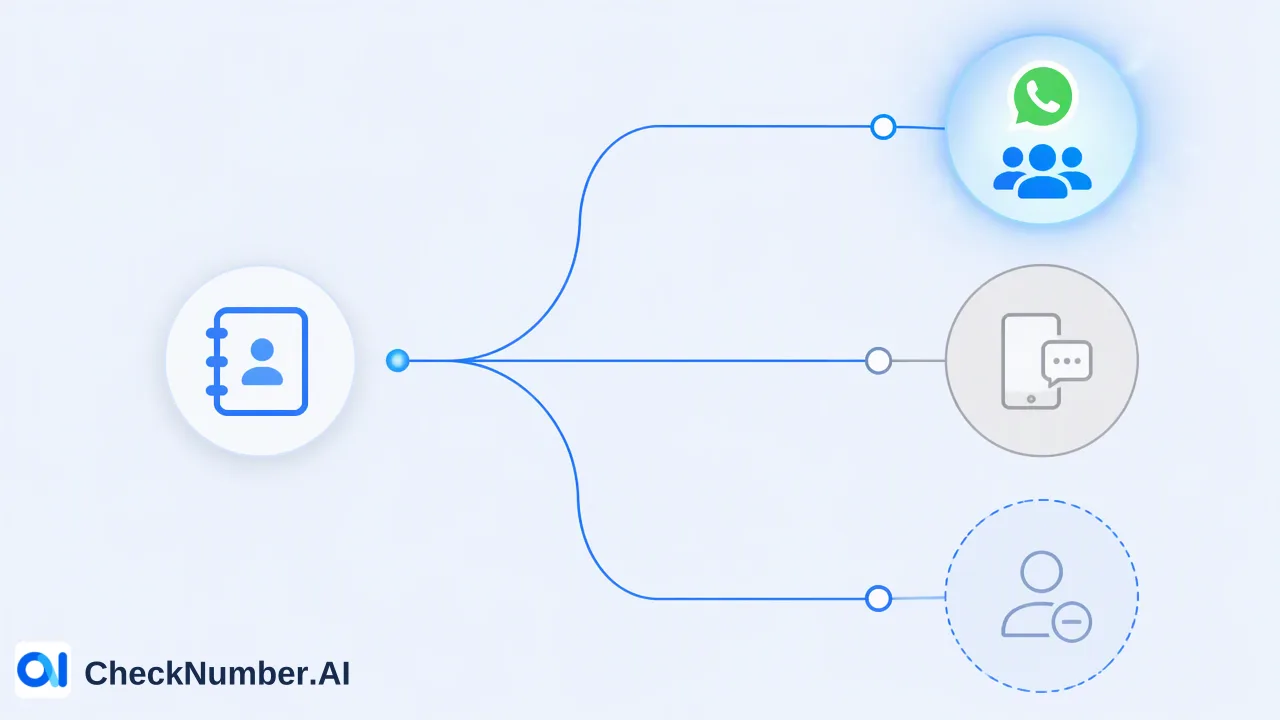
Conducting phone verification before messaging send decisions helps organizations allocate communication budgets efficiently by assessing reachability prior to dispatch. Rather than transmitting messages blindly to unverified lists, teams evaluate platform registration signals—such as WhatsApp or RCS availability—alongside format validation. This pre-send evaluation informs channel routing, reduces wasted spend on incompatible destinations, and supports cleaner audience segmentation.
The Strategic Value of Pre-Send List Verification
High-volume outbound communication incurs significant delivery costs across SMS, rich messaging, and instant messaging networks. When marketing, operational, or support teams broadcast to legacy databases or unsegmented lead files, budget is frequently expended on unreachable endpoints or inappropriate channels. Integrating phone verification before messaging send workflows introduces an upstream evaluation layer. CheckNumber.AI operates as a bulk phone-number and email list checking service, providing teams with data to evaluate contact records before executing dispatch jobs. Filtering identifiers through bulk checks allows organizations to refine list composition, verify structural integrity, and make informed dispatch choices prior to committing financial resources.
Evaluating Platform-Specific Reachability Signals
Basic data hygiene often begins with format or normalization checks, which verify that a number conforms to standard numerical syntax. However, structural correctness alone does not indicate whether a number can receive rich media, interactive cards, or specific over-the-top (OTT) communications. Platform registration signals bridge this informational gap by confirming whether an identifier is associated with a specific ecosystem at check time:
- RCS Checker: Assesses phone numbers to generate a platform registration signal and rich messaging capability signal, supporting audience planning for Google Messages and native RCS. - WhatsApp Number Checker: Generates a platform registration signal indicating whether a number is currently registered on WhatsApp. These indicators provide reachability context for specific channels.
End-to-End Workflow: Integrating Verification Before Dispatch
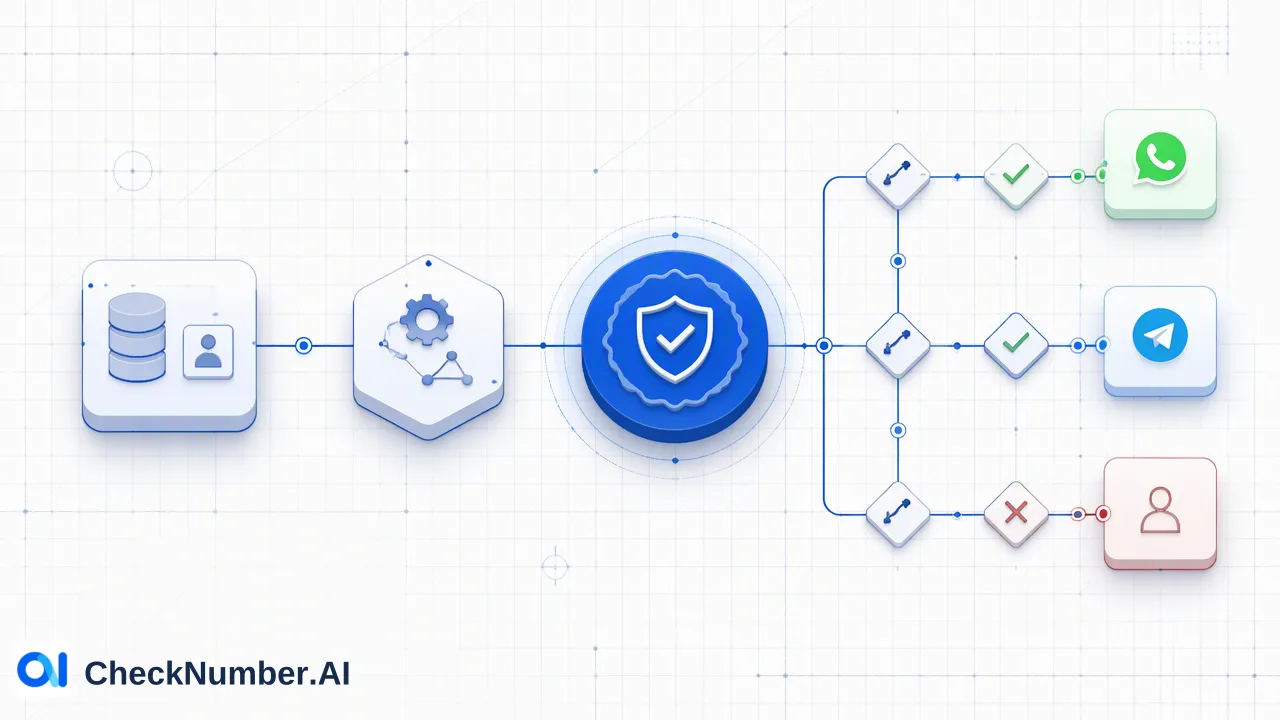
A structured pre-send verification pipeline follows an operational sequence that connects data ingestion, automated evaluation, and messaging engine routing:
- Trigger (List Extraction): The workflow initiates when a campaign audience, transactional queue, or customer segment is generated within an internal database or CRM. 2. Action (Pre-Send Batch Checking): The contact file is submitted for evaluation. Bulk workflows support CSV or TXT list uploads as well as REST API access, accommodating both batch marketing files and automated operational pipelines. Identifiers are checked against selected platform services to determine reachability. 3. Result (Intelligent Routing and Allocation): The checking service returns platform registration signals. Internal business logic processes these outputs to route each record to its optimal channel:
- Identifiers confirmed with RCS capability receive interactive, rich media templates. - Registered WhatsApp identifiers are routed through dedicated conversational paths. - Numbers lacking specific platform registrations can fall back to standard SMS or alternative contact channels, preventing wasted expenditure on unsupported delivery protocols.
Aligning Verification Data with Messaging Budget Allocation
Implementing pre-send checks establishes clear boundaries for communication spend. Messaging platforms often charge varying rates depending on whether a message is an SMS, a conversational utility session, or a rich interactive prompt. Sending high-cost rich messages to destinations that lack client support results in dropped payloads, carrier fallback fees, or failed delivery attempts. By leveraging bulk checking capabilities, organizations ensure each dollar spent corresponds to a verified, platform-compatible endpoint.
FAQ
What is the difference between format validation and platform registration checks?
Format validation evaluates whether a phone string complies with standard numerical structures, such as length and prefix rules. In contrast, a platform registration signal checks whether an identifier is registered with a specific messaging service—such as WhatsApp or RCS—at the time of the query. While format checks confirm structural validity, registration signals provide channel-specific reachability context.
How do pre-send checks support messaging campaign efficiency?
Evaluating lists prior to transmission helps teams identify which numbers can receive channel-specific content.