CheckNumber.AI
 · 4 min read
How to Choose the Right Phone Number Verification Workflow for Your Business
Learn how to choose an effective phone number verification workflow by matching data hygiene tiers, from format validation to platform registration signals, with organizational goals.

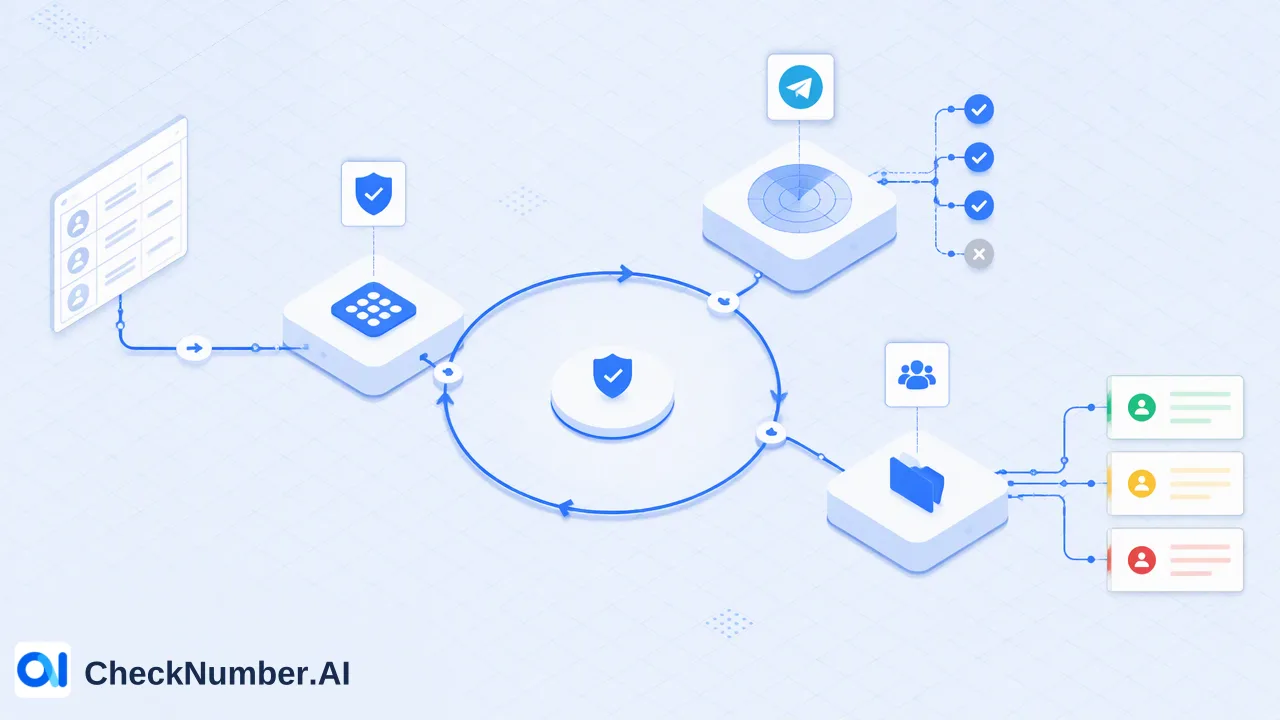
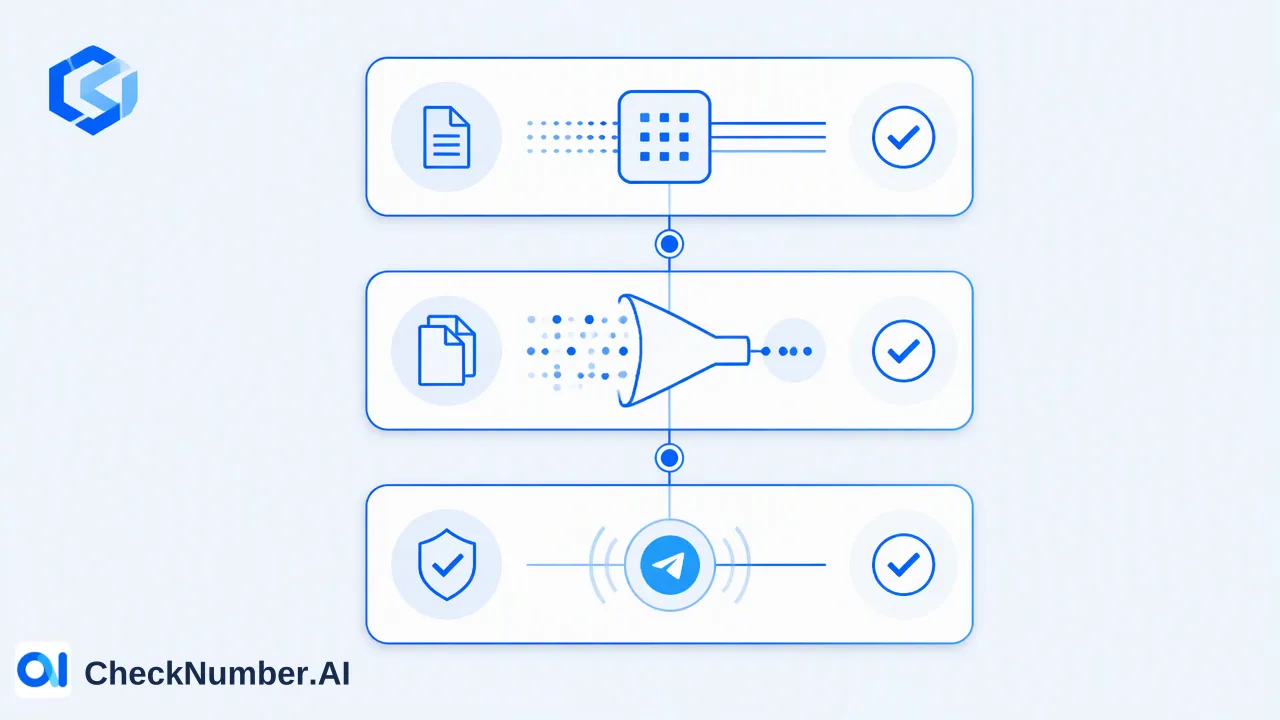
Choosing the right phone number verification workflow involves matching your business goals with the appropriate depth of data validation. An effective architecture treats list hygiene as a multi-stage process rather than relying on a single check. Organizations should begin with foundational format validation to ensure numbers comply with standard numbering plans, followed by carrier and line-type evaluation. For engagement workflows requiring channel-specific routing, teams can layer in platform-specific registration signals at check time to confirm reachability on platforms such as WhatsApp or Telegram before deploying campaigns or synchronizing databases.
The Strategic Importance of Multi-Stage Data Hygiene
Maintaining a high-quality contact database requires a structured, multi-stage approach to data cleaning rather than relying on a single screening tool. Contact records originate from diverse touchpoints, including lead capture forms, legacy CRM migrations, and customer self-service entries. Each collection method introduces risks of typographical errors, synthetic entries, and formatting discrepancies. Treating list hygiene as a phased pipeline allows teams to filter out unusable data progressively. Initial checks quickly isolate malformed inputs, preserving computational resources and operational budgets for deeper inspection tiers. Furthermore, because phone number ownership and platform account states change over time, establishing regular re-verification intervals is essential to prevent database decay and maintain consistent outreach efficiency.
Tier 1: Fundamental Format and Line-Type Validation
The first operational stage in any phone number verification workflow focuses on structural integrity and network classification. Before committing records to messaging platforms or outbound queues, systems must verify that numbers are mathematically sound and capable of routing traffic. - Format Validation: Assesses whether a telephone number complies with international numbering architectures, ensuring valid country calling codes, area codes, and standard lengths. - Carrier and Line-Type Detection: Categorizes numbers into functional types such as Mobile, Landline, or VoIP. Implementing these foundational checks early prevents invalid records from entering marketing automation tools or analytical reporting pipelines.
Tier 2: Platform-Specific Registration and Reachability Signals
While format checks confirm that a number can theoretically exist within a telecommunications plan, they do not indicate whether the subscriber is reachable on specific modern messaging applications. Advanced verification workflows introduce channel-specific signal detection to provide immediate reachability context. For businesses communicating across dedicated messaging channels, verifying platform presence helps avoid wasted transmission attempts:
- WhatsApp Verification: Specialized checkers determine whether an account exists on WhatsApp. More granular checks can provide available last-seen activity or business account context, which supports prioritization of outbound communication lists. - Telegram Verification: Network checks inspect whether phone numbers are registered with Telegram. Extended evaluations can inspect available activity context, account identifiers, or membership details to inform engagement workflows.
Aligning Verification Architecture with Business Scale
Selecting the optimal workflow requires balancing validation depth against organizational scale, technical resources, and operational objectives. Different operational models demand different ingestion mechanisms and signal depths:
| Workflow Stage | Primary Validation Focus | Common Ingestion Method | Core Operational Benefit |
|---|---|---|---|
| Ingestion Hygiene | Format & Line-Type Checks | REST API | Stops malformed data at point of entry |
| Campaign Preparation | Platform Registration Signals | Bulk CSV or TXT List Upload | Confirms platform reachability before dispatch |
| Database Maintenance | Re-verification & Activity Signals | Bulk Batch Processing | Deprecates stale contacts and updates CRM context |
| For large-scale marketing databases and customer support backlogs, batch processing efficiency is vital. Organizations handling tens of thousands of records benefit from bulk list processing via CSV or TXT uploads or automated REST APIs, allowing teams to evaluate extensive datasets simultaneously without building custom scraping or manual inspection infrastructure. |
FAQ
What is the difference between format validation and platform registration checks?
Format validation evaluates whether a phone number strictly adheres to structural and mathematical numbering standards, such as country codes, routing prefixes, and character length. In contrast, platform registration checks determine whether that number is associated with an active account on a specific communication network, such as WhatsApp or Telegram, at the time of the check.
Why is periodic re-verification necessary for contact databases?
Contact databases naturally degrade over time as subscribers change phone numbers, switch networks, or deactivate communication accounts. Periodic re-verification maintains data hygiene, helps teams suppress disconnected or unallocated records, and ensures downstream CRM workflows rely on current reachability context.