CheckNumber.AI
 · 4 min read
Preventing E-commerce Fraud: The Power of Silent Phone Number Verification
Learn how silent phone number verification helps e-commerce businesses reduce fraud and chargebacks without compromising the user experience.
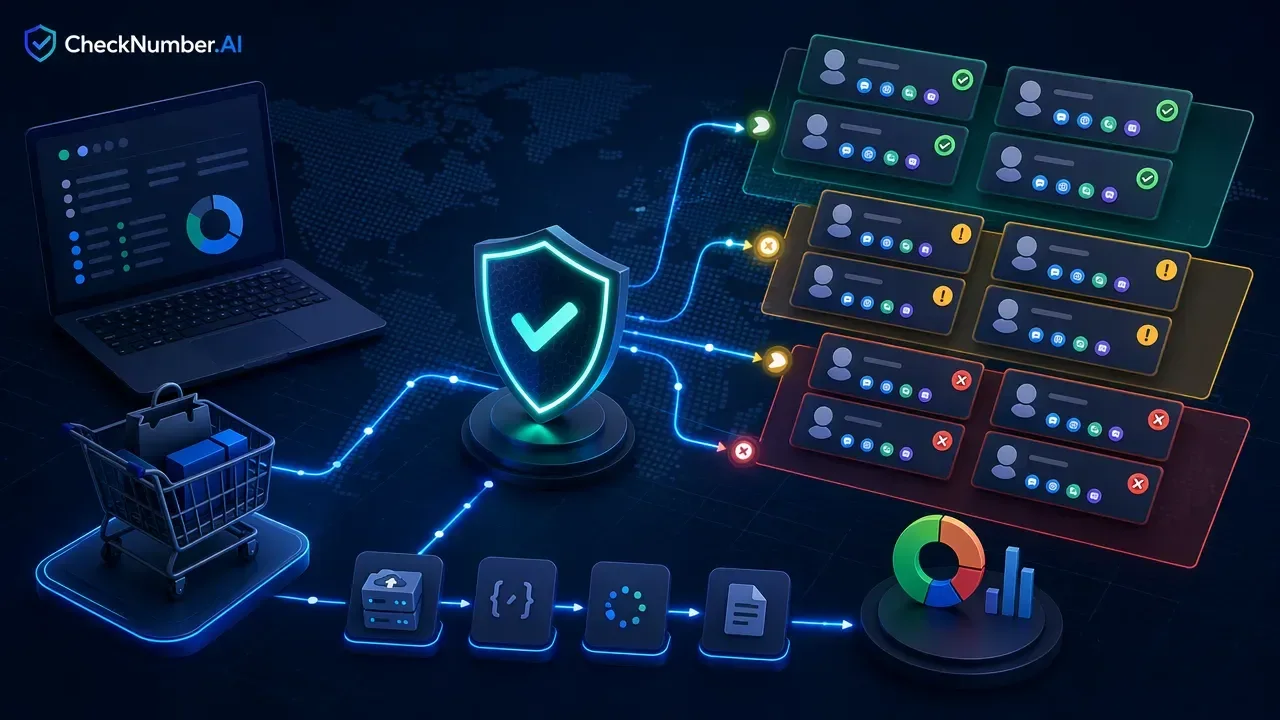
Phone number verification for fraud prevention confirms that a user’s provided contact information is legitimate, active, and reachable in real-time. Unlike intrusive methods that require user interaction, silent verification checks data behind the scenes. This allows merchants to block fake accounts and high-risk transactions instantly, reducing chargebacks and protecting revenue without adding friction to the checkout experience.
→ Start verifying — get 1,000 free checks →
The Rising Cost of E-commerce Fraud
E-commerce fraud remains a significant threat to global retail. According to industry reports, global e-commerce fraud losses are projected to reach $48–53 billion by 2025. This financial impact is driven by sophisticated tactics such as New Account Fraud (NAF), where bad actors use stolen identities or automated scripts to create multiple accounts for illegal activity. For merchants, the challenge is to implement robust security that stops these threats without driving away legitimate customers who demand strong security measures.
What is Phone Number Verification?
Phone number validation is a multi-faceted approach used to assess the legitimacy, activity, and risk associated with a user’s phone number. It goes beyond simple syntax checks to determine if a number is currently active and whether it is associated with high-risk behavior. By integrating this process into checkout and payment flows, businesses can effectively reduce chargebacks and prevent the creation of fake accounts.
Why Silent Verification is the Gold Standard
The primary advantage of modern verification is its ‘silent’ nature. Silent verification ensures a frictionless user experience by not requiring any user interaction, such as entering a one-time password (OTP) or responding to an SMS. Because the verification happens in the background, customers can complete their purchases without interruption, which is critical for maintaining high conversion rates.
Real-Time vs. Cached Data
For effective fraud prevention, the quality of data is paramount. Real-time data analysis is superior to cached databases because it provides an up-to-the-minute status of a phone number. Static or cached databases may contain outdated information, leading to false positives or missed fraud attempts. Real-time verification ensures that the risk assessment is based on the current state of the number, providing a more accurate defense against evolving fraud tactics.
Implementing CheckNumber.AI
CheckNumber.AI provides a robust solution for businesses looking to secure their platforms. The service supports silent verification across 50+ platforms, allowing merchants to validate user data without friction. Whether you are a developer integrating via REST API or a business owner using the no-code platform for bulk uploads, CheckNumber.AI offers the flexibility to scale your security efforts. By leveraging real-time checks, businesses can proactively identify and block fraudulent activity before it impacts the bottom line.
Where to Place Verification in the Buyer Journey
Silent phone checks can be used at several points in an e-commerce workflow. At account creation, they help identify malformed or unsupported numbers before a profile is trusted. At checkout, they can add context when an order has high-value goods, unusual shipping information, or a mismatch between billing and contact details. During promotions, they can help reduce repeat abuse from the same contact pool. After purchase, they can support review queues before refunds, reshipments, or manual account changes.
The best placement depends on your tolerance for friction. Low-risk orders can continue without interruption, while higher-risk combinations can trigger step-up verification, manual review, or a temporary hold. This keeps the customer experience smooth for normal shoppers while giving risk teams an earlier signal for suspicious patterns.
Practical Decision Rules for Merchants
A simple rule set can make the signal easier to use. Valid and consistent records can continue through checkout. Records with formatting issues can be corrected before payment. Unsupported or conflicting records can trigger a second check, an email confirmation, or a manual review. Repeated attempts from the same normalized contact, region, device, or promotion code can be flagged for further investigation.
These rules should be documented and reviewed regularly. Fraud patterns change, and a rule that works during a normal week may be too strict during a seasonal sale or too loose during an attack. Tracking outcomes by rule helps teams tune thresholds without turning phone verification into a blunt blocking tool.
FAQ
How does phone verification improve checkout conversion?
By using silent verification, you can validate user data instantly without requiring the customer to perform extra steps like entering OTPs or clicking verification links, which keeps the checkout process fast and frictionless.
Is phone verification a replacement for other fraud tools?
No, phone verification should be part of a multi-layered security strategy. It works best when combined with other signals like IP address analysis, device fingerprinting, and behavioral analytics to create a comprehensive defense.
Can I verify numbers without sending an SMS to the user?
Yes. Silent verification methods allow you to assess the legitimacy and risk of a phone number without sending any messages or alerts to the account owner, ensuring the process remains invisible to the customer.