CheckNumber.AI
· 5 min read
Mobile Carrier Detection API: A Workflow for Carrier and Line-Type Data
A developer workflow for keeping carrier data separate from other phone signals.
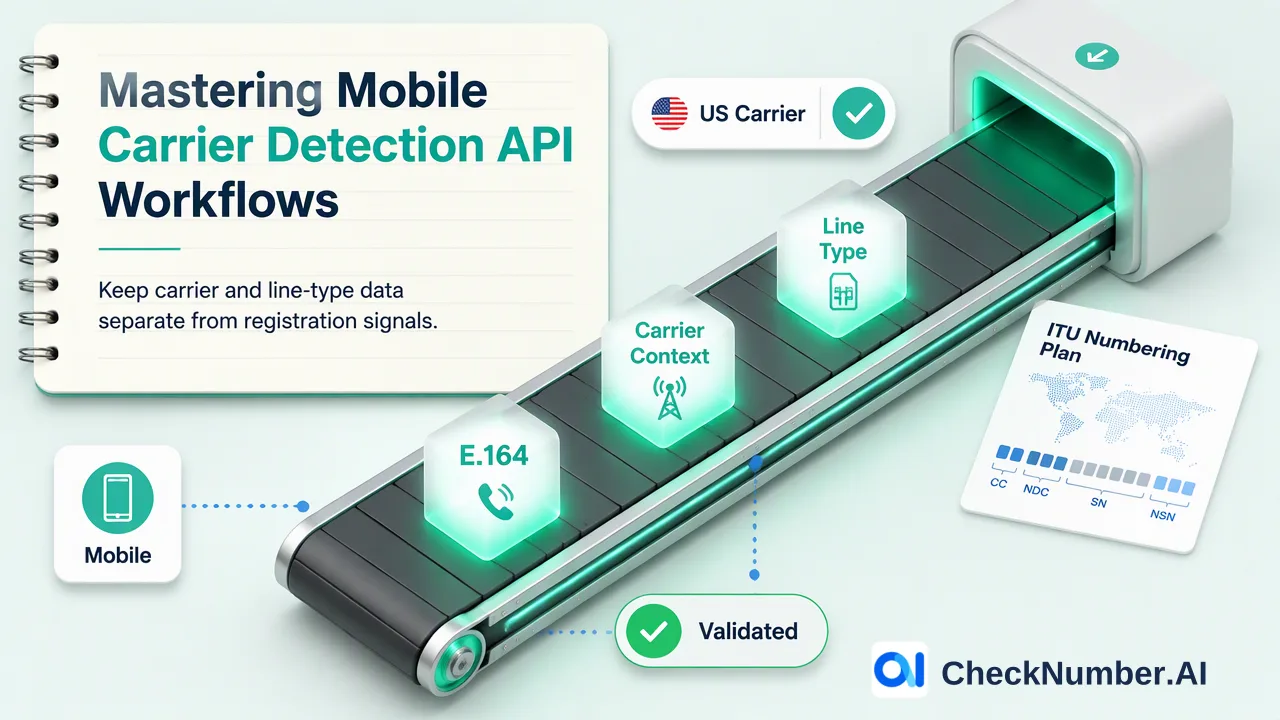
A mobile carrier detection API supports a phone-data workflow when the team needs carrier and line-type context for a list. Prepare country-coded numbers, select the appropriate carrier product, and keep its result separate from platform registration or validity checks. Check the current product API documentation for supported request and result details before implementation.
Define what the carrier question is
A developer should begin with a decision statement, such as “which source records need a mobile versus landline review?” or “which carrier group should an operations team inspect?” That keeps the integration focused. Carrier intelligence can inform CRM hygiene, lead-intake review, and a customer’s own SMS routing decisions. It is one input to those decisions, not a promise that a message will reach a device.
The Global Carrier Checker documents carrier, line type, country, and regional context across supported countries. The Advanced US Carrier Checker is the named product for United States and Canada numbers, with carrier, line type, and regional context. These are product-level capability descriptions. The integration should consult the current CheckNumber API documentation for available methods, fields, and limits rather than assuming the two products share a schema. The ITU international numbering plan is a useful reference when designing the input-normalization stage.
Place the check in a controlled data pipeline
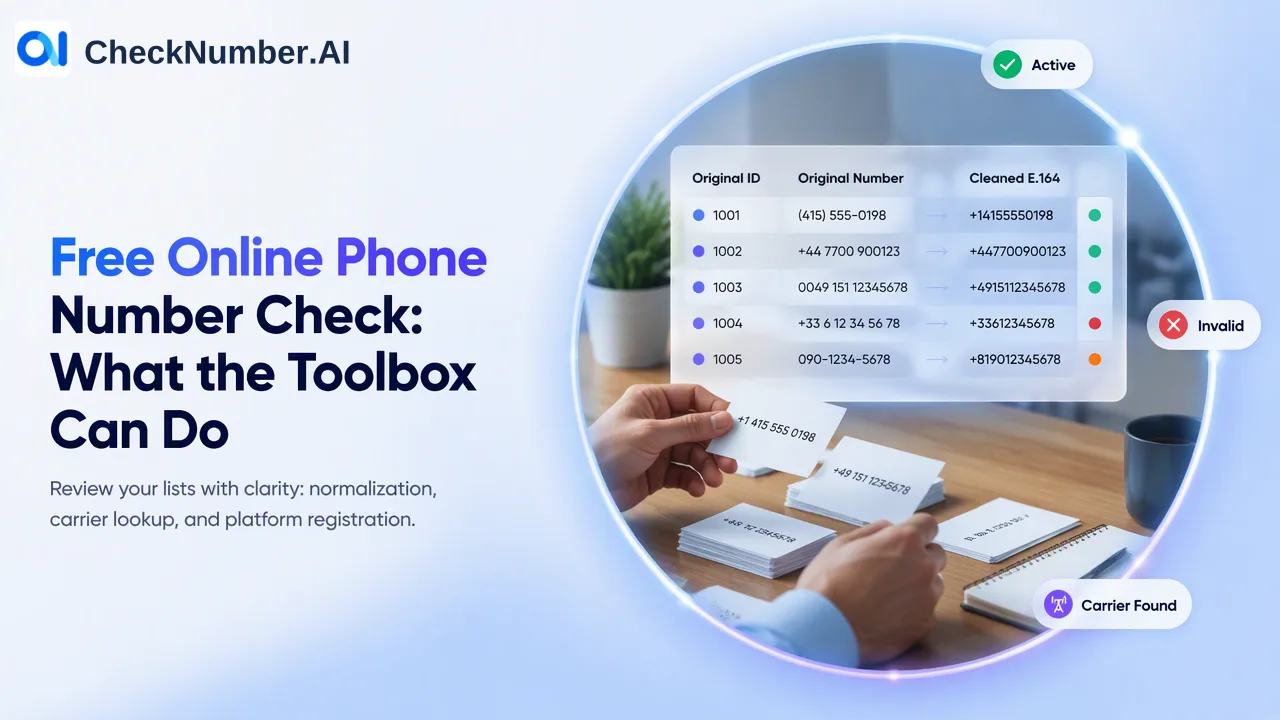
At intake, retain the source system’s stable record ID and the declared country. Create a working copy of the phone list and normalize it with Number Cleaner, which converts values to E.164 and removes duplicates and invalid entries before a dedicated check. Reconcile cleaned values back to source records under the team’s own merge policy. A duplicate number need not imply duplicate people, so avoid deleting CRM records solely because two rows share a normalized number.
Prepare one country per upload file and one number per line with the country code; the plus sign is optional under the documented phone-list convention. For a cross-border CRM, partition the list before the check rather than sending an unreviewed mixture. Also confirm each selected product’s country coverage in its current selector. The key implementation detail is the mapping between a checked phone number and the team’s source ID. Preserve that mapping outside the checker so an export can be joined back safely.
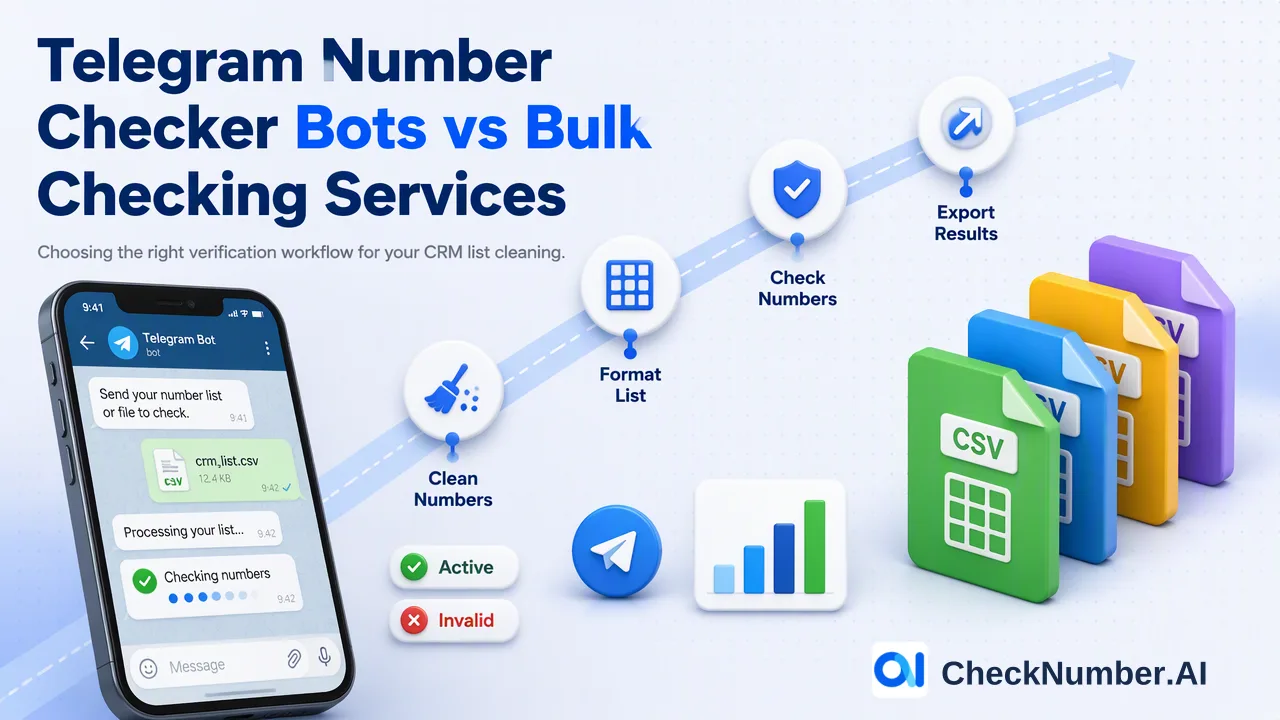
A team using supported bulk products can choose CSV or TXT upload or REST API access. The exact API method, authentication format, request body, response envelope, limits, and handling rules should be taken from current documentation. This article does not define a sample payload because an invented one could lead an integration to misclassify or discard records.
Choose the carrier product for the geography
| List and question | Product choice | Review focus |
|---|---|---|
| Supported countries outside the United States and Canada; carrier and line type needed | Global Carrier Checker | Country and regional context alongside carrier data. |
| United States or Canada list; carrier and line type needed | Advanced US Carrier Checker | The named North American product’s documented capability. |
| One number and a quick carrier question | Free dashboard Toolbox carrier lookup | Record the lookup as a one-off observation. |
The product choice belongs in the job metadata maintained by the customer, along with the run date and country. If the source list spans regions, select a supported product for each country and keep exports labeled separately. Do not infer a universal field list or common limits from the words “carrier checker.” A result can become stale as data changes; a dated observation is more useful than a permanent label in a CRM.
If a consumer system only needs a line-type category for review, it can read the documented output of the selected product and apply its own policy. The policy should explain who can override a routing suggestion and how an unknown or missing result is handled. Those are customer-defined workflow controls, not product behavior.
Keep carrier data separate from registration signals
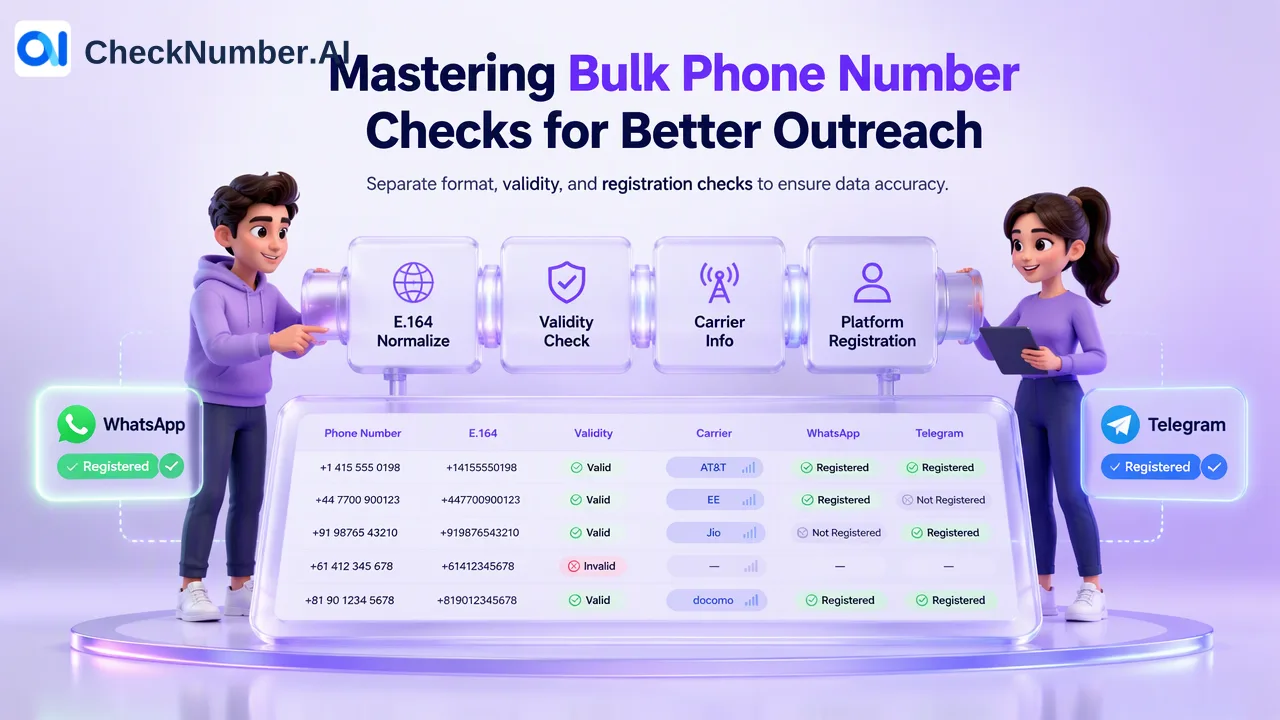
The presence of carrier information does not answer whether a phone number is registered with WhatsApp, Telegram, RCS, or another named platform. A platform-registration checker supplies a platform-specific reachability and deliverability signal at check time; a carrier checker supplies network and line-type context. Store them as separately named observations with their product and date. Combining them into a single “verified person” flag would discard important differences and imply identity evidence that neither provides.
Similarly, a cleaned E.164 number is not a carrier result. A number’s format can be prepared before a carrier query, but formatting alone cannot resolve the operational question. If the decision is whether a list is valid under the dedicated validity product, run that product rather than guessing from line type. A developer can represent the pipeline as source data, normalization, named checker, export review, and customer policy. Each stage answers a different question.
Before production use, test the join between source IDs and the exported result with a controlled, authorized list. Check country partitioning, duplicate treatment, and the handling of rows requiring review. Compare the implementation against the current API docs whenever the integration changes. Avoid encoding assumptions about rate limits, result values, or error fields that are not in the documentation.
FAQ
How can developers choose between Global Carrier Checker and Advanced US Carrier Checker?
Use the product’s documented geography and capability: Global Carrier Checker for supported countries, and Advanced US Carrier Checker for United States and Canada lists. Confirm current coverage and API details before integration.
Does a carrier result indicate that a number uses a messaging app?
No. Carrier and line-type data are distinct from a named platform-registration signal.
How can teams join carrier results back to a CRM?
Keep stable source record IDs with normalized numbers in a customer-controlled mapping, then reconcile the selected product’s export against that mapping.
Can line type alone decide whether to send SMS?
It can inform a customer routing rule, but the team should also apply its own consent, channel, and exception policies.