CheckNumber.AI
 · 4 min read
The E-commerce Data Hygiene Framework: Cleaning and Validating Phone Lists for Global Outreach
Learn how an e-commerce data hygiene framework standardizes formats, deduplicates databases, and separates format checks from platform registration signals.
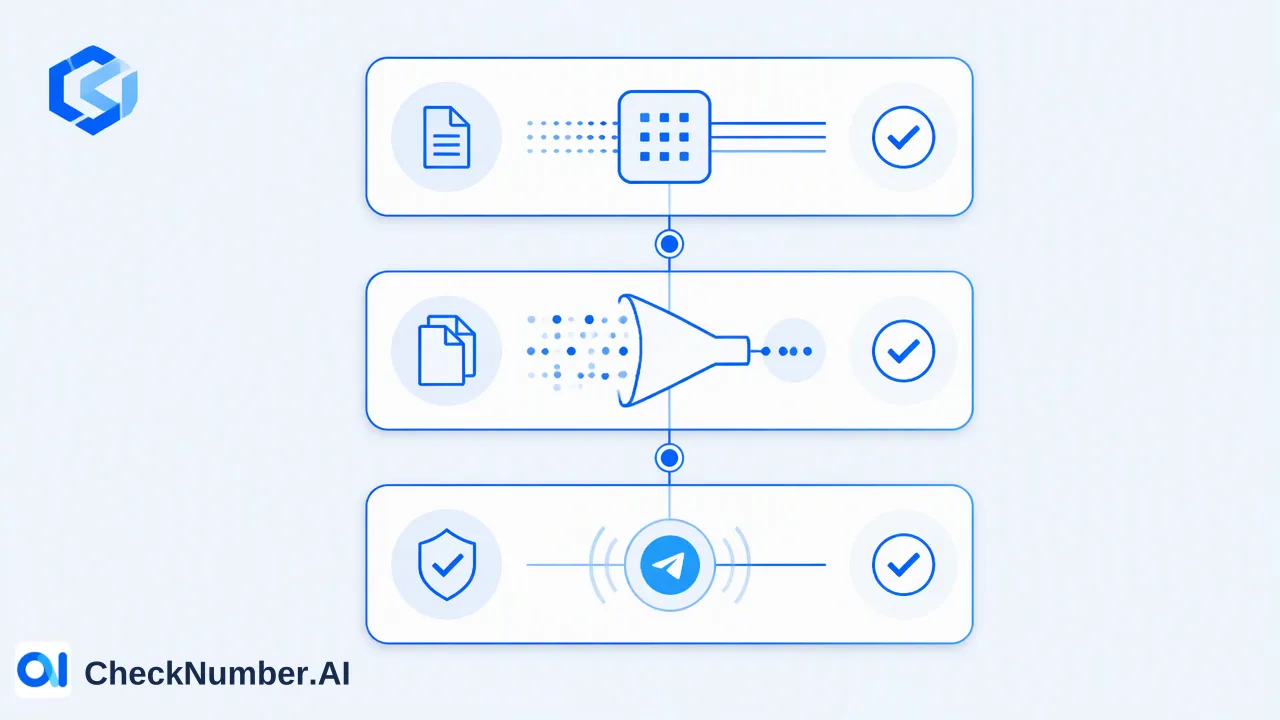
Effective e-commerce outreach relies on a robust phone number data hygiene framework that standardizes international formats, deduplicates records, and applies systematic validation. By distinguishing between basic format normalization, high-level phone number validity, and check-time platform registration signals, e-commerce teams can establish reliable customer communication channels across global markets.
The Strategic Importance of Data Hygiene in E-commerce
Customer contact databases in global e-commerce environments expand rapidly across diverse sales channels, localized storefronts, and marketing campaigns. Without structured phone number data hygiene, contact lists naturally accumulate invalid digits, formatting anomalies, and stale entries. Outdated or inaccurate phone records directly lead to inefficient resource allocation. Sending messages or notifications to unreachable numbers burns routing budgets, dilutes performance metrics, and adds unnecessary load to operations teams.
Standardizing International Phone Data
Global e-commerce brands collect contact information across multiple countries, where phone number structures, trunk prefixes, and regional dialing conventions vary significantly. International phone number standardization is a prerequisite for accurate global outreach. When phone records arrive without standard country codes or contain local dialing artifacts, routing engines and verification tools may misinterpret or fail to process them. Normalizing numbers into a consistent international structure before downstream review establishes a clean baseline. This standardization prevents errors during batch processing and ensures that regional lists can be evaluated systematically.
Deduplication and Record Hygiene
Customer records often enter an e-commerce database through varied touchpoints, including newsletter signups, guest checkouts, abandoned cart sequences, and support inquiries. Over time, identical phone numbers can appear under different user entries or internal database IDs. Deduplication is essential for maintaining an organized and cost-effective database. Merging or removing redundant records prevents organizations from transmitting duplicate messages to the same recipient, which protects operational spend and preserves clean analytics. Performing deduplication alongside format normalization creates a reliable foundation before applying verification checks.
Validation vs. Platform Registration Signals
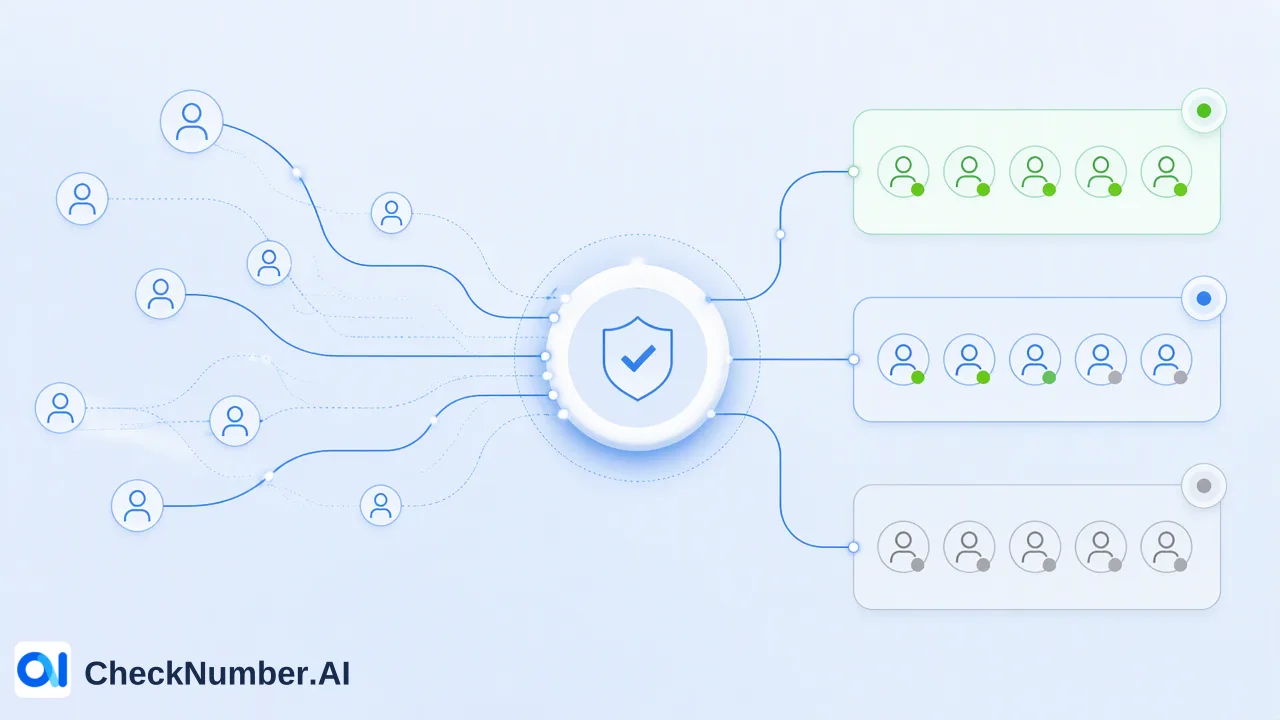
A common operational misunderstanding is equating general phone validity with platform-specific channel availability. A comprehensive hygiene framework distinguishes between distinct verification layers. | Verification Layer | Operational Scope | Workflow Application | | :--- | :--- | :--- | | Format Normalization | Conforming digits to regional and international structural conventions | Baseline formatting and initial intake cleaning | | Phone Number Validation | Batch-checking phone-number validity | Removing malformed or non-viable numbers before routing | | Platform Registration Signal | Check-time indicator of platform presence (e.g., iMessage, Telegram) | Channel-specific reachability context and routing prioritization | Standard phone number validation assesses whether a number is technically valid for list cleaning before downstream operations. For example, identifying iMessage-registered numbers in bulk informs iOS and Apple ecosystem audience segmentation and iMessage outreach or support planning. Similarly, checking registration on Telegram or an E-commerce Activity Checker provides channel-specific presence signals. These platform registration signals serve as decision-support tools for routing and list segmentation.
Implementing a Periodic Maintenance Cycle
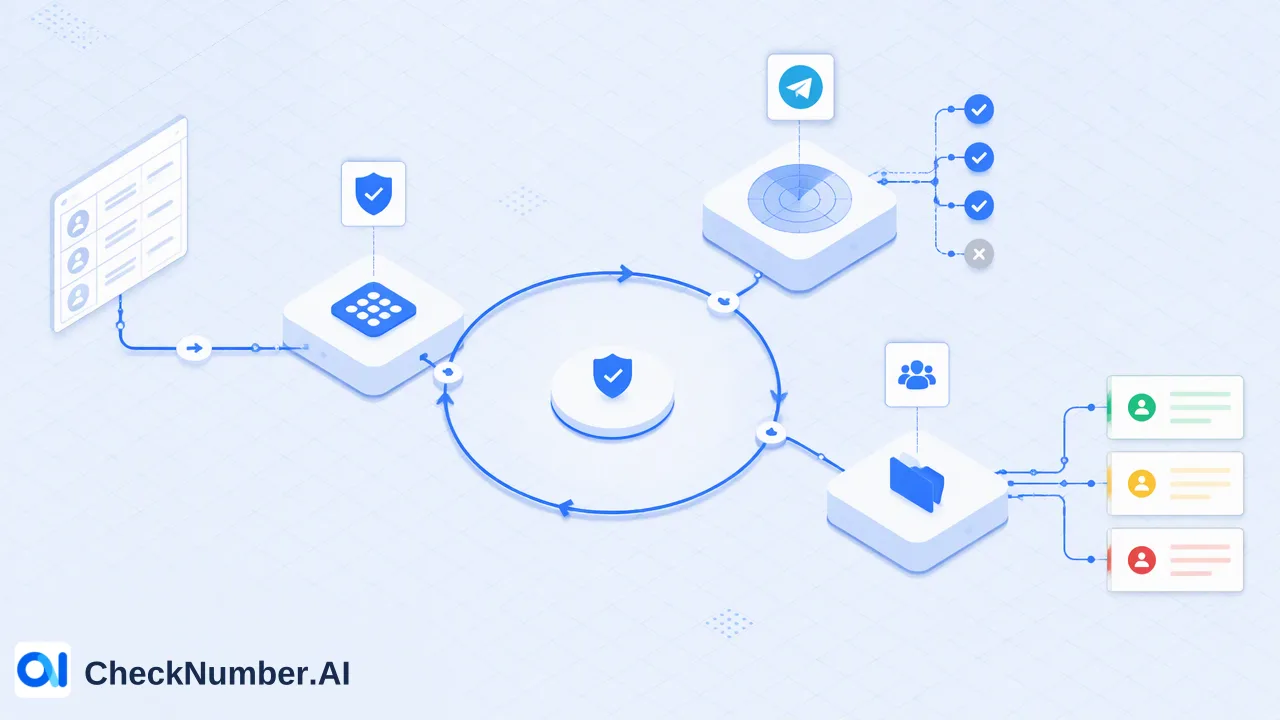
Data hygiene cannot function as an isolated, one-time exercise. In active consumer markets, phone numbers are routinely deactivated, ported to new mobile providers, or reassigned to new subscribers. Data maintenance must be periodic to account for number churn and status changes over time. Bulk list checking workflows—whether executed via CSV or TXT file uploads or integrated through a REST API—allow operations teams to audit contact repositories on a scheduled cadence. Regular re-evaluation ensures that contact repositories remain actionable, preventing stale records from degrading outreach efficiency or skewing reporting data.
FAQ
Why is deduplication essential for an e-commerce customer database?
Deduplication removes duplicate phone records caused by repeated account creations, checkout submissions, or multiple campaign imports. Eliminating redundant records prevents wasted outreach spend, stops repetitive messages to the same customer, and maintains consistent communication reporting across internal systems.
How does platform registration checking differ from standard phone number validation?
Standard phone number validation assesses the technical validity of a number for list cleaning before downstream operations.
Why do organizations need a periodic data maintenance cycle for contact lists?
Contact databases naturally decay over time due to number reassignment, carrier churn, and account deactivations. Establishing regular maintenance cycles helps organizations account for these status shifts, keeping operational CRM records organized and preventing outreach teams from sending resources to obsolete destinations.