CheckNumber.AI
 · 5 min read
How to Interpret Different Phone-Check Signal Categories
A guide to understanding phone checker signal categories, distinguishing platform registration signals from activity and profile enrichment data to improve review workflows.

Phone checker signal categories classify the depth and nature of data returned during list verification. Beyond basic presence, activity signals provide contextual indicators like last-seen timing or account age, while profile enrichment signals supply available public attributes such as demographic indicators or avatar data. Understanding these distinct categories helps teams evaluate contact lists and structure internal review workflows without conflating platform presence with verified identity or ownership.
Understanding Phone-Check Signal Categories
Evaluating phone numbers across operational or marketing pipelines requires understanding that phone data checks do not return a single, universal attribute. Instead, bulk checking services assess numbers across several signal categories, each answering a distinct question about reachability, account presence, or public profile context. Organizations frequently begin data hygiene by distinguishing format normalization from service-level checks. Formatting confirms whether a string complies with structural numbering plans, but it cannot indicate whether a number can receive messages on a particular network or app. To evaluate true reachability on modern channels, organizations rely on platform-specific signals. Within modern data verification, three primary categories define phone-related intelligence:
| Signal Category | Primary Purpose | Documented Capabilities |
|---|---|---|
| Platform Registration | Confirms account presence on a specific service at check time | platform registration signal |
| Activity Signals | Provides presence depth, last-seen indicators, or tenure | activity signal, account_identifier_signal, membership_signal |
| Profile Enrichment | Retrieves available public profile information | profile_enrichment, demographic_enrichment |
| Because different checking products expose different high-level capabilities, teams must interpret each signal strictly within the scope of the specific check performed. |
Platform Registration Signals
For instance, testing a number with a dedicated WhatsApp Number Checker or Signal Checker evaluates whether that number exists within that specific messaging network. Key characteristics of platform registration signals include:
- Platform-Specific Scope: Account registration on WhatsApp does not indicate that the same number exists on Telegram or Signal. Each platform operates independent registries. - Temporal Validity: A registration check reflects account existence at check time. - Reachability Support: The signal confirms platform presence, helping organizations determine which communication channel is technically viable for a given contact. It simply confirms that an account is associated with the queried number on that specific application.
Activity and Contextual Signals
While basic registration confirms that an account exists, activity signals supply deeper operational context about the state of that account. Specialized checks provide additional dimensions beyond a binary registered/unregistered result. For example, tools such as the Telegram Days Checker evaluate account presence while returning available activity or last-seen context, alongside account-identifier and Premium-membership indicators. These contextual data points help teams prioritize active accounts during list evaluations. Activity signals are useful for:
- List Prioritization: Identifying accounts with recent last-seen timestamps supports operational triage in customer support or outreach workflows. - Account Tier Context: Signals indicating membership context (such as platform subscription status) give organizations insight into account engagement tiers. - Filtering Inactive Records: Numbers that maintain an account presence but lack recent activity can be routed to separate review queues.
Profile Enrichment Data
Profile enrichment signals move beyond presence and activity to retrieve publicly available profile information associated with an account. Enrichment capabilities are tied to specific evaluation tools:
- Public Attribute Retrieval: The Telegram Username Activity Checker evaluates usernames for registration and collects available public profile information, such as avatar data. 2. Demographic Context: The Telegram Age & Gender Checker evaluates account presence and provides available demographic enrichment alongside profile and activity signals. These capabilities must remain strictly scoped to the tools that support them. Standard phone checks do not return demographic or avatar data unless the designated enrichment product is used. Furthermore, public profile attributes should be treated as contextual signals rather than verified customer identification.
Workflow Steps for Interpreting Phone-Check Signals
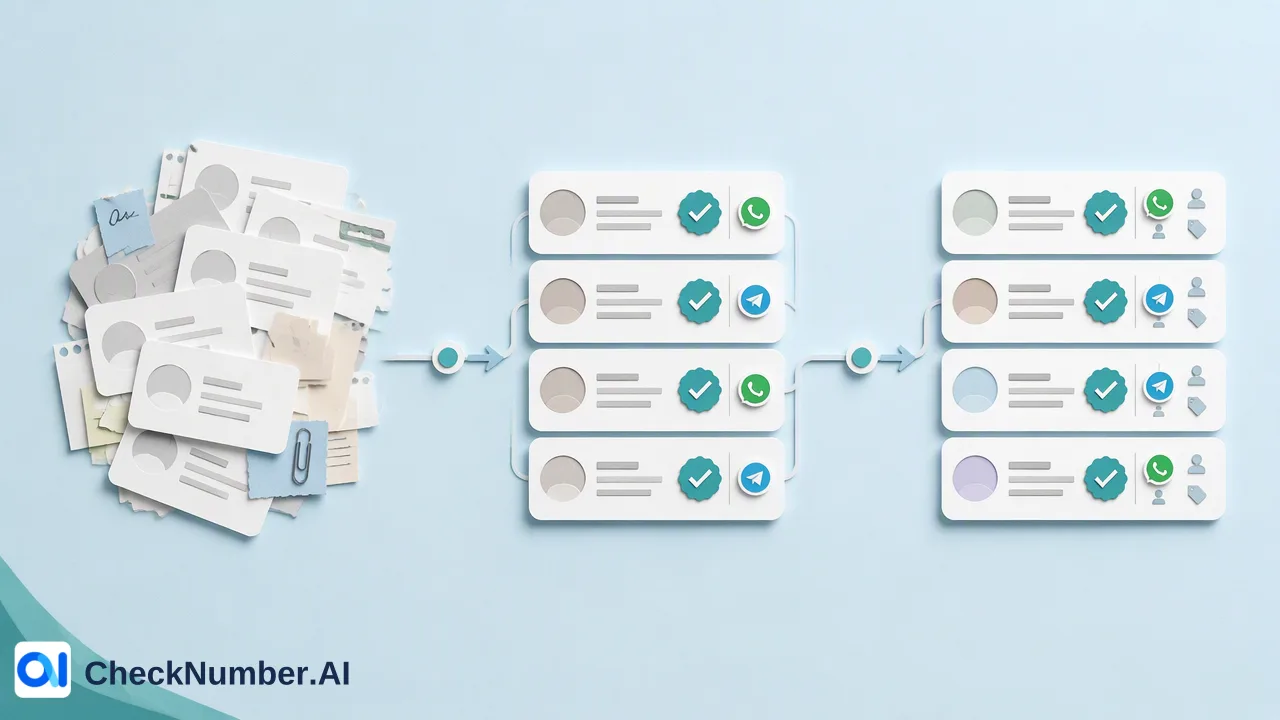
To integrate phone-check signals into operational pipelines, organizations can implement a structured four-step review workflow:
- Select the Appropriate Verification Capability: Match the operational requirement with the correct tool. Use basic registration checkers (such as WhatsApp Number Checker or Signal Checker) when channel reachability is the primary goal. Select specialized checkers when activity or enrichment is needed. 2. Execute List Checking: Perform bulk checks using CSV or TXT file uploads or integrate via REST API access to process contact lists against the chosen platform. 3. Isolate Platform-Specific Reachability: Treat positive registration outputs strictly as proof of account presence on that specific platform at the time of check. 4. Apply Contextual Rules for Review: Use activity signals (such as last-seen records) and enrichment data (such as public demographic signals or membership status) to inform customer-defined segmentation or risk-review queues. Following this structured approach prevents the conflation of basic registration with verified identity, enabling teams to build accurate, channel-specific contact operations.
FAQ
What is the difference between a registration signal and an activity signal?
A platform registration signal confirms only whether a phone number is currently registered on a specific service, providing a check-time reachability indicator. An activity signal adds contextual depth, such as last-seen indicators or account presence history, which helps teams prioritize contacts within review workflows.
How does profile enrichment differ from basic platform checks?
Basic platform checks evaluate registration status on a platform. Profile enrichment retrieves available public profile information, such as avatar data or demographic context, where supported by dedicated checking tools.