CheckNumber.AI
 · 3 min read
Beyond the Raw List: Why Platform-Specific Verification is the Foundation of Messaging ROI
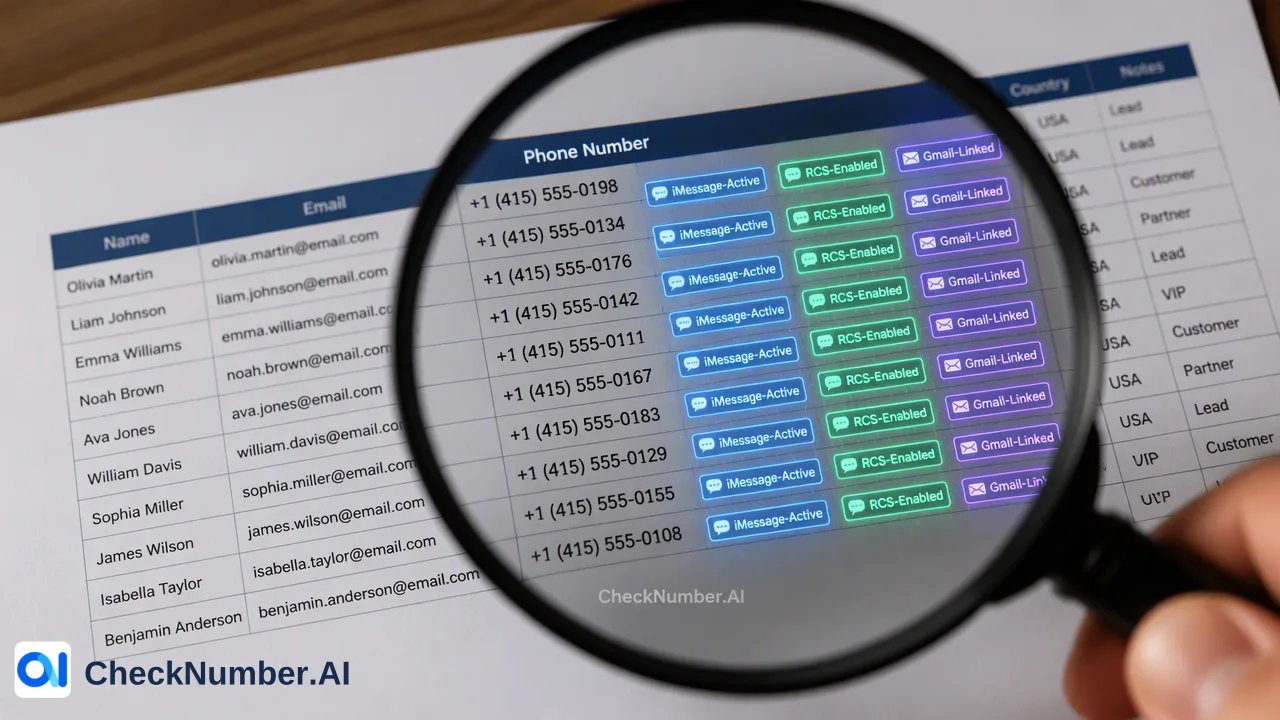
Raw contact lists often lack the context needed for modern messaging. By utilizing platform-specific verification—such as identifying RCS support or carrier line types—businesses can better segment their audiences and tailor their messaging strategies.
Raw contact lists often lack the context needed for modern messaging. By utilizing messaging platform contact verification—such as identifying RCS support or carrier line types—businesses can better segment their audiences and tailor their messaging strategies. This approach moves beyond simple list cleaning to provide actionable intelligence that informs how and where to engage contacts effectively.
The Limitations of Raw Contact Data
Standard list processing often stops at basic formatting, leaving teams without the platform-specific context required for modern rich-messaging strategies. When organizations rely solely on raw data, they miss critical insights about the underlying network or device capabilities associated with a phone number. Bulk checking of supported phone-number or email lists allows businesses to move beyond raw data, adding layers of intelligence that support more informed audience segmentation.
Understanding Platform-Specific Signals
Differentiating between network attributes and device capabilities is a core component of messaging platform contact verification. Carrier intelligence provides foundational network context. For example, the Global Carrier Checker identifies the carrier, line type, country, and regional context for phone numbers across supported countries. Similarly, the Advanced US Carrier Checker provides carrier, line type, and regional context specifically for United States and Canada phone numbers. Beyond network data, platform registration signals identify specific messaging capabilities. The RCS Checker identifies phone numbers that support RCS or Google Messages. This platform registration signal provides insights into rich-messaging capabilities, helping teams understand which contacts are present on platforms that support advanced media and interactive messaging features.
Integrating Intelligence into Your Workflow
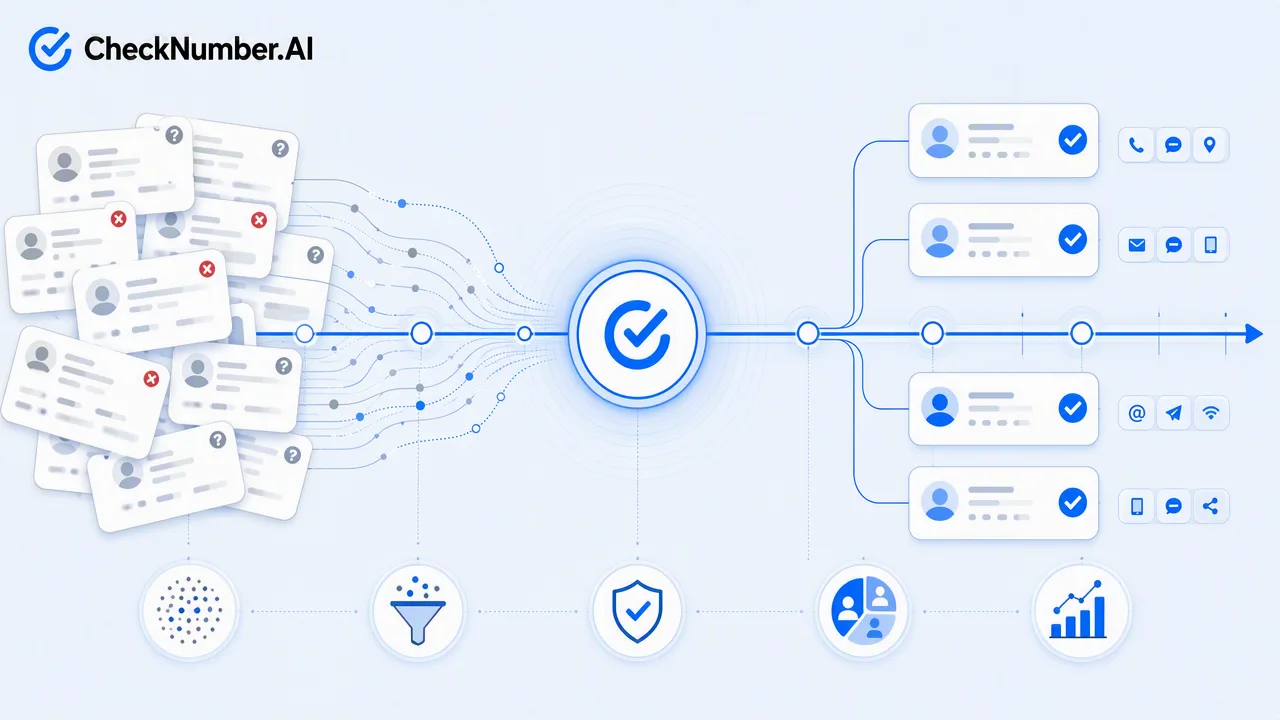
Applying these signals at scale requires efficient data processing. The core workflow for CheckNumber.AI involves the bulk checking of supported phone-number or email lists. Teams can integrate these checks directly into their existing operations using flexible input methods. Bulk workflows support CSV or TXT list uploads for manual list processing, as well as REST API access for automated, programmatic integration. By incorporating these checks, organizations can systematically append carrier intelligence and platform registration signals to their contact records before initiating outreach.
Optimizing Messaging ROI with Data-Driven Decisions
Platform-specific signals serve as valuable decision-support tools for audience planning. By identifying phone numbers that support RCS or Google Messages, the RCS Checker helps teams segment their audience based on rich-messaging capabilities. This intelligence informs messaging planning, allowing organizations to route rich-media campaigns to supported devices while reserving standard text formats for other line types. Using these signals as an input alongside other checks supports a more tailored approach to audience engagement, ultimately contributing to a more refined messaging strategy.
FAQ
What is the difference between carrier intelligence and platform registration signals?
Carrier intelligence, provided by tools like the Global Carrier Checker, identifies the carrier, line type, country, and regional context for a phone number. Platform registration signals, such as those from the RCS Checker, identify if a phone number supports specific services like RCS or Google Messages for rich-messaging audience planning.
How does bulk list checking improve messaging strategy?
Bulk checking of supported phone-number lists allows teams to process data efficiently via CSV, TXT, or REST API. This workflow appends carrier and platform signals at scale, which informs audience segmentation and supports more targeted messaging planning.