CheckNumber.AI
 · 5 min read
How to Segment Messaging Lists by Device Type for Targeted Outreach
Learn how messaging list device segmentation supports targeted outreach by identifying platform-specific registration signals for tailored technical guidance and campaign planning.
Messaging list device segmentation organizes contact records according to platform-specific messaging reachability, helping organizations distribute relevant technical instructions, application links, and communication formats. This data-driven categorization supports outreach workflows without relying on manual entry or assumptions about user hardware.
The Strategic Value of Device-Type Segmentation
Managing outbound communications across varied mobile environments presents operational hurdles when technical instructions or app download links differ between operating systems. Directing an Apple App Store link to a recipient using an Android device or providing Android-specific configuration guidance to an iPhone user creates immediate friction. Segmenting lists based on platform reachability signals helps resolve these inconsistencies before messages are dispatched. Tailoring outreach by platform environment supports both customer care workflows and promotional campaigns. Technical support teams benefit by delivering operating-system-specific troubleshooting paths, minimizing confusion during identity recovery, software onboarding, or device provisioning. Similarly, marketing teams can design campaigns that reference operating-system-specific features or app stores, which supports overall message relevance and user engagement.
Technical Differences in Messaging Ecosystems
Mobile communication standards vary significantly across operating systems. The Apple messaging ecosystem supports proprietary protocols like iMessage, which provide high-resolution media sharing, inline replies, and end-to-end encryption between supported devices. Conversely, modern Android communication increasingly relies on Rich Communication Services (RCS) via Google Messages, delivering interactive carousels, verified business sender profiles, and read receipts across compatible carrier networks. When outreach platforms fail to account for these architectural variations, messages often fall back to standard SMS. Plain text SMS lacks rich-media rendering, actionable buttons, and extended character limits, which diminishes the user experience. By identifying which contacts support iMessage versus RCS, organizations can tailor outgoing payloads to make optimal use of available platform features. Acknowledging these technical distinctions also aids operational planning, ensuring that rich-media assets or interactive buttons are directed only to environments that support them.
Preparing Contact Lists for Segmentation
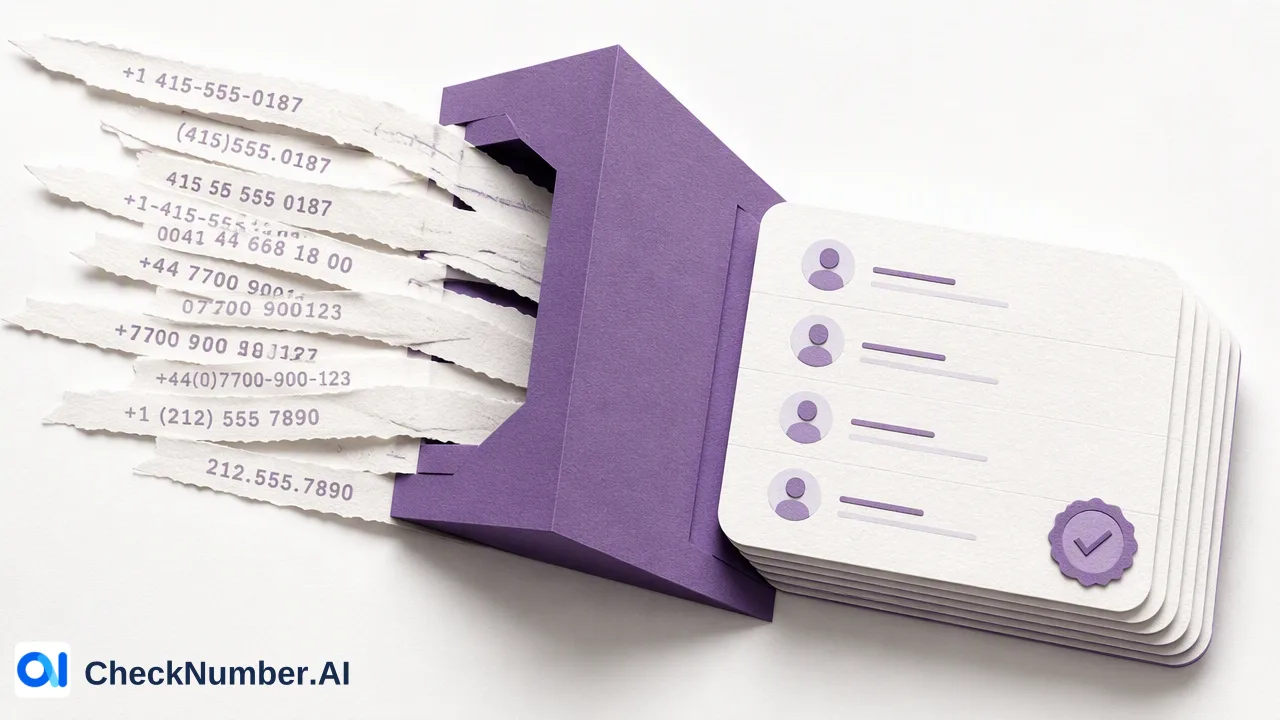
Before performing platform-level checks, organizations must establish clean data foundations. Unformatted contact records, improper country codes, and malformed strings introduce processing errors and degrade segmentation accuracy. Preparing lists involves standardized normalization and data hygiene routines across all records. A systematic list-preparation process involves three foundational steps:
- Normalizing raw records into the international standard E.164 format, ensuring each entry includes the appropriate plus sign, country code, and subscriber number. 2. Removing obvious duplicates and structural syntax errors from CRM exports. 3. Separating records into clean CSV or TXT files suitable for bulk verification workflows. Establishing these formatting baselines ensures that downstream verification queries process without formatting rejections. Clean input datasets also prevent mismatched records when exporting platform tags back into customer relationship management databases.
Workflow for Grouping Contacts by Platform
Once a list is standardized, organizations can determine platform reachability by screening phone numbers through specialized verification checks. CheckNumber.AI provides bulk list checking workflows that support CSV or TXT list uploads alongside REST API access for automated pipelines. The segmentation workflow typically applies two distinct platform-level checks:
- iOS Ecosystem Screening: The iMessage Checker identifies iMessage-registered numbers in bulk for iOS/Apple ecosystem audience segmentation and iMessage outreach or support planning. In addition, the Apple Checker evaluates Apple device association signals for phone numbers. - Rich Messaging Screening: The RCS Checker identifies phone numbers that support RCS or Google Messages for rich-messaging audience planning. Processing contact lists through these checks generates distinct data tags for each record. For example, a phone number returning a positive iMessage registration signal can be tagged as an iOS segment record, whereas a record returning an RCS capability signal can be categorized for Google Messages campaigns. Contacts displaying neither signal can remain in standard SMS or voice workflows. This systematic classification provides marketing and support engines with clear routing rules prior to campaign execution.
Best Practices for CRM Data Maintenance
Mobile device associations and platform registrations are dynamic. Subscribers frequently change hardware, switch operating systems, port their numbers to different mobile carriers, or deactivate specific messaging services over time. Treating platform segmentation tags as static entries in a CRM leads to message degradation and failed payload rendering as data ages. To preserve the reliability of segmented lists, teams should implement routine maintenance practices:
| Maintenance Practice | Operational Focus | Recommended Frequency |
|---|---|---|
| Re-screening active segments | Re-evaluating platform registration signals on active lists | Quarterly or prior to major campaigns |
| Inactive record pruning | Archiving numbers that consistently fail reachability checks | Bi-annually |
| Real-time CRM ingestion | Tagging newly ingested leads via REST API before first outreach | Continuous at capture |
| Maintaining current platform tags ensures communication workflows adapt as subscribers transition between devices. |
FAQ
Why is device-type segmentation helpful for technical support?
Device-type segmentation allows support organizations to distribute relevant operating-system instructions and troubleshooting paths, such as routing Apple-specific recovery steps to iMessage-registered contacts and Android-oriented guidance to RCS-capable users. This reduces friction during customer assistance.
What bulk tools help segment contact lists by messaging channel?
CheckNumber.AI offers the iMessage Checker to identify iMessage-registered numbers for iOS and Apple ecosystem audience segmentation, alongside the RCS Checker to identify numbers supporting RCS or Google Messages for rich-messaging planning. Both tools support CSV/TXT file uploads and REST API workflows.