CheckNumber.AI
 · 3 min read
Navigating Privacy-First Messaging: Strategies for Lead Quality and Contact Intelligence
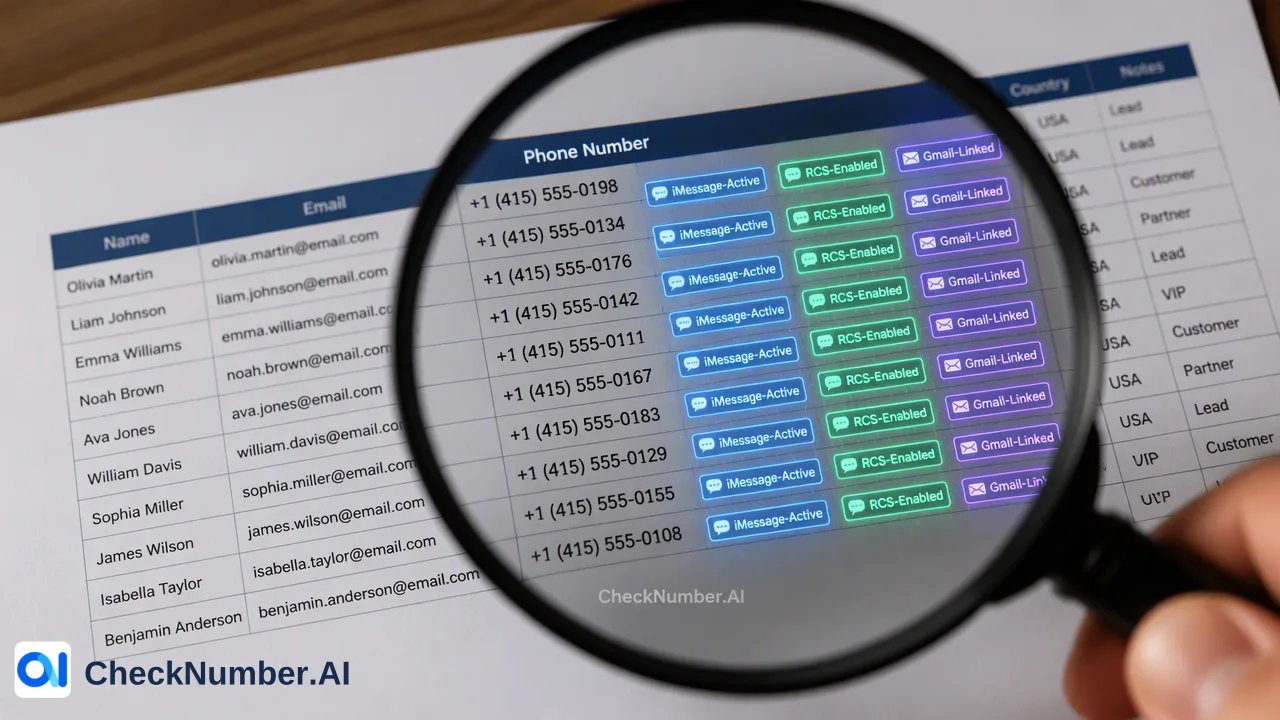
Maintaining lead quality in encrypted messaging environments requires systematic data hygiene. By utilizing bulk checking workflows, businesses can categorize contacts using carrier intelligence and platform registration signals to support communication planning.

Maintaining lead quality in encrypted messaging environments requires systematic data hygiene. Effective messaging lead verification relies on bulk checking workflows to categorize contacts using carrier intelligence and platform registration signals. By processing large contact lists via CSV, TXT, or REST API, businesses can identify line types, regional context, and rich-messaging support. These insights support more precise audience segmentation and communication planning, ensuring that outreach strategies align with the technical capabilities of the target contact numbers.
The Challenge of Modern Messaging Environments
Effective communication planning requires understanding the technical context of contact lists. As messaging ecosystems become more fragmented, organizations face the challenge of organizing contact databases without visibility into the underlying network or platform capabilities. Without systematic data hygiene, teams lack the context needed to segment audiences appropriately. Messaging lead verification helps address this by providing structured signals that inform internal decisions and support targeted outreach strategies.
Leveraging Bulk Workflows for Data Hygiene
Data hygiene is the foundation of effective lead management. The core workflow for organizing large-scale contact databases relies on bulk checking of supported phone-number or email lists. These bulk workflows support CSV or TXT list uploads and REST API access, allowing technical teams to integrate contact intelligence directly into their existing systems. By processing records in bulk, organizations can efficiently append technical context to their lists, which supports prioritization and informs downstream communication workflows.
Applying Carrier Intelligence to Contact Lists
Carrier intelligence provides essential context for audience segmentation. Dedicated tools like the Global Carrier Checker identify the carrier, line type, country, and regional context for phone numbers across supported countries. For North American audiences, the Advanced US Carrier Checker provides specific carrier, line type, and regional context for United States and Canada phone numbers. Understanding this regional and carrier context helps teams segment contact lists accurately, ensuring that communication strategies account for the specific line types and geographic locations of the intended recipients.
Identifying Rich Messaging Capabilities
Beyond carrier data, platform registration signals offer additional context for messaging lead verification. The RCS Checker is designed to identify phone numbers that support RCS or Google Messages. This platform registration signal is essential for rich-messaging audience planning, as it helps teams understand which contacts are capable of receiving advanced messaging formats. By isolating numbers with RCS support, organizations can tailor their content strategies to match the technical capabilities of the recipient’s device and messaging client.
Best Practices for Ongoing List Management
Consistent use of bulk checking signals supports informed decision-making for communication workflows. To maintain data hygiene, organizations should regularly process their contact lists through bulk CSV/TXT uploads or automated REST API integrations. It is important to keep capabilities distinct; carrier intelligence should be used to understand line types and geography, while platform registration signals should guide rich-messaging strategies. By systematically applying these checks, teams can maintain an organized, well-segmented contact database that supports effective communication planning.
FAQ
How does bulk checking support lead management?
Bulk checking workflows support CSV or TXT list uploads and REST API access, allowing businesses to efficiently process large contact lists. This core workflow appends technical context to phone numbers, which informs audience segmentation and communication planning.
What is the difference between carrier intelligence and platform registration signals?
Carrier intelligence identifies the carrier, line type, and regional context for a phone number. In contrast, a platform registration signal identifies whether a number supports specific services, such as RCS or Google Messages, for rich-messaging audience planning.
Can I integrate these checks into my existing technical workflow?
Yes, bulk workflows support REST API access alongside standard CSV or TXT list uploads, allowing technical teams to integrate contact intelligence directly into their existing data hygiene processes.