CheckNumber.AI
 · 5 min read
Beyond Registration: A Framework for Filtering Inactive and Low-Quality Messaging Leads
Platform registration confirms account existence, but effective campaigns require multi-stage filtering across validity, registration, activity, and profile enrichment.

Verifying that a phone number is registered on a messaging platform confirms only that an account exists at the time of the check. It does not indicate whether the user actively opens the application, engages with contacts, or represents a real customer. Businesses that rely solely on registration checks often spend resources messaging inactive accounts, dormant profiles, and ad-only or automated accounts. Implementing a structured messaging lead quality filtering framework—advancing from basic number validity and platform registration to activity signals and profile enrichment—helps organizations focus communication budgets on reachable, responsive contacts while protecting overall sender reputation.
The Limitations of Registration-Only Verification
Many messaging outreach workflows begin by confirming whether a contact list has accounts on channels such as Telegram, iMessage, or RCS. While this check is an essential technical baseline, treating a registration signal as proof of lead readiness introduces substantial operational inefficiencies. A platform registration signal only confirms account existence at check time. In practice, large contact databases accumulate three major categories of low-value accounts:
- Dormant and Abandoned Accounts: Users frequently switch devices, change SIM cards, or delete mobile applications without deleting their underlying platform accounts. These accounts remain registered on the network but never view inbound messages. * Automated and Bot Accounts: Platforms often host accounts generated for bulk automated activities or single-purpose broadcasts. These profiles inflate audience numbers but yield negligible organic interaction. * Low-Frequency Users: Certain contacts log into a messaging service once every several months, meaning time-sensitive notifications or promotional outreach will go unseen during active sales windows. When teams send high volumes of messages to dormant or automated accounts, engagement metrics drop, customer acquisition costs rise, and outbound infrastructure risks increased platform filtering due to low interaction rates.
The Multi-Stage Messaging Lead Quality Filtering Framework
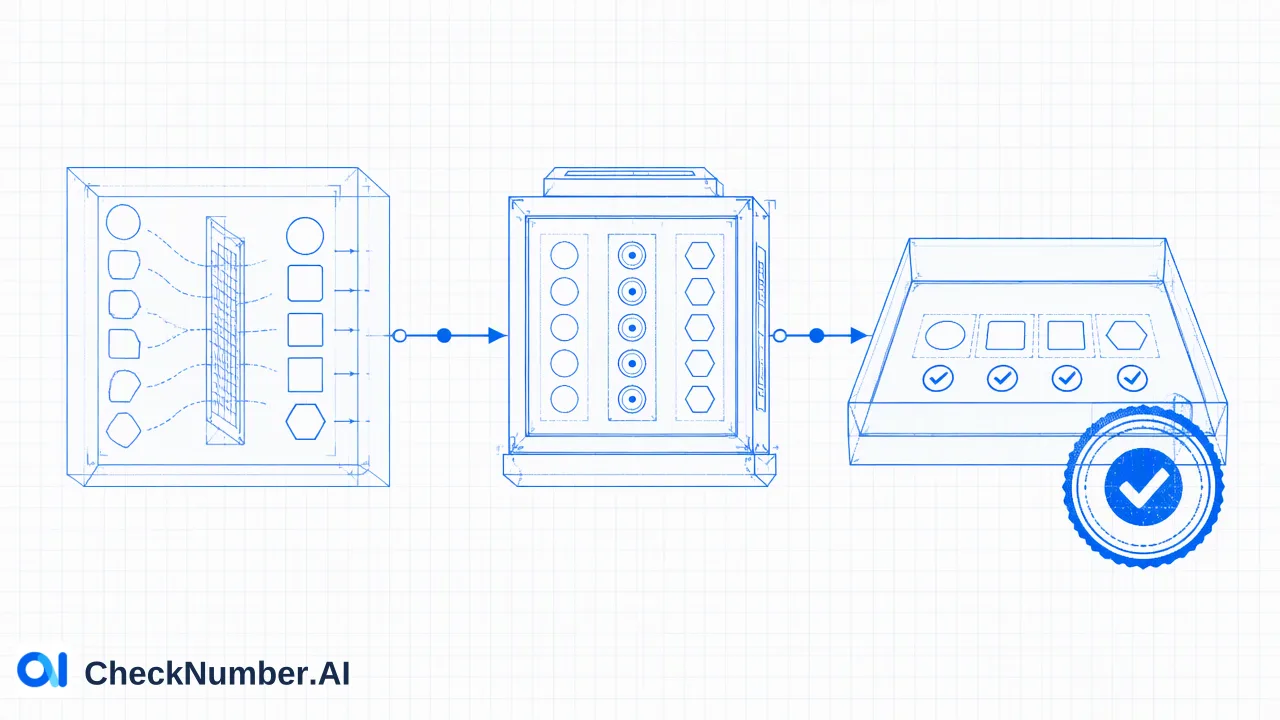
To maximize outreach efficiency, technical and marketing teams should move beyond single-point checks and adopt a multi-stage filtering pipeline. This structured approach progressively qualifies contacts based on technical validity, platform presence, activity signals, and demographic fit. | Stage | Verification Objective | Signals Evaluated | Workflow Action | | :--- | :--- | :--- | :--- | | 1. Technical Validity | Confirm format and carrier viability | Number formatting, normalization, carrier type | Eliminate malformed or invalid inputs | | 2. Platform Presence | Verify account existence at check time | Platform registration signals (e.g., Telegram, RCS, iMessage) | Filter out unregistered numbers | | 3. Activity Qualification | Assess usage recency | Last-seen indicators, activity duration | Separate active users from dormant records | | 4. Profile Enrichment | Contextualize lead value | Public bio data, demographic context, Premium status | Route to targeted audience segments | By executing these stages in sequence, organizations avoid spending resources on deep enrichment for numbers that fail basic validation or platform registration checks. Furthermore, each stage refines data hygiene, creating cleaner pipeline reporting for CRM and revenue teams.
Leveraging Activity and Profile Signals in Practice
Once a list has been filtered for basic platform registration, the next critical task is evaluating activity and profile signals. CheckNumber.AI provides dedicated checking capabilities designed to extract these deeper data points without requiring manual contact inspection. For example, verifying that a number exists on Telegram using a standard Telegram Checker confirms platform reachability at that moment. However, pairing or following that with the Telegram Days Checker provides additional activity context, such as last-seen timeframes and account-identifier details, alongside Premium membership indicators. Contacts exhibiting recent platform activity can be prioritized for direct sales outreach, while contacts inactive for extended periods can be routed to nurture pools or excluded. In addition, profile enrichment tools such as the Telegram Age & Gender Checker provide demographic context and public profile indicators. For username-driven pipelines, the Telegram Username Activity Checker evaluates public profile details, including avatar availability and membership signals. These data points help teams segment audiences into granular tiers, matching promotional tone, channel selection, and campaign spend to the verified characteristics of the audience.
Implementing Data-Driven Audience Segmentation and Operations
Translating lead quality filtering into day-to-day operations requires flexible integration into existing technical workflows. CheckNumber.AI supports bulk list checking through CSV and TXT file uploads for periodic database cleaning, as well as a REST API for real-time list qualification. Organizations can implement this framework through three straightforward operational steps:
- Pre-Campaign List Hygiene: Before launching a messaging broadcast, run contact lists through bulk platform registration checks (such as Telegram Checker, iMessage Checker, or RCS Checker) to remove unregistered lines. 2. Activity-Based Routing: Filter confirmed registrations using activity checkers to identify contacts with recent platform presence. Route high-activity records to high-touch sales agents or immediate conversational sequences. 3. Database Maintenance: Schedule automated checks via REST API to continuously flag dormant or altered records, ensuring CRM contact lists do not decay over time. Adopting this layered qualification strategy protects outbound campaign budgets, minimizes unnecessary messaging charges, and provides marketing teams with accurate performance benchmarks grounded in verified lead activity.
FAQ
Why is platform registration status alone insufficient for messaging campaigns?
A platform registration signal is a point-in-time check confirming that an account exists on that specific network. However, it does not provide insight into whether the account owner frequently logs in, has uninstalled the app, or maintains an automated account. Treating every registered number as an active lead leads to wasted marketing spend and distorted campaign engagement metrics.
What is the difference between a registered account and an active lead?
A registered account is simply an identifier associated with a platform record. In contrast, an active lead displays recency of platform usage, such as recent last-seen timestamps or current profile updates. Evaluating activity signals helps marketing and sales teams distinguish dormant accounts from users who are more likely to see incoming messages.
How does activity-level segmentation support messaging ROI?
Activity-level segmentation allows organizations to separate dormant or low-engagement contacts from highly active users. Teams can direct high-cost, personalized messaging or conversational workflows toward accounts with verified recent activity, while routing stale or dormant numbers to lower-cost re-engagement tracks or pruning them from lists entirely.