CheckNumber.AI
 · 5 min read
The Logical Sequence of Messaging Contact Screening: Validity, Registration, and Activity
A tiered messaging contact list screening workflow verifies data format, checks platform registration, and evaluates activity signals to prioritize outreach efficiently.

An effective messaging contact list screening workflow follows a clear three-stage sequence: first, establish baseline data hygiene through format and phone-number validity checks; second, verify platform registration to confirm reachability on the intended channel; and third, assess available account activity signals to prioritize high-value engagement. Executing these steps in order eliminates malformed entries early, prevents wasted platform queries, and equips teams with actionable context for contact prioritization.
The Foundation: Data Hygiene and Phone-Number Validity
Every reliable messaging contact list screening workflow begins with systematic data preparation. Contact records gathered across disparate acquisition channels frequently include syntax defects, missing international dialing prefixes, accidental duplicates, and deactivated numbers. Attempting to evaluate these unrefined inputs directly against messaging network interfaces introduces operational friction and inflates processing overhead. Initial data hygiene focuses on structural normalization and basic phone-number validity. Normalizing records into standard formats resolves regional formatting discrepancies and isolates duplicate entries. Once records adhere to standard numerical structures, dedicated validity checks confirm whether a number corresponds to an assignable, operable telephone format. Filtering out defective and unserviceable records at this foundational layer ensures that subsequent, platform-dependent screening processes receive only valid targets, optimizing list processing pipelines.
Verifying Platform Registration for Channel Reachability
Once a list is standardized and validated, the subsequent stage verifies platform registration. A phone number may be fully valid on the public telephone network while lacking an account on specific messaging ecosystems such as WhatsApp or Telegram. Evaluating channel presence ensures messaging resources are deployed exclusively to destinations where an endpoint exists. Within this workflow, specialized platform checkers confirm account status. For example, CheckNumber.AI supports bulk checking across CSV or TXT list uploads as well as REST API access. In WhatsApp workflows, solutions like WhatsApp Number Checker and WhatsApp Advanced Checker provide a platform registration signal that verifies account presence across target lists. Similarly, Telegram Checker evaluates phone numbers to establish whether an account is registered on that network.
Evaluating Activity Signals for Account Prioritization
Verifying that an account exists establishes technical presence, but it does not reveal how recently the account engaged with the platform. Many registered accounts sit dormant, have been abandoned, or maintain minimal application usage. If teams treat all registered accounts identically, campaign efficiency drops due to unread dispatches. Assessing platform-specific activity signals bridges the gap between registration and interaction. Dedicated checking tools provide this contextual visibility. Telegram Days Checker supplies platform registration signals alongside available activity and last-seen context, account-identifier data, and Premium-membership indicators. For username-driven pipelines, Telegram Username Activity Checker evaluates registrations and surfaces public profile context, while Telegram Age & Gender Checker pairs platform presence with available activity and profile enrichment. These activity signals enable organizations to segment registered lists into functional tiers:
- High-Activity Cohorts: Numbers displaying recent last-seen timestamps or current activity signals, suited for primary outreach. - Low-Activity or Dormant Records: Registered accounts showing no recent activity, suited for slower nurture tracks or alternative channels. - Unregistered Entries: Numbers with no platform presence, which can be excluded from messaging workflows entirely. While activity metrics support informed prioritization, they function as decision-support indicators rather than guarantees of contact response.
Optimizing Outreach Through Tiered Workflow Execution
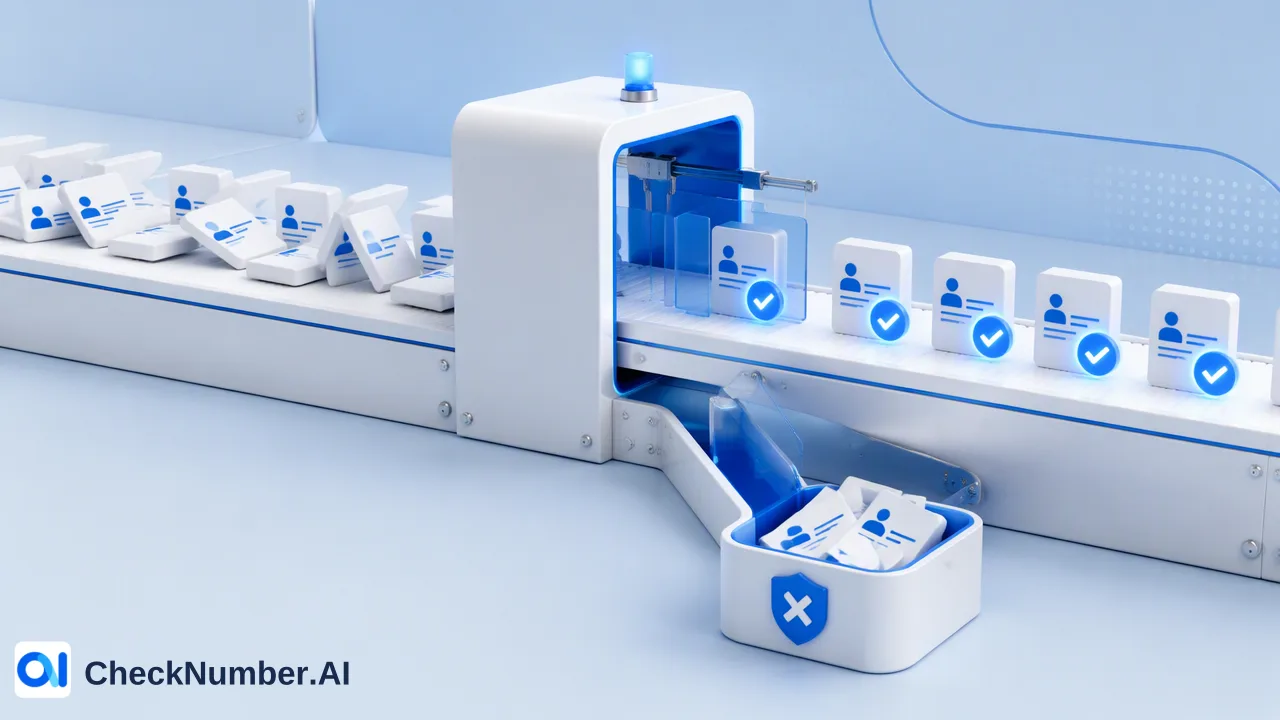
Structuring contact validation into a sequential pipeline—validity, registration, and activity—maximizes operational efficiency and protects team resources. Rather than subjecting millions of raw records to complex multi-attribute queries, the tiered model applies filters progressively. | Pipeline Phase | Primary Objective | Key Operational Value | | :--- | :--- | :--- | | 1. Data Hygiene & Validity | Syntax correction and standard validity checks | Removes malformed entries and prevents processing waste | | **2. | 3. Activity Assessment | Last-seen indicators and activity context | Directs priority messaging resources to recently active accounts | By executing screening in this logical order, teams protect messaging sender reputation, eliminate unnecessary queries on unreachable contacts, and base their communication strategy on verified technical data.
FAQ
Why should phone-number validity checks precede platform registration checks?
Raw lists often contain syntax errors, incorrect country codes, and inactive line formats. Running initial formatting and phone-number validity checks removes these invalid entries before platform-specific queries occur, reducing processing volume and ensuring downstream tools evaluate only properly structured numbers.
What is the difference between a registered account and an active account?
A platform registration signal confirms that a phone number or identifier is currently associated with an account on a specific messaging network. An activity signal provides additional context, such as recent activity or last-seen status, helping organizations distinguish between dormant profiles and recently engaged users.
What does a platform registration signal indicate for messaging campaigns?
It informs routing workflows by verifying whether an account exists, serving as a technical decision-support metric rather than proof of ongoing user intent or identity.
How do account activity signals support contact prioritization?
Activity signals, such as last-seen observations or account age context, allow operations teams to rank registered contacts into tiered outreach cohorts. Contacts showing recent platform interactions can be prioritized for immediate communication, while inactive records can be routed to secondary re-engagement schedules.