CheckNumber.AI
 · 3 min read
Messaging Account Reputation Scoring via Platform Signals
Platform-specific signals support messaging account reputation scoring by providing registration and activity context for prioritization.

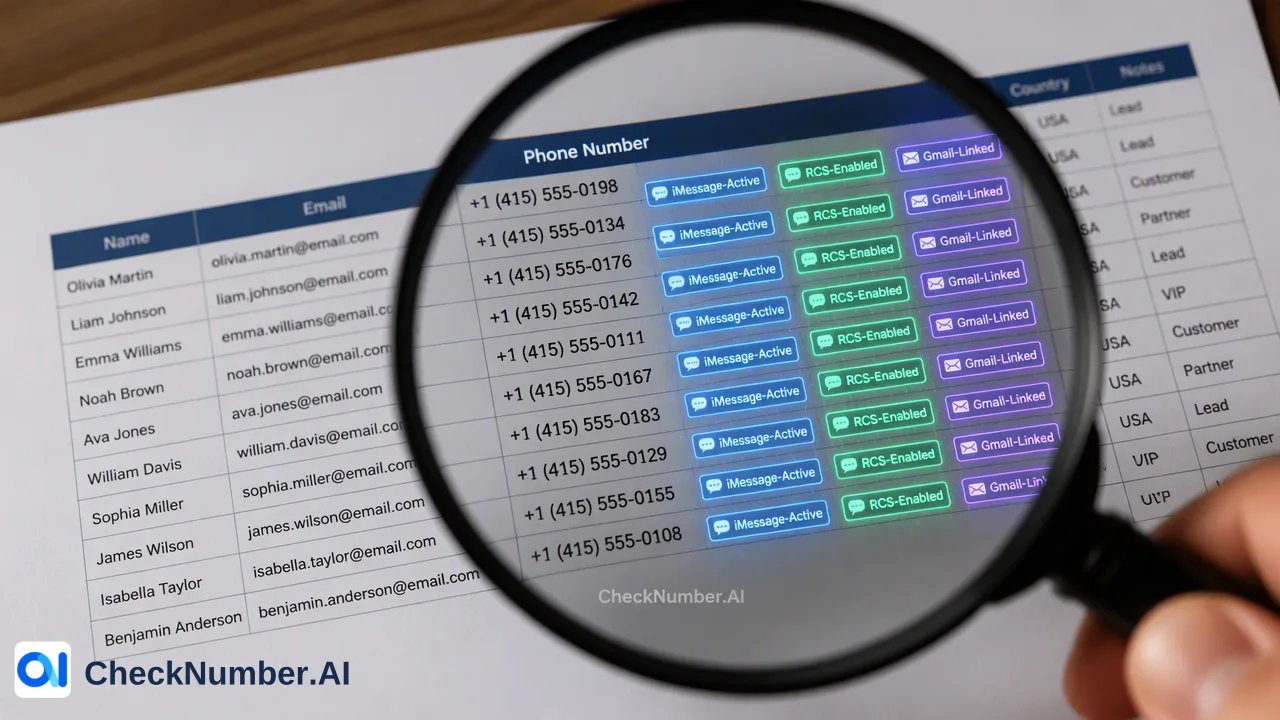
Messaging account reputation scoring relies on platform-specific signals rather than generic phone validity. By utilizing bulk checking workflows for platforms like RCS, Viber, or Telegram, teams can identify registration presence, activity context, and profile attributes. These signals help prioritize communication efforts and tailor messaging formats based on the specific capabilities associated with each phone number.
The Limitations of Generic List Validation
Generic phone validity checks confirm whether a number is formatted correctly or assigned to a carrier, but they do not account for platform-specific capabilities. A standard validity check cannot determine if a number has a registered presence on a specific messaging application. Relying solely on generic validation limits the context available for messaging account reputation scoring, as it omits the platform-level data necessary to inform communication strategies.
Understanding Platform-Specific Signals
Platform-specific signals provide granular data regarding a phone number’s presence on a given messaging service. A platform registration signal indicates whether a specific identifier is associated with a registered presence on a particular platform. Activity signals offer contextual data regarding recent usage or presence, which supports communication prioritization. Because these signals are unique to each service, different products expose different high-level capabilities, and a capability must not be transferred from one product to another.
Practical Applications: RCS, Viber, and Telegram
Different messaging platforms offer unique data points that inform internal decisions.
- RCS: The RCS Checker identifies phone numbers that support RCS or Google Messages. This provides a rich messaging capability signal and a platform registration signal, which helps teams with rich-messaging audience planning.
- Viber: The Viber Days Checker checks Viber account presence. It provides a platform registration signal, an activity signal, and an account identifier signal, offering available activity or last-seen context.
- Telegram: The Telegram Avatar, Age, Gender & Others Checker checks Telegram account presence. It provides a platform registration signal, an activity signal, profile enrichment, demographic enrichment, and a membership signal.
Integrating Bulk Workflows into Your Operations
The core workflow for retrieving these signals involves bulk checking of supported phone-number lists. Bulk workflows support CSV or TXT list uploads and REST API access. This infrastructure helps teams process large lists efficiently to retrieve the specific platform registration and activity signals needed for messaging account reputation scoring. Integrating these checks can be one input alongside other checks to support review and prioritization.
FAQ
How do activity signals support messaging prioritization?
Activity signals provide contextual data regarding recent presence on a platform, which informs internal decisions and helps teams prioritize communication efforts.
Can the same checking workflow apply to all messaging platforms?
While the core bulk checking workflow supports CSV, TXT, and REST API access for list processing, the platform-specific signals are unique to each service. Different products expose different high-level capabilities, and a capability must not be transferred from one product to another.