CheckNumber.AI
 · 6 min read
Beyond the Primary Number: A Framework for Managing Messaging Account Registration
Explore best practices for messaging account registration, comparing number sources for account stability, and using platform-registration checks to support operational messaging workflows.
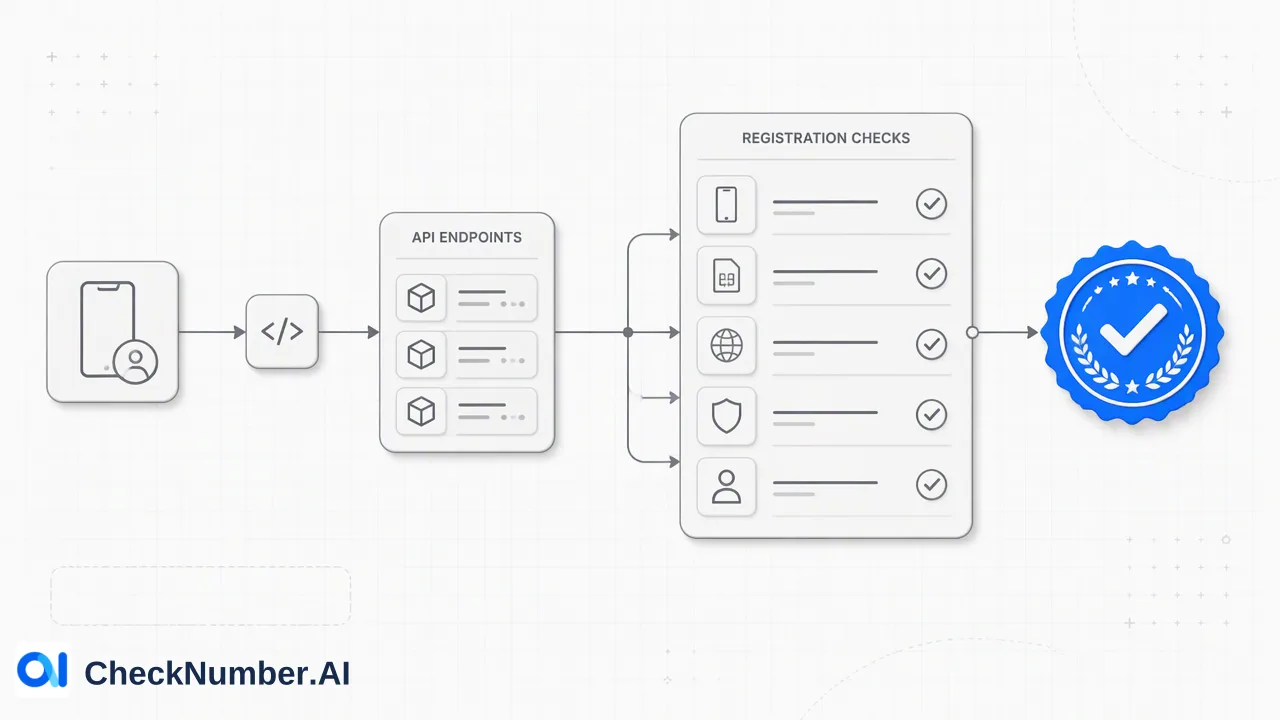
Messaging account registration best practices center on decoupling business communications from personal phone lines by adopting dedicated, sustainable number sources. Major messaging platforms require a valid phone number capable of receiving SMS or voice verification codes for initial onboarding. However, maintaining operational scale and long-term continuity requires numbers that remain accessible for periodic re-verification. Establishing a structured registration framework—supported by platform-registration signal verification across services such as WhatsApp, Telegram, and RCS—helps teams maintain account stability, protect privacy, and organize outbound messaging lists responsibly.
The Strategic Role of Dedicated Registration Numbers
Relying on an employee’s personal primary number for business messaging introduces substantial operational friction. When a personal number is used to activate messaging accounts on platforms like WhatsApp or Telegram, the account remains tied to an individual’s personal device, privacy profile, and carrier subscription. If that team member departs the organization or changes their personal handset, business access to existing customer conversations can be disrupted. Adopting dedicated, non-primary numbers establishes a clear boundary between corporate assets and personal communications. Messaging platforms mandate a functional phone number solely to complete carrier-based SMS or voice verification during account provisioning. By sourcing dedicated lines—such as enterprise SIM cards or permanent commercial virtual numbers—organizations retain continuous ownership of the asset, simplify compliance monitoring, and can reassign account responsibilities across teams without risking account forfeiture.
Evaluating Registration Number Types for Long-Term Stability
Organizations managing messaging operations must assess the trade-offs across different telephone number categories. The longevity of an account depends directly on the sustainability of the underlying number source and its ability to receive verification codes long after the initial setup. * Physical SIMs (Prepaid/Postpaid): Dedicated hardware SIMs provide reliable SMS and voice reception for carrier verification. They offer high account stability because the subscription remains under organizational control, allowing ongoing re-authentication whenever prompted by platform security updates. * Commercial VoIP and Virtual Numbers: High-grade virtual numbers from established telecommunications providers enable software-driven management and geographic flexibility. While viable for many platforms, organizations must ensure the underlying provider supports recurring inbound SMS one-time passwords, as some messaging platforms restrict numbers flagged as non-fixed VoIP. * Temporary or Disposable Numbers: Public SMS-receiver portals and short-lived burner numbers represent an acute operational risk. Although they may facilitate initial account creation, they rarely retain incoming SMS capabilities for that user over time. When a messaging platform initiates a security challenge or re-verification prompt, the inability to capture the verification code results in sudden account suspension or total loss of access. | Number Type | Ongoing Verification Support | Long-Term Account Stability | Operational Fit | | :--- | :--- | :--- | :--- | | Dedicated Physical SIM | High (Direct carrier SMS/Voice) | High | Critical accounts, primary support lines | | Commercial Virtual/VoIP | Variable (Provider dependent) | Medium to High | Scaled customer operations, regional desks | | Temporary/Burner Services | None to Negligible | Very Low (High risk of loss) | Unsuitable for business infrastructure |
Verifying Platform Registration and Channel Viability
Maintaining a stable portfolio of numbers is only half the framework; organizations must also understand which target messaging networks their contacts and provisioned numbers actually support. Basic syntax validation and format normalization confirm whether a string aligns with standard digit counts and country codes, but they do not reveal whether a line is registered on a specific messaging network. CheckNumber.AI provides bulk list checking workflows that allow organizations to inspect platform-registration signals at scale using CSV or TXT list uploads or REST API integrations. Specialized checkers offer focused visibility:
- WhatsApp Advanced Checker: Evaluates lists of phone numbers to confirm WhatsApp platform registration using a higher-detection-rate task model. * Telegram Checker: Evaluates whether supplied phone numbers possess an active platform-registration signal on Telegram. * RCS Checker: Identifies phone numbers configured to support rich messaging via Google Messages or carrier RCS networks. It is essential to treat a platform-registration signal strictly as a point-in-time reachability indicator. However, it provides valuable technical context that informs outbound routing decisions and prevents wasted transmission attempts.
Operational Best Practices for Multi-Platform Management
To maintain scalable and resilient messaging infrastructure across multiple platforms, organizations should adopt structured management protocols:
- Centralize Number Inventory Management: Maintain an internal inventory of all registered phone numbers, noting the assigned platform, hosting provider, and carrier renewal dates. Ensuring recurring billing continuity prevents inadvertent number recycling by telecommunications providers. 2. Establish Re-Verification Protocols: Document procedural access to inbound SMS and voice gateways. When platform updates or security audits trigger step-up challenges, authorized personnel should be able to retrieve verification codes immediately. 3. Audit Contact Lists Regularly: Periodically evaluate outbound communication lists using bulk verification tools. Removing unverified or inactive numbers refines contact lists and supports messaging hygiene. 4. Organizations should combine technical registration checks with appropriate operational verification when handling sensitive transactions.
FAQ
Why should organizations avoid using personal phone numbers for messaging accounts?
Using personal numbers binds operational access to individual staff members and personal devices. When personnel change or devices are upgraded, organizations risk losing account access. Dedicated business numbers separate personal identity from operational channels, supporting multi-user administration and centralized control over communications.
What is the difference between format validation and a platform-registration signal?
A format or normalization check evaluates whether a phone string conforms to standard mathematical and structural formatting rules, such as standard country codes and digit counts. In contrast, a platform-registration signal confirms whether a specific number is currently registered with a designated messaging service at the time of check.
Why do temporary or disposable numbers present risks for messaging account stability?
Temporary or public disposable numbers may successfully receive an initial activation SMS, but they typically lack persistent access. Messaging services routinely request step-up authentication, re-verification following app updates, or periodic security checks. If an organization cannot receive future verification codes on that exact number, the associated account faces permanent lockout or deactivation.
How do bulk verification workflows support messaging infrastructure management?
Bulk checking workflows allow teams to upload phone lists via CSV or TXT files or query a REST API to inspect platform-registration signals before launching outreach. This process helps organizations identify which numbers are registered on specific channels like WhatsApp or Telegram, supporting cleaner contact segmentation without making assumptions about delivery or response.