CheckNumber.AI
 · 5 min read
Registration vs. Purchase: A Framework for Qualifying Messaging Leads
A practical guide for separating platform registration signals from internal purchase history to strengthen CRM hygiene and prioritize sales outreach.
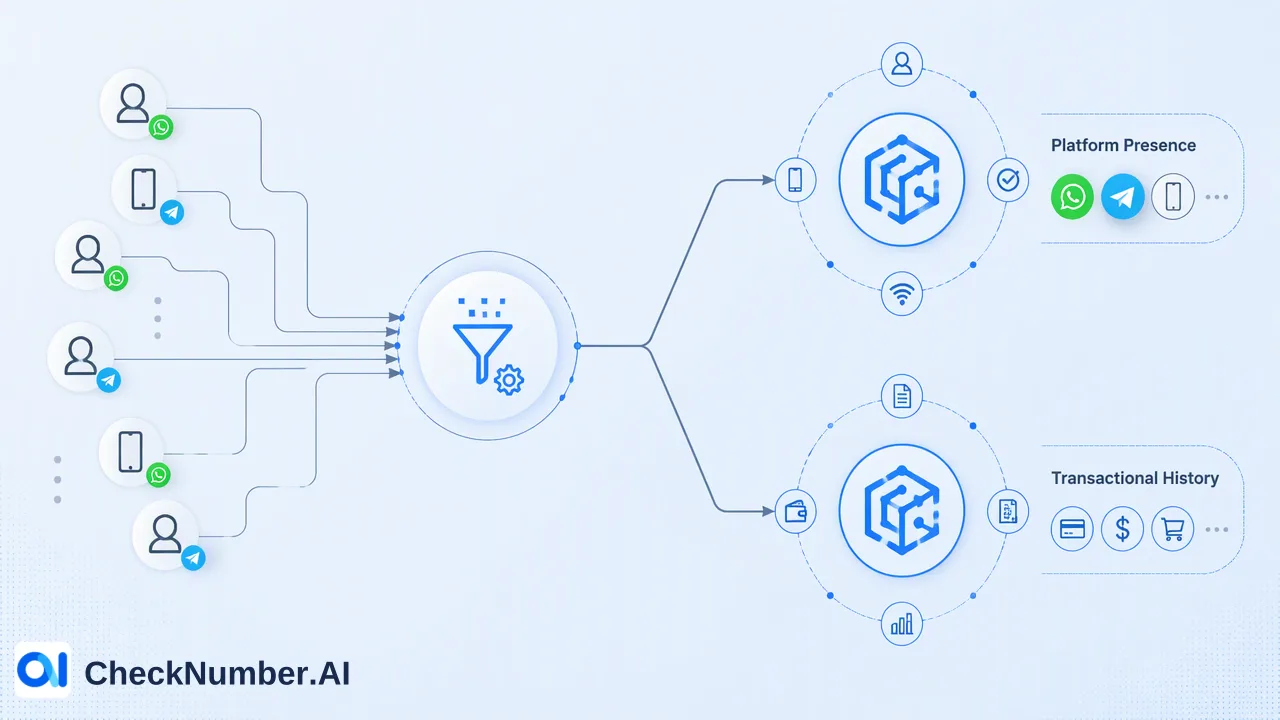
Platform registration confirms that an account exists on a given messaging channel at check time, whereas transaction history records an actual business purchase. A structured lead qualification framework treats platform registration as a baseline indicator of channel reachability and relies on internal CRM records to assess commercial intent. Separating these signals helps organizations prevent resource misallocation, maintain clean operational records, and direct high-touch outreach toward qualified buyers.
The Challenge of Defining Lead Intent
Marketing and sales operations frequently encounter discrepancies between platform account creation and genuine commercial interest. An individual may register a phone number on a messaging application or create a public profile without evaluating products or intending to complete a transaction. Treating basic account existence as a demonstration of buying interest leads to inaccurate funnel reporting and wasted sales effort. A reliable lead qualification framework establishes a clear boundary between operational channel presence and verified transactional engagement. When sales teams conflate reachability with qualified demand, pipeline stages become crowded with contacts who have taken no commercial action, distorting forecasting and slowing representative follow-up on genuine prospects.
Platform Signals: Establishing Channel Reachability
External verification tools provide valuable data points about where and how a contact can receive communication. CheckNumber.AI provides bulk phone-number and email list checking services that support these operational verifications through CSV or TXT list uploads as well as REST API integration. Before conducting verification across messaging networks, teams must standardize international phone number formats. Consistent formatting resolves discrepancies caused by local dialing codes, country prefixes, and irregular punctuation, ensuring that subsequent checks query the precise destination network. Once normalized, bulk checking services assess platform presence across relevant services:
| Verification Signal | Primary Data Returned | Strategic Application |
|---|---|---|
| Format Normalization | Consistent international number structure | Prepares contact records for downstream platform querying |
| WhatsApp Registration | Account presence on the WhatsApp network | Informs conversational messaging routing and contactability |
| Telegram Registration | Account presence on the Telegram network | Identifies reachability for community and direct messaging |
| RCS Capability | Rich communication service support | Supports audience planning for rich media campaigns |
| These checks reveal whether an addressable endpoint exists on a selected platform at the time of the query. |
The Risks of Proxy-Based Qualification
Using external platform presence as a proxy for customer intent creates measurable inefficiencies across go-to-market workflows. Organizations that assume registered messaging contacts are ready to buy face several practical challenges:
- Distorted Pipeline Prioritization: High-volume messaging lists often contain dormant accounts or consumers using platforms strictly for personal networking. Assigning high lead scores based solely on platform presence pulls sales focus away from high-intent buyers. 2. Inflated Acquisition Costs: Deploying high-cost communication channels, such as direct sales calls or premium messaging templates, to unverified leads increases operating expenses without improving conversions. 3. Compromised Channel Reputation: Sending commercial solicitations to contacts who merely hold an account on a messaging app risks high opt-out and complaint rates, which can impact sender standing on those networks. A resilient lead qualification framework uses account presence to determine technical delivery options, leaving buyer prioritization to behavioral and transactional indicators.
A Framework for Data Hygiene and Segmentation
To maintain clean CRM records and maximize outreach productivity, operations teams can implement a multi-tiered segmentation model that separates platform verification from commercial history. ### Step 1: Ingestion and Normalization Standardize incoming contact records upon capture. Phone numbers should follow standard international formats, and email addresses should be normalized to ensure consistent querying across downstream verification systems. ### Step 2: Channel Presence Verification Process contact lists through bulk checking workflows using file uploads or REST API endpoints. This step identifies which channels—such as WhatsApp, Telegram, or RCS—have registered accounts associated with each identifier at check time, populating technical reachability fields within the CRM. ### Step 3: Transactional Overlay Cross-reference the reachability layer with first-party customer records. Separate contacts into distinct operational tiers based on verified engagement:
- Registered Non-Buyers: Contacts with verified platform accounts who have never transacted. These records belong in low-touch, automated educational workflows. - Lapsed Customers: Contacts with previous transaction records whose platform reachability has been verified. These profiles can be prioritized for reactivation messaging. - Active Transactors: High-intent profiles with recent purchase history and verified messaging channels, suitable for high-value transactional notifications and dedicated account support. Maintaining strict separation between external reachability flags and internal order history preserves data hygiene, supports accurate reporting, and ensures team members direct appropriate resources toward active commercial opportunities.
FAQ
Why is platform registration distinct from buyer intent?
Platform registration confirms that a phone number or identifier is associated with an account on a specific messaging network at the time of verification. It does not reflect past transactions, purchasing power, or immediate interest in acquiring goods or services.
How do organizations incorporate platform verification into CRM records?
Teams typically store platform presence as an operational reachability attribute alongside internal transaction logs. Keeping external channel verification distinct from historical sales data ensures marketing automation and sales routing reference verified customer actions rather than raw account availability.
What role does number normalization play prior to platform checks?
Standardizing phone numbers into consistent international formats removes local prefixes, trunk codes, and formatting variations. This step ensures that verification queries evaluate accurate identifiers across global messaging networks.