CheckNumber.AI
 · 5 min read
Optimizing Cross-Border Commerce with International Phone Number Intelligence
Learn how international phone number validation, carrier intelligence, and platform signals support cross-border commerce and global data management workflows.
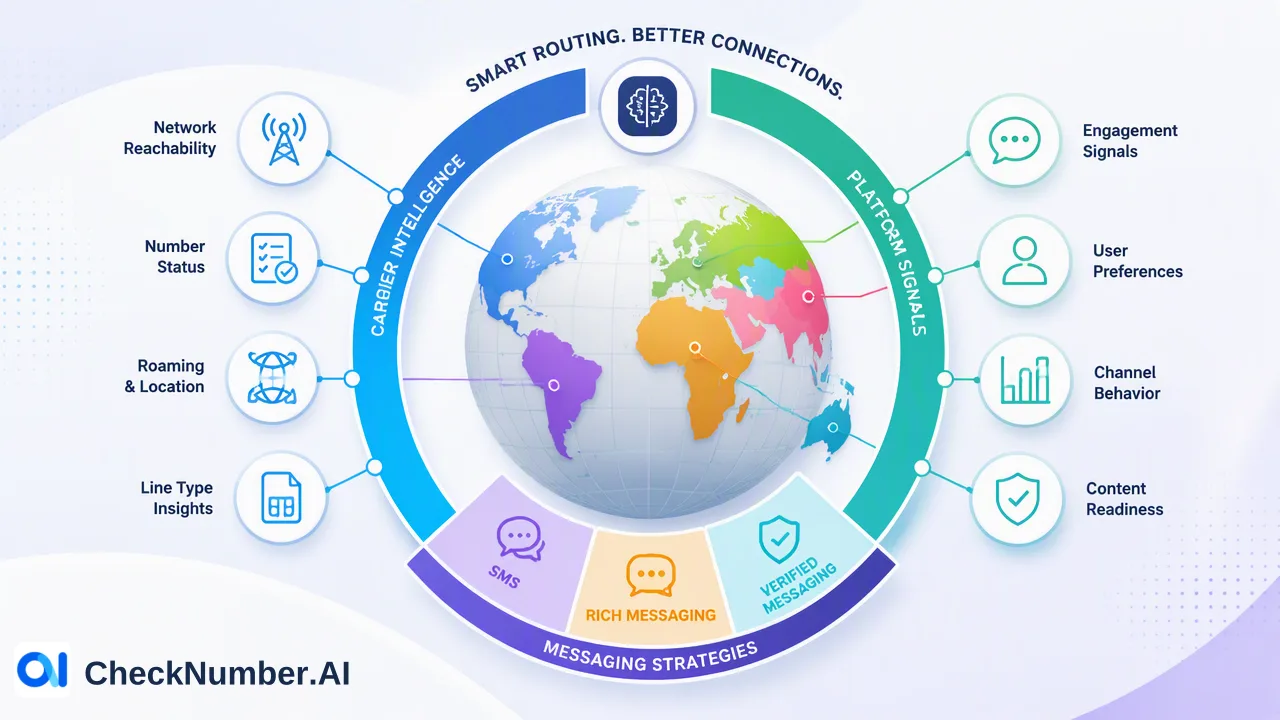
Managing international phone numbers in cross-border commerce requires accurate regional context and platform-specific insights. By utilizing bulk carrier intelligence and platform registration signals, organizations can better categorize their global datasets, identify line types, and plan regional messaging strategies effectively without relying on manual validation. This structured approach helps technical and business teams process diverse country-specific numbering formats and informs downstream routing or audience segmentation decisions across international markets.
The Challenge of Global Phone Data
Cross-border commerce requires accurate regional context for phone numbers. When organizations scale operations across multiple countries, they encounter diverse numbering plans, varying digit lengths, and distinct local telecom infrastructures. A phone number collected in one region may lack the necessary country code or formatting required for standardized processing. Furthermore, businesses often ingest contact data from disparate regional storefronts, leading to fragmented and inconsistent databases. Without structured data management, teams struggle to categorize contacts accurately, which complicates regional outreach and data hygiene efforts. Addressing this challenge involves moving beyond basic format checks to incorporate deeper intelligence about the number’s origin and network context. By systematically validating and enriching international phone numbers, organizations can establish a standardized dataset. This foundational step supports more organized global operations, reduces the friction associated with handling unfamiliar international formats, and informs subsequent workflow decisions for technical and business teams.
Leveraging Carrier Intelligence for Regional Context
Carrier intelligence provides carrier, line type, country, and regional context for phone numbers across supported countries. In cross-border commerce, this data supports better regional segmentation for global operations. By identifying whether a number belongs to a mobile, landline, or VoIP network, organizations can tailor their communication workflows appropriately. For example, knowing a number is a landline informs teams that SMS-based outreach may not be applicable, whereas a mobile line type supports different engagement strategies. Furthermore, extracting the country and regional context helps businesses align their operations with local time zones and regional requirements. This intelligence acts as a critical input for data-driven operations, helping teams organize large datasets based on concrete network attributes rather than assumptions. Integrating carrier intelligence into the data management pipeline ensures that cross-border teams have the necessary context to route communications effectively and maintain high standards of data hygiene across international markets.
Integrating Platform Signals into Audience Planning
Beyond carrier data, platform registration signals indicate account-related presence for specific messaging services at the time of the check. For instance, identifying phone numbers that support RCS (Rich Communication Services) or Google Messages assists in planning rich-messaging outreach. These signals provide technical teams with the context needed to segment audiences based on platform compatibility. However, integrating this account-presence data into audience planning workflows helps organizations allocate resources more effectively. By understanding which segments of an international dataset are registered on rich-messaging platforms, businesses can design targeted communication strategies that align with the technical capabilities of their audience’s registered services. This targeted approach supports more efficient cross-border campaigns and helps teams prioritize channels based on documented platform presence.
Streamlining Workflows with Bulk Processing
Managing large international datasets requires efficient operational workflows. The core workflow for handling these extensive lists is the bulk checking of supported phone numbers. Bulk workflows support CSV or TXT list uploads and REST API access, providing flexible integration options for technical teams. Instead of processing numbers individually, organizations can submit extensive lists to retrieve carrier intelligence and platform registration signals systematically. This bulk processing capability allows for the efficient handling of cross-border data, reducing the manual effort required to categorize and segment global contacts. For example, a data operations team can export a CSV file from their customer relationship management (CRM) system, upload it for bulk checking, and use the appended carrier and platform data to update their records. Alternatively, by utilizing REST API access, businesses can integrate these checks directly into their existing data management pipelines, ensuring that regional context and platform signals are consistently applied to new and existing records. This streamlined approach supports scalable global operations and maintains data structure across diverse regional markets.
FAQ
How does carrier intelligence differ from platform registration signals?
Carrier intelligence identifies the underlying network attributes of a phone number, such as the carrier, line type, country, and regional context. In contrast, platform registration signals indicate whether a phone number has an account-related presence on a specific messaging service, such as RCS or Google Messages. While carrier data informs general network routing and line categorization, platform signals assist specifically in planning rich-messaging audience outreach.
Can bulk processing handle international phone number formats?
Yes, bulk workflows are designed to process large international datasets. Organizations can utilize CSV or TXT list uploads, as well as REST API access, to submit extensive lists of phone numbers from various regions. This bulk checking workflow systematically retrieves the relevant carrier intelligence or platform signals for the submitted numbers, supporting efficient cross-border data management.
What is the benefit of identifying line types in cross-border commerce?
Identifying line types—such as mobile, landline, or VoIP—provides necessary context for organizing global operations. This intelligence helps teams segment their datasets accurately and informs communication strategies. For example, distinguishing a mobile line from a landline supports decisions regarding which channels are appropriate for outreach, thereby optimizing resource allocation in international workflows.