CheckNumber.AI
 · 5 min read
The International Data Hygiene Framework: Standardizing Phone Lists for Global Outreach
A technical best-practices guide for organizing and validating global contact lists by separating raw number standardization from platform-specific registration and activity signals.
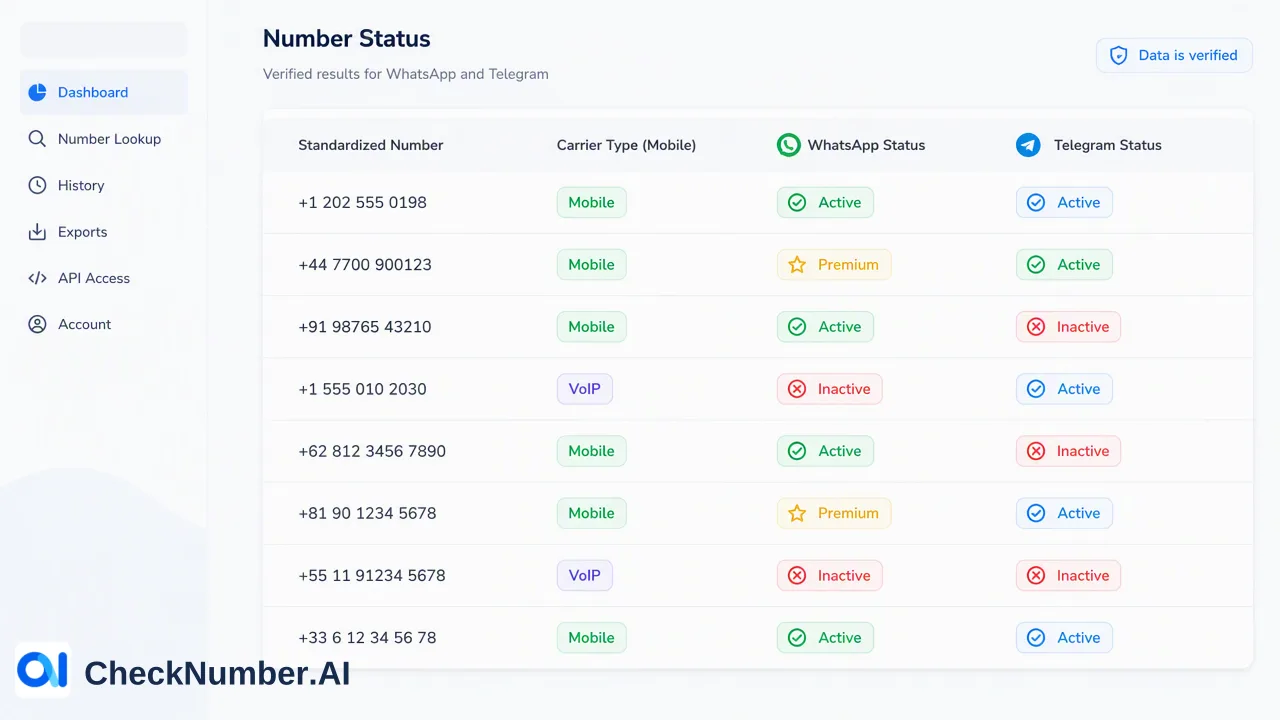
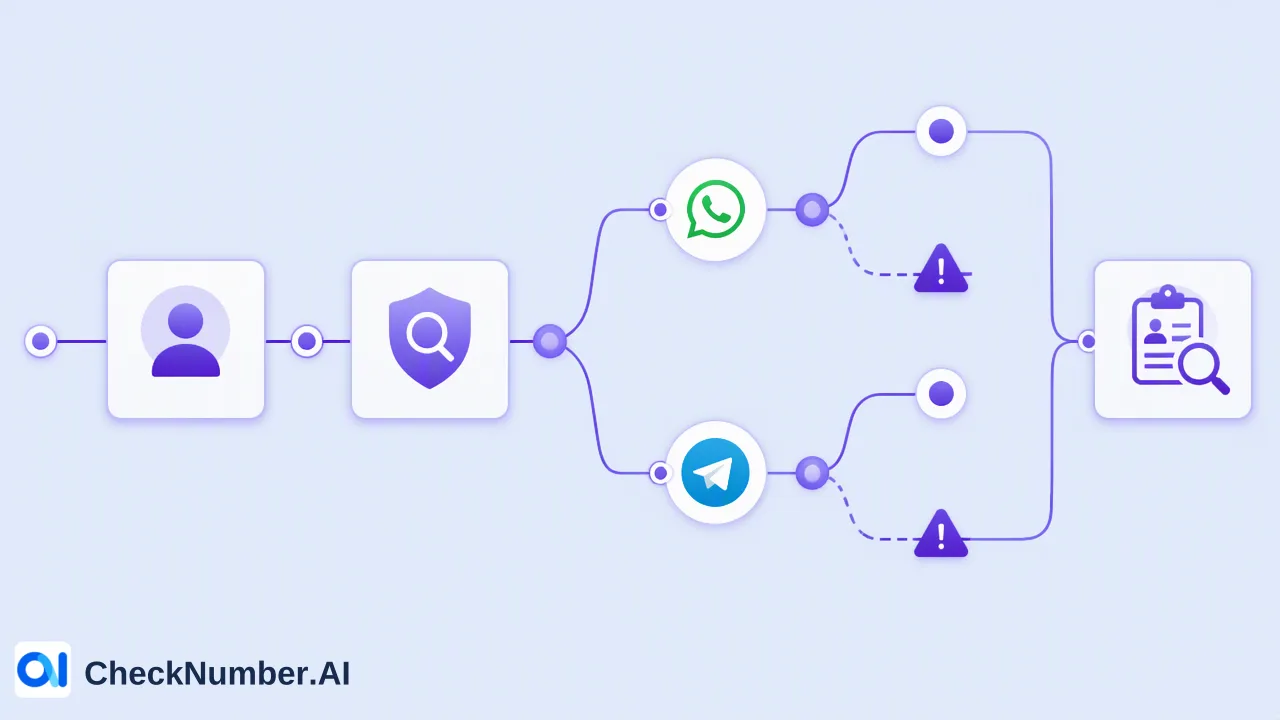
Effective global contact management relies on a multi-layered data hygiene framework. First, normalize all raw phone numbers to international standards. Second, apply carrier-level validation to identify line types. Finally, use platform-specific checks to detect registration and activity signals. Storing these as distinct, channel-specific fields keeps your data actionable for diverse outreach and review workflows. Implementing international phone number list cleaning as a foundational step supports more accurate downstream platform screening and helps teams organize their contact databases systematically.
The Foundation: Normalizing Global Phone Data
Standardizing phone formats is the mandatory first step before any platform screening. When managing contact lists across multiple regions, raw data often contains inconsistencies such as missing country codes, localized dialing prefixes, or formatting artifacts like spaces and dashes. Removing local prefixes and normalizing international codes ensures consistency across your database. For example, local dialing habits often include leading zeros or specific trunk codes that are only valid within that country’s domestic network. International phone number list cleaning strips these local artifacts and converts the number to the globally recognized E.164 format, which consists only of the country code and the subscriber number. Without this baseline standardization, downstream checks may fail to recognize otherwise valid inputs. By treating normalization as a distinct, preliminary phase, technical teams can isolate formatting errors from actual registration or activity signals, supporting correct formatting for subsequent API queries or bulk uploads.
Layering Your Data: Carrier vs. Platform Signals
Once numbers are standardized, the next phase of the framework involves separating carrier intelligence from platform-specific data. Carrier-level data is distinct from platform-level registration data. Carrier intelligence provides foundational line-type information, helping teams distinguish between mobile, landline, and VoIP numbers. In contrast, platform registration signals confirm whether a specific phone number is associated with an account on a particular messaging or social platform. A number might be a valid mobile line at the carrier level but lack a registered WhatsApp or Telegram account. Conversely, a VoIP number might be registered on a messaging app but flagged differently in carrier routing. For teams processing large datasets, CheckNumber.AI supports these workflows through bulk checking of supported phone-number lists. Bulk workflows support CSV or TXT list uploads and REST API access, making it straightforward to process standardized numbers and retrieve distinct carrier and platform signals systematically. When integrating these checks programmatically, note that the API has rate limits that restrict requests per minute and that concurrency is also limited; teams should consult the current API documentation for applicable limits to optimize their data pipelines.
Structuring Multi-Channel Verification
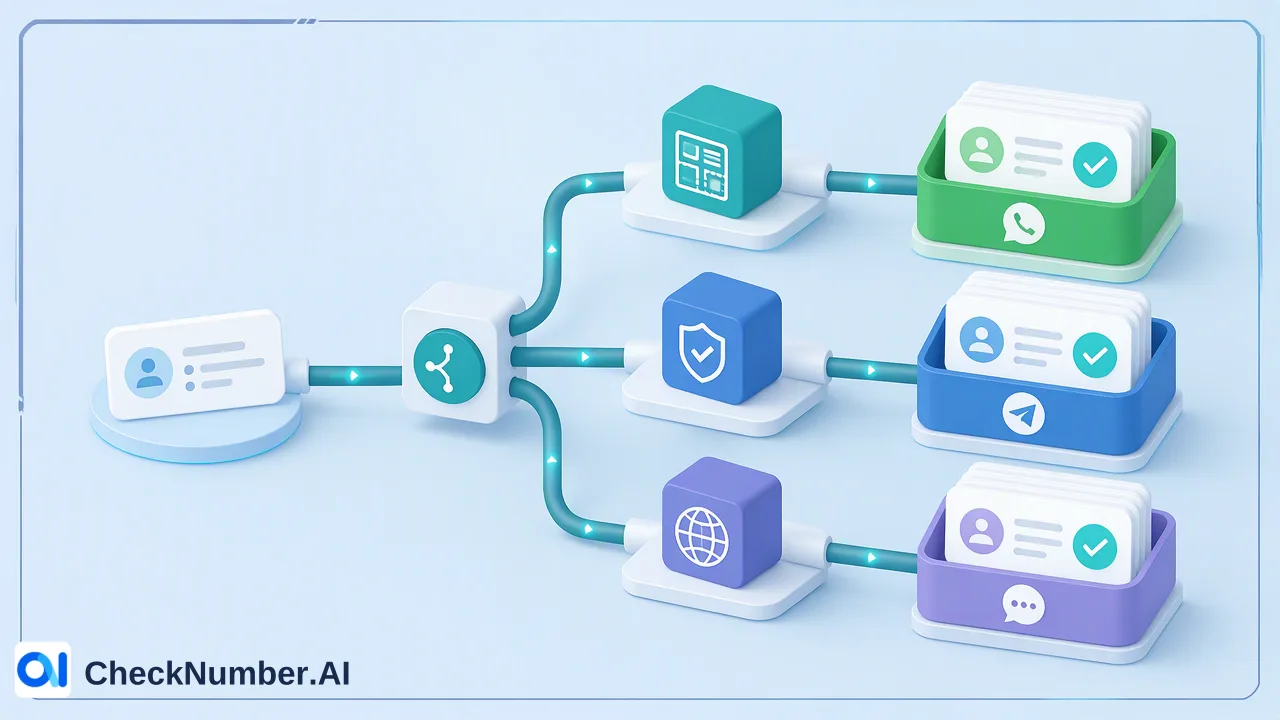
A robust data architecture requires storing platform registration status as separate fields per channel rather than relying on a generic ‘social account valid’ flag. Because different products expose different high-level capabilities, maintaining granular channel data informs better routing and review decisions. For example, the WhatsApp Days Checker checks WhatsApp account presence and provides available activity or last-seen context plus available business-account and profile context. Storing this WhatsApp-specific data in its own dedicated database column supports targeted outreach planning for that specific ecosystem. Similarly, Telegram requires its own distinct fields. The Telegram Avatar, Age, Gender & Others Checker checks Telegram account presence and provides available profile, demographic, and activity enrichment. Meanwhile, the Telegram Days Checker provides available activity or last-seen context plus available username, account-identifier, and Premium-membership context. By structuring your database to capture these distinct capabilities separately—such as mapping demographic enrichment to one field and account-identifier signals to another—teams can build a highly contextualized view of channel availability without conflating signals from different platforms.
Using Signals to Inform Outreach Workflows
Technical signals like ‘last seen’ or ‘online status’ are indicators of channel availability, not proxies for purchase intent or lead quality. These activity signals can be one input alongside other checks to help teams prioritize outreach, as they remain distinct from contact response or message delivery outcomes. To maximize the utility of this data, preserve customer source data—such as CRM records, ad sources, or order history—alongside technical validation results. Combining internal business context with external platform registration and activity signals supports more nuanced review workflows. For instance, knowing a contact has a registered Telegram account and recent activity context can inform channel selection, while the preserved CRM data provides the necessary business context for the interaction. This multi-layered approach helps data hygiene efforts directly support operational decision-making. It provides teams with the context needed to route communications effectively, without overestimating the meaning of a technical presence signal.
FAQ
Why is raw number normalization required before platform checking?
Standardizing phone formats is the mandatory first step before any platform screening. Removing local prefixes and normalizing international codes ensures consistency, preventing formatting errors from being misinterpreted as missing platform registration signals.
How do I distinguish between carrier data and platform registration?
Carrier-level data provides foundational line-type information, such as whether a number is mobile, VoIP, or landline. Platform registration data is distinct and confirms whether that specific phone number is associated with an account on a particular messaging platform, such as WhatsApp or Telegram.
Should I store platform registration status as a single field?
No, platform registration status should be stored as separate fields per channel. Avoiding a generic ‘social account valid’ flag helps teams maintain granular data for specific platforms, which informs more accurate channel routing and review workflows.
How can teams process large lists for international data hygiene?
Bulk workflows support CSV or TXT list uploads and REST API access. This helps teams process standardized numbers systematically and retrieve distinct carrier and platform signals at scale.