CheckNumber.AI
 · 6 min read
From Raw Lists to Sales-Ready Data: A Framework for International Phone List Hygiene
A systematic framework for transforming raw international phone lists into actionable data through standardization, validity batch-checking, and platform-specific enrichment.
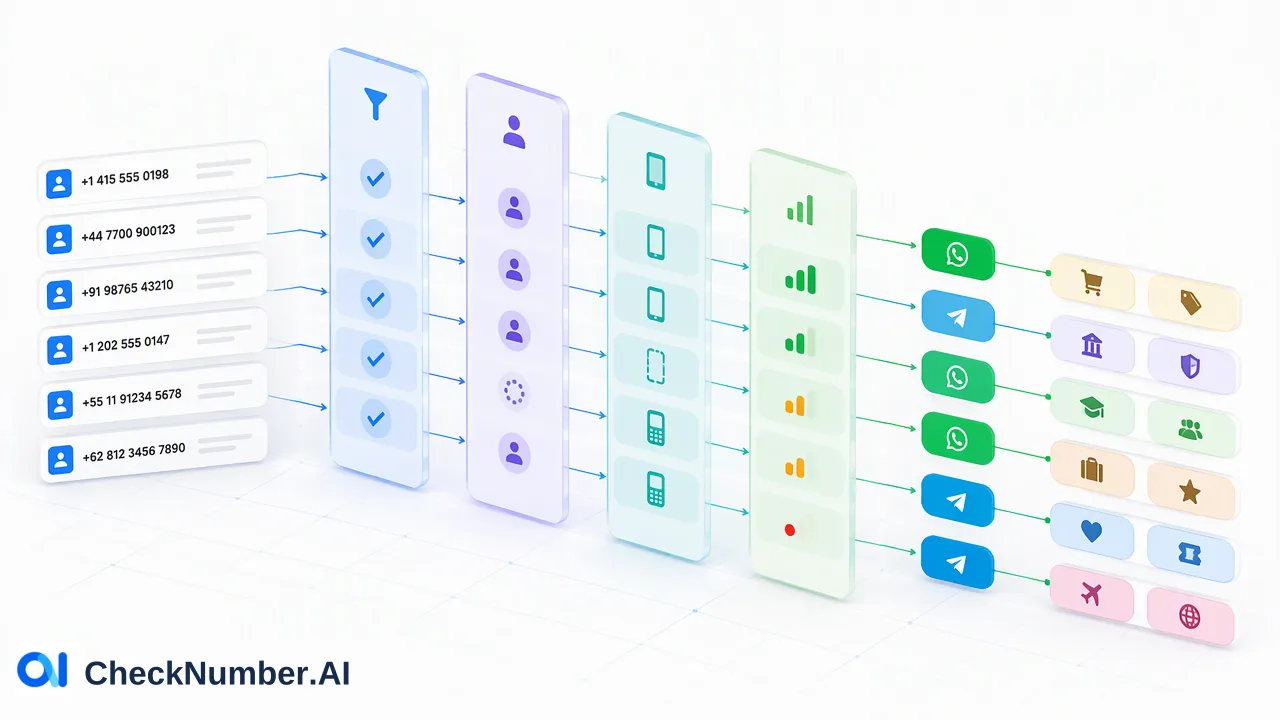
Effective phone list hygiene requires a systematic framework: standardizing international formats, batch-checking phone-number validity, and enriching data with platform-specific signals. By moving beyond raw data to a structured, cleaned, and tagged database, organizations can prioritize high-value leads, reduce outreach waste, and support sales teams with actionable contact information. This systematic process of cleaning, standardizing, and enriching contact data supports accuracy and improves the overall efficiency of CRM workflows.
The Hidden Cost of Raw Contact Data
Raw contact lists often contain unorganized data that hinders international outreach. When organizations collect phone numbers across different regions, the resulting databases frequently lack consistent formatting and include numbers that are no longer active. This unhygienic data creates a hidden cost for sales operations, as teams spend valuable time attempting to engage with unreachable contacts. Effective contact management requires more than just basic data entry; it demands a systematic approach to formatting, deduplication, and enriching data with business context. Without this framework, CRM administrators and technical leads struggle to maintain a database that accurately reflects their target audience. By implementing a structured phone list hygiene framework, organizations can transform raw lists into sales-ready data, ensuring that sales teams can prioritize and engage leads effectively. This systematic process of cleaning, standardizing, and enriching contact data supports accuracy and improves the overall efficiency of CRM workflows.
Step 1: Standardization and Phone Number Validation
Standardization of international phone formats is a prerequisite for effective data hygiene. Before applying any advanced checks, organizations must ensure that all contact records follow a consistent international format. This standardization step prepares the database for accurate processing across global regions. Once formats are standardized, teams can utilize Phone Number Validation to batch-check phone-number validity for list cleaning before downstream workflows. This validity signal provides a foundational layer of list hygiene, ensuring that subsequent checks are performed on validated numbers. During this initial cleaning phase, organizations must also address duplicate records. Deduplication should involve merging data sources rather than simply deleting records to preserve customer history. By combining duplicate entries into a single, comprehensive record, CRM administrators maintain valuable context about past interactions while keeping the database clean. CheckNumber.AI supports this workflow by offering bulk checking of supported phone-number lists, allowing teams to process large volumes of data through CSV or TXT list uploads, or via REST API access. This bulk capability ensures that even extensive international databases can be systematically cleaned and prepared for the next stages of the hygiene framework.
Step 2: Applying Reachability and Platform Signals
After standardizing formats and batch-checking phone-number validity, the next step in the hygiene framework involves checking platform-specific reachability. It confirms whether a phone number is currently associated with a specific messaging platform, which informs outreach strategy. Organizations can use the WhatsApp Advanced Checker to check WhatsApp account registration for uploaded phone-number lists using the higher-detection-rate task. This provides a real-time check and a platform registration signal for WhatsApp. Similarly, the Telegram Checker can be used to check whether phone numbers are registered with Telegram. These registration checks are foundation signals that help teams review and segment their lists based on platform presence. By filtering lists using these platform registration signals before a campaign launch, sales operations managers can allocate resources toward reachable contacts and tailor their communication channels accordingly.
Step 3: Enriching Data for Sales Prioritization
Validation status is a foundation, not a complete lead qualification strategy. To make a list truly actionable for sales, organizations must enrich the data with additional context. Adding business-context tags, such as source or product interest, helps sales teams prioritize their efforts and tailor their messaging. CheckNumber.AI provides tools to support this enrichment phase. The High-value Users Checker flags high-value audience signals across uploaded phone-number lists for prioritization and review. This audience value signal helps teams identify which contacts may warrant immediate attention based on platform indicators. Additionally, the Telegram Days Checker checks Telegram account presence and provides available activity or last-seen context, plus available account-identifier and Premium-membership context. These activity and membership signals contribute to a richer contact profile, giving sales teams the context they need to tailor their engagement strategies. By combining platform registration signals with audience value signals and business-context tags, organizations can systematically prioritize high-value leads and improve the efficiency of their international outreach.
Step 4: The Feedback Loop: Maintaining List Quality
Data hygiene is an iterative process, not a one-time event. Contact data degrades over time as individuals change phone numbers, switch platforms, or update their preferences. To maintain list quality, organizations must establish a continuous feedback loop between the sales team and the CRM database. Sales feedback must be looped back into the database to maintain list quality over time. When sales representatives identify a disconnected number or a change in platform reachability during their outreach, this information should be recorded and used to update the central database. This iterative approach ensures that the phone list hygiene framework remains effective and that the data remains sales-ready. By continuously standardizing new entries, batch-checking phone-number validity, applying platform registration signals, and incorporating sales feedback, organizations can sustain a high-quality database that supports ongoing international outreach efforts. This ongoing maintenance is essential for maximizing the value of contact data and supporting long-term sales performance.
FAQ
Why is international phone format standardization important?
Standardization of international phone formats is a prerequisite for effective data hygiene. It ensures that all contact records follow a consistent structure, which prepares the database for accurate processing before applying downstream workflows like batch-checking phone-number validity or platform registration checks.
What is the difference between phone validation and platform registration checks?
Phone Number Validation is used to batch-check phone-number validity for list cleaning before downstream workflows.
How can teams maintain phone list quality over time?
Data hygiene is an iterative process. Organizations can maintain list quality by continuously standardizing formats, batch-checking validity, and ensuring that sales feedback is looped back into the database to update contact records when reachability changes.
How do audience value signals support sales prioritization?
Audience value signals help teams identify which contacts may warrant immediate attention based on platform indicators. By flagging high-value audience signals across uploaded phone-number lists, organizations can systematically prioritize leads for review and tailor their engagement strategies.