CheckNumber.AI
 · 6 min read
How to Improve Your Customer List Match Rate for Social Media Advertising
Learn how data hygiene and bulk contact validation workflows support better customer list match rates for social media advertising.
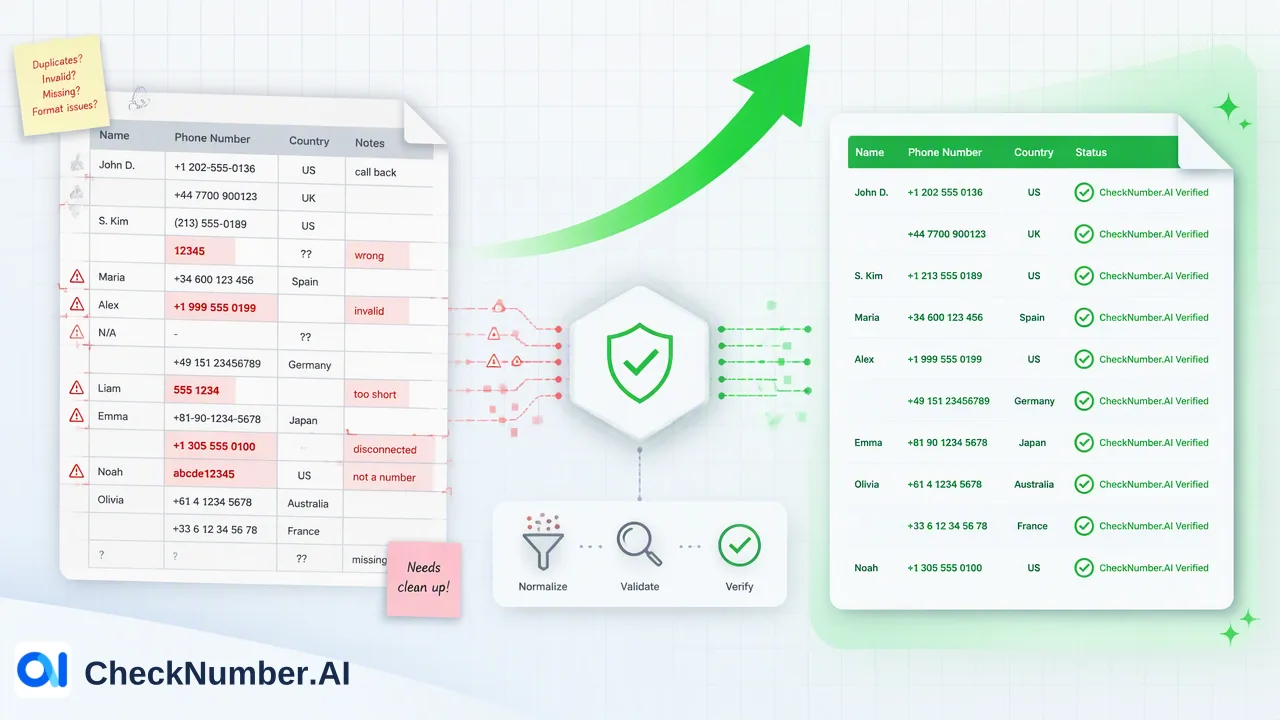
Low match rates in social media advertising are typically caused by poor data hygiene, such as outdated or incorrectly formatted contact identifiers, rather than platform-side issues. Improving customer list match rates requires a proactive approach to audience preparation. This process focuses on validating and cleaning contact lists before they are uploaded to advertising platforms. By ensuring identifiers are formatted correctly and checking for an account-related presence on the target platform, organizations can support more accurate audience matching and better inform their advertising operations.
Understanding the Factors Behind Low Match Rates
Customer list match rates represent the percentage of contact identifiers in a provided list that successfully map to existing user accounts on a social media advertising platform. When teams upload a list of phone numbers or email addresses, the advertising platform attempts to match those identifiers against its own user database. If the match rate is low, the resulting audience size will be smaller than expected, which can limit the reach of a campaign. Low match rates are often caused by outdated or incorrectly formatted contact identifiers. Over time, CRM databases accumulate contact information that may no longer be accurate. When this unverified data is exported and uploaded directly to an advertising platform, the platform cannot match the identifiers to its users. Platform-specific matching requires identifiers that are actually linked to an account-related presence on that specific network. If a phone number or email address lacks this account-related presence, the platform will simply discard it during the matching process. To address these discrepancies, teams must distinguish between different types of data issues. A contact identifier might fail to match because it lacks proper formatting, or it might fail because it does not have an account-related presence on the target platform. Recognizing that these factors originate in the source data rather than the advertising platform itself is crucial for troubleshooting audience size issues.
The Role of Data Hygiene in Audience Preparation
Data hygiene, including formatting, validation, and cleaning, is the essential first step in audience preparation. Before uploading any contact list to a social media advertising platform, organizations must ensure that the data is standardized and accurate. CRM data often contains outdated or invalid contact information that degrades audience matching. Without a dedicated data hygiene workflow, teams risk uploading lists filled with unusable identifiers. A comprehensive data hygiene strategy involves multiple layers of review. First, teams should implement format checks to ensure that phone numbers and email addresses adhere to standard conventions. However, format checks alone do not confirm whether an identifier is associated with a social media account. To build a more accurate audience list, organizations can incorporate platform registration signals. A platform registration signal indicates an account-related presence for the named platform at the time of the check. By integrating these checks into the audience preparation workflow, teams can filter out low-quality identifiers before campaign launch. This proactive cleaning process helps organizations maintain cleaner CRM databases and supports more predictable audience matching outcomes. When data hygiene is prioritized, advertising operations teams can focus on campaign strategy rather than troubleshooting data upload errors.
Optimizing Your List Before Upload
Preparing large datasets for social media advertising requires efficient processing tools. Manual review of contact identifiers is not feasible for enterprise CRM databases. Instead, organizations can utilize bulk checking workflows to streamline the optimization process. CheckNumber.AI provides bulk checking of supported phone-number or email lists, helping teams manage large-scale data hygiene tasks efficiently. Bulk workflows support CSV or TXT list uploads, allowing teams to export their audience segments directly from their CRM or marketing automation platforms and process them in a single batch. For organizations that require automated data hygiene, REST API access is also available to integrate bulk checking directly into internal systems. These capabilities support the rapid processing of thousands of contact identifiers, identifying which records have an account-related presence on the target platform. When optimizing a list, teams can use these bulk workflows to segment their data based on the returned signals. Identifiers that return a positive platform registration signal can be prioritized for the primary audience upload. Records that lack an account-related presence can be flagged for further review or excluded from the social media campaign entirely. This systematic approach to list optimization helps teams filter unreachable or low-quality identifiers before campaign launch, providing a stronger foundation for advertising operations.
Troubleshooting Audience Size Issues
When a social media advertising campaign reports a smaller-than-expected audience size, teams often look to the platform’s targeting settings or bidding strategies for a solution. However, troubleshooting audience size issues should start with the source list, not the ad platform settings. The root cause of a low match rate is almost always found in the quality of the uploaded contact identifiers. To diagnose the issue, organizations should audit their recent list uploads. Teams can review the data for common formatting errors, such as missing country codes on phone numbers or incomplete email domains. If the formatting appears correct, the next step is to evaluate the age and source of the CRM data. Older lists are more likely to contain identifiers that no longer have an account-related presence on the target platform. Implementing a routine validation process using bulk checking tools can help teams identify these issues before they impact campaign planning. By routinely processing CSV or TXT list uploads through a validation workflow, organizations can establish a baseline for their data quality. This ongoing maintenance ensures that when it is time to launch a new campaign, the source list is already optimized, reducing the likelihood of unexpected audience size limitations.
FAQ
Why is a customer list match rate low?
Low match rates are frequently caused by outdated or incorrectly formatted contact identifiers in the source data. If the uploaded phone numbers or email addresses lack an account-related presence on the specific social media platform, they will not match to existing users, resulting in a smaller audience size.
What is the first step in preparing a customer list for social media advertising?
Data hygiene, including formatting, validation, and cleaning, is the essential first step in audience preparation. Organizations should review their CRM data and filter out low-quality identifiers before uploading the list to an advertising platform.
How do bulk workflows support audience preparation?
Bulk workflows support CSV or TXT list uploads and REST API access, allowing teams to process large datasets efficiently. The core workflow is bulk checking of supported phone-number or email lists, which helps organizations identify records with an account-related presence and optimize their lists prior to campaign launch.