CheckNumber.AI
 · 5 min read
How to Clean and Validate Email Lists Before Platform Registration Checks
Learn how a structured two-step email list validation workflow checks provider registration signals and platform-specific presence to support data hygiene and improve audience segmentation.

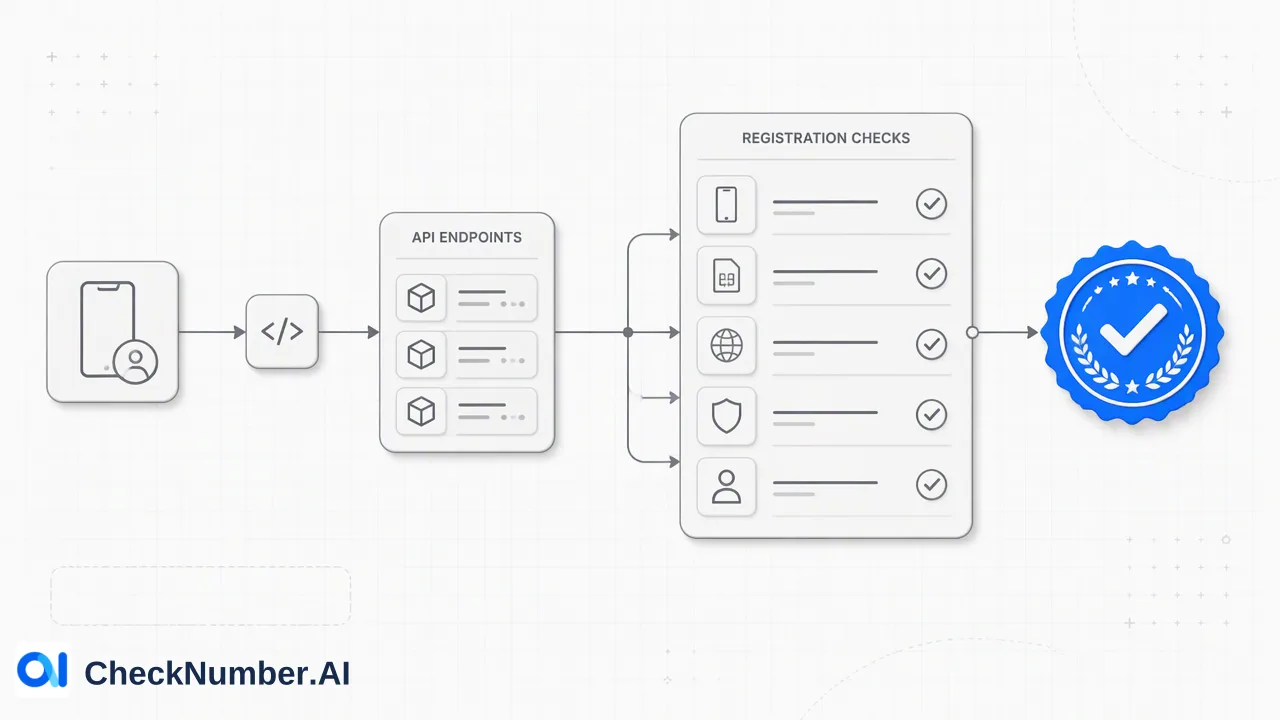
An effective email list validation workflow uses a sequential two-step approach: first verifying baseline email provider registration signals, and then evaluating platform-specific registration signals. Checking whether an email address is recognized across supported email providers helps teams identify inactive or non-existent mailboxes before attempting further checks. Once baseline existence is confirmed, evaluating platform-specific registration signals—such as presence on professional or communication networks—provides timely reachability context at check time.
The Need for Systematic Data Hygiene in Contact Lists
Maintaining a healthy email list is fundamental to sustainable marketing operations and data infrastructure. Over time, databases degrade as individuals change jobs, abandon old inboxes, or enter incorrect addresses during sign-up flows. When organizations dispatch bulk email communications to unverified lists, messages sent to non-existent mailboxes generate hard bounces. Traditional data hygiene often stops at basic syntax validation, which merely verifies that an address adheres to standard formatting. Implementing a rigorous email list validation workflow addresses this issue by confirming actual registration signals across email providers before contact data enters campaign sequences. A proactive hygiene process protects sending infrastructure, supports data accuracy, and ensures downstream marketing resources are allocated to viable recipients.
Step 1: Checking Email Provider Registration Signals
The foundational stage of any list cleaning workflow is checking baseline email validity. In this step, teams evaluate registration signals across supported email providers to confirm that the address is recognized within its respective service. Performing this step first provides substantial operational advantages:
- Early Elimination of Invalids: Addresses flagged as non-existent or unallocated by the provider can be purged immediately, preventing hard bounces in future campaigns. * Reduced Processing Waste: Subsequent platform lookups require time and processing quota. Removing invalid records early prevents unnecessary queries against secondary platform endpoints. * Infrastructure Hygiene: Regular provider checks help maintain clean core databases and protect long-term sender reputation. Teams handling high-volume contact records can execute this step using bulk workflows, uploading lists via CSV or TXT files or integrating verification checks through a REST API to support automated list intake.
Step 2: Evaluating Platform-Specific Registration Signals
Once an email address has been confirmed as existing at the provider level, teams can proceed to the second stage: checking platform-specific registration signals. This check evaluates whether the verified address is linked to an account on a targeted platform or professional network. For instance, checking an email address with a LinkedIn Email Profile Checker determines whether that address is associated with a registered LinkedIn account. Where available, such checks can also retrieve professional and demographic profile enrichment data, such as job roles or general location signals. Similarly, dedicated checks can assess whether addresses are Gmail accounts or retrieve avatar availability signals. It is essential to interpret these signals accurately. When treated as an objective reachability signal, however, it offers valuable context for multi-channel campaign planning.
Audience Categorization and Outreach Alignment
The primary benefit of a two-step validation sequence is the ability to segment contact lists with high precision. By combining provider validation with platform signals, organizations can categorize records into three primary groups, each requiring a distinct operational strategy:
| Segment | Characteristics | Recommended Action |
|---|---|---|
| Invalid Records | Addresses unrecognized by email providers or failing registration checks. | Exclude or suppress immediately from marketing systems to prevent bounces and protect reputation. |
| Valid but Unregistered | Addresses verified at the provider level, but with no registered presence on the target platform. | Route to standard email-only sequences; avoid dedicating platform-specific outreach resources. |
| Valid and Registered | Addresses confirmed at the provider level and registered on the target platform. | Prioritize for coordinated multi-channel campaigns, personalized professional touchpoints, or enriched workflows. |
| Aligning communication workflows with these segments ensures that outreach is tailored to the confirmed capabilities of each channel. For example, records identified as valid and registered on professional platforms can receive targeted B2B messaging informed by available profile signals, while valid but unregistered contacts remain within core email drip campaigns. |
Best Practices for Ongoing List Maintenance
Data verification is not a one-time exercise; contact data naturally degrades over time. Organizations looking to sustain clean outreach workflows should adopt several operational best practices:
- Validate Before Every Major Send: Do not rely on historical verification data that is several months old. Re-running registration checks ensures records reflect current provider and platform statuses. 2. Integrate Real-Time Intake: In addition to scheduled bulk CSV or TXT list cleaning, connect intake webhooks or forms to a verification REST API to inspect addresses before they populate CRM databases. 3. Separate Signal Interpretation from Intent: Maintain clear boundaries between technical reachability and recipient intent. Use registration presence to guide channel selection, while ensuring standard consent and compliance requirements are met independently. 4. Audit List Decay Rates: Regularly review the proportion of invalid records uncovered during checks to identify problematic acquisition sources, such as unvetted lead providers or unverified web forms. By following this structured two-step workflow—verifying email provider registration first and evaluating platform signals second—teams can maintain high data hygiene standards, preserve email sender reputation, and optimize multi-channel audience targeting.
FAQ
Why is a two-step verification process better than a single check?
A single validation check only reveals whether an address exists or meets general criteria, without indicating whether the recipient participates on a target platform. Conversely, querying a platform directly with an uncleaned list wastes processing effort on addresses that may not exist at the provider level. Running an initial email provider registration check filters out dead records first. Performing a subsequent platform-specific check then yields accurate reachability signals for active destinations, supporting cleaner records and more efficient resource allocation.
What is the difference between email deliverability validation and platform registration checking?
In contrast, platform registration checking evaluates whether that email corresponds to an active account on a specific third-party network, such as LinkedIn.
How do platform registration signals support audience segmentation?
Platform registration signals allow teams to categorize validated records into actionable tiers, such as addresses that exist generally versus those associated with specific platform profiles. This separation helps organizations decide whether an address is suitable for multi-channel outreach or should receive standard email communication, thereby supporting more relevant messaging workflows.