CheckNumber.AI
 · 6 min read
How to Enrich CRM Data with Platform Registration Signals Without Full Social Profiling
Marketing teams can optimize CRM data by appending specific platform registration signals rather than attempting to build comprehensive social profiles. This focused approach improves audience targeting and outreach efficiency while maintaining a clean separation between business-defined lifecycle segments and platform-specific activity status.

Marketing teams can optimize CRM data by appending specific platform registration signals—such as whether a contact is registered on a particular messaging app—rather than attempting to build comprehensive social profiles. This focused approach improves audience targeting and outreach efficiency while maintaining a clean separation between business-defined lifecycle segments and platform-specific activity status. By integrating these focused data fields, organizations can support outreach prioritization without the operational bloat associated with full social media data collection.
The Challenge of Over-Enrichment in CRM Data
Organizations rely on Customer Relationship Management (CRM) systems to guide marketing, sales, and support operations. However, a common challenge arises when teams attempt to gather as much information as possible about every contact. Full social profiling often leads to unnecessary data storage and operational complexity. When datasets become bloated with extraneous social media details, the core utility of the CRM can degrade. Over-enriching records with unnecessary social profile data introduces operational risk. Marketing teams may find it more difficult to segment audiences effectively when they have to navigate through unstructured or irrelevant social data points. Furthermore, attempting to maintain comprehensive social profiles requires constant updates, which can strain technical resources and complicate data hygiene practices. Instead of broad data collection, CRM data should remain focused on business-defined lifecycle segments. Firmographic data, purchase history, and direct interaction logs are foundational elements that define a customer’s relationship with the business. When teams look to expand this context, they need targeted data points that directly inform communication strategies, rather than exhaustive profiles that offer little actionable value for standard outreach workflows.
Understanding Platform Registration Signals
A platform registration signal is a specific, point-in-time indicator confirming whether a phone number or email address is associated with an account on a particular platform. For example, the CheckNumber.AI Telegram Checker evaluates whether phone numbers are registered with Telegram, returning a platform registration signal. Similarly, the Apple Checker evaluates Apple device association signals for phone numbers, providing a platform registration signal and an Apple device signal based on the Apple ID platform. These checks use phone numbers or emails as keys to verify platform registration status. By focusing on these specific indicators, organizations can determine if a contact is reachable on a specific messaging app or ecosystem. This approach contrasts sharply with social profiling, which attempts to aggregate behavioral data, interests, and extended network connections. Platform registration signals remain strictly focused on account presence, helping teams understand which communication channels are viable for a given contact at that specific moment.
Strategic Enrichment: Adding Focused Fields
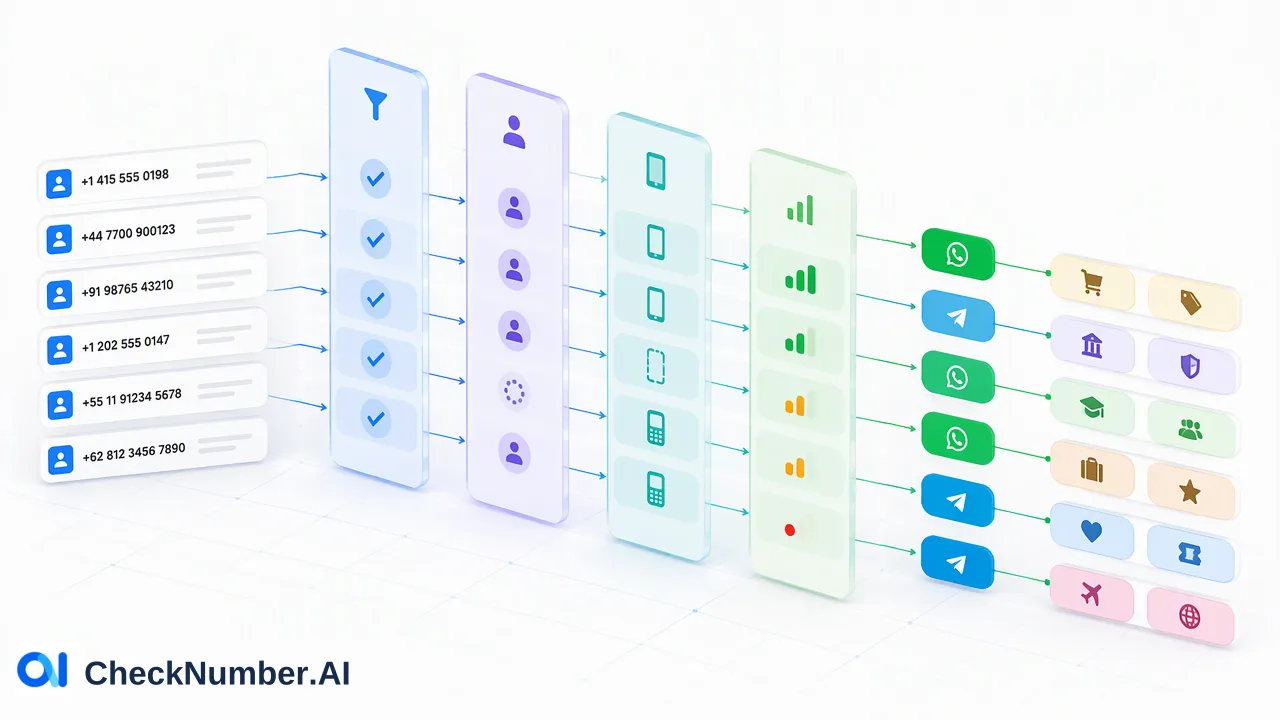
The methodology for CRM data enrichment with platform registration signals centers on adding focused fields to existing datasets rather than replacing foundational contact information. Teams can append these signals as distinct columns or tags within their CRM, ensuring that the new data enhances rather than obscures existing records. Maintaining a clear separation between business-defined lifecycle segments and platform-specific activity status is a critical best practice. A contact’s position in the sales funnel or marketing lifecycle should dictate the overall strategy, while the platform registration signal informs the tactical execution of that strategy. For instance, knowing that a segment of leads is registered on a specific messaging platform supports the decision to route certain communications through that channel, without altering the underlying lifecycle classification of those leads. To implement this strategy at scale, organizations can utilize bulk workflows. CheckNumber.AI is a bulk phone-number and email list checking service that supports this operational model. The core workflow involves the bulk checking of supported phone-number or email lists. These bulk workflows support CSV or TXT list uploads and REST API access, allowing technical teams to integrate the checking process directly into their data enrichment pipelines. By processing lists in bulk, marketing operations can systematically update CRM records with current reachability context.
Operationalizing Platform Signals for Outreach
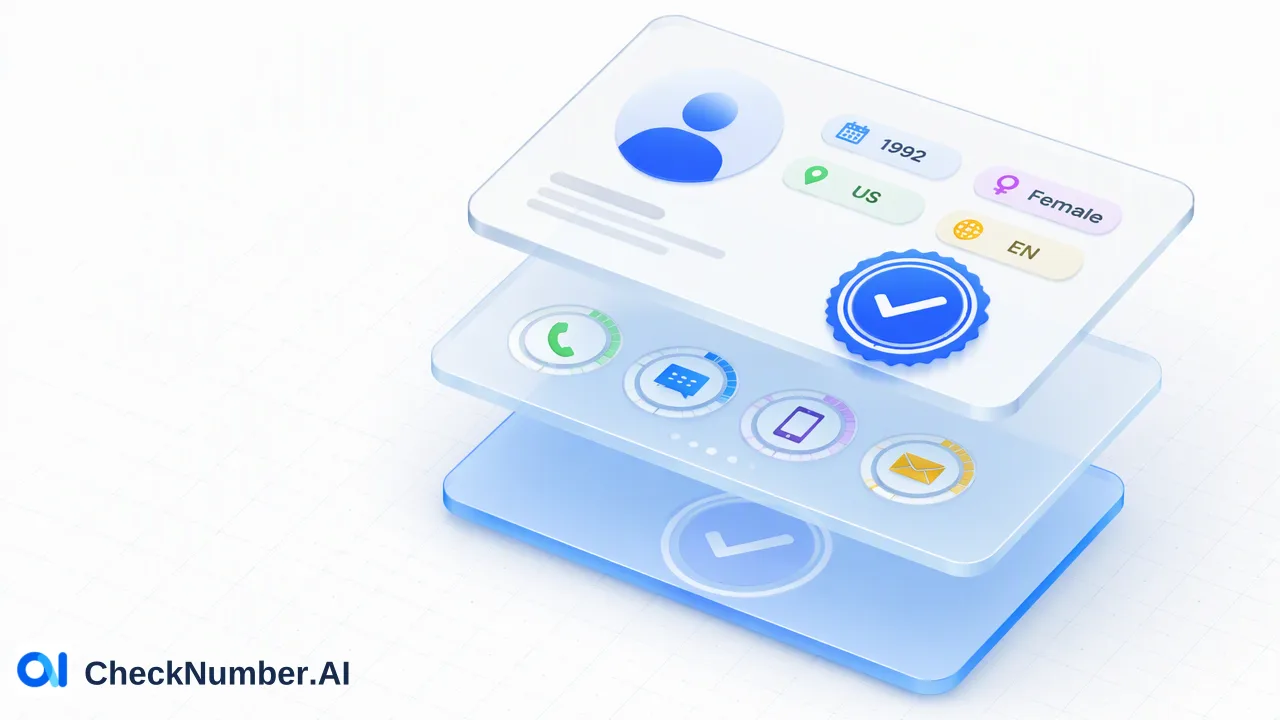
Once CRM records are enriched with platform registration signals, marketing and operations teams can operationalize this data to support outreach workflows. Platform signals support the prioritization of outreach channels by providing concrete context about where a contact maintains an active account presence. Different products expose different high-level capabilities that can inform specific outreach strategies. For example, the Telegram Days Checker checks Telegram account presence and provides available activity or last-seen context, plus available account-identifier and Premium-membership context. This activity signal and membership signal can help teams tailor their messaging approach for contacts who are reachable on Telegram. Additionally, the Telegram Age & Gender Checker provides available profile, demographic, and activity enrichment, offering further context for audience segmentation. For email-based workflows, Email Validation checks registration signals across supported email providers, returning an email provider registration signal. This helps teams confirm the reachability of email addresses before launching large-scale campaigns. By utilizing these focused signals, organizations can design routing logic that directs messages to the most appropriate platforms. If a phone number returns a positive platform registration signal for a specific messaging app, the outreach system can prioritize that app for time-sensitive notifications. This targeted approach helps teams optimize their communication resources, relying on verified account presence rather than assumptions about channel preferences.
FAQ
What is the difference between social profiling and platform registration signals?
Social profiling attempts to build comprehensive records of a contact’s online behavior, interests, and extended network connections, which can lead to operational complexity. In contrast, a platform registration signal is a specific, point-in-time indicator confirming whether a phone number or email address is associated with an account on a particular platform.
How do platform registration signals improve CRM data quality?
This targeted enrichment helps teams maintain a clean separation between business-defined lifecycle segments and platform-specific activity status, avoiding the bloat of unnecessary social data.
How do platform registration signals inform outreach workflows?
These signals support the prioritization of outreach channels by confirming platform account presence. For example, using a Telegram registration check to determine if a contact is reachable on a specific messaging app helps teams tailor their communication strategies and route messages to the appropriate platforms.
How can teams integrate platform registration checks into existing systems?
Organizations can integrate these checks using bulk workflows that support CSV or TXT list uploads and REST API access. CheckNumber.AI provides a bulk phone-number and email list checking service, allowing technical teams to systematically append platform registration signals to their existing CRM datasets.