CheckNumber.AI
 · 4 min read
Integrating Platform Activity Signals into CRM Segmentation
Learn how to use platform-specific activity signals as dynamic filters for CRM audience segmentation, preserving core database integrity while supporting outreach planning.
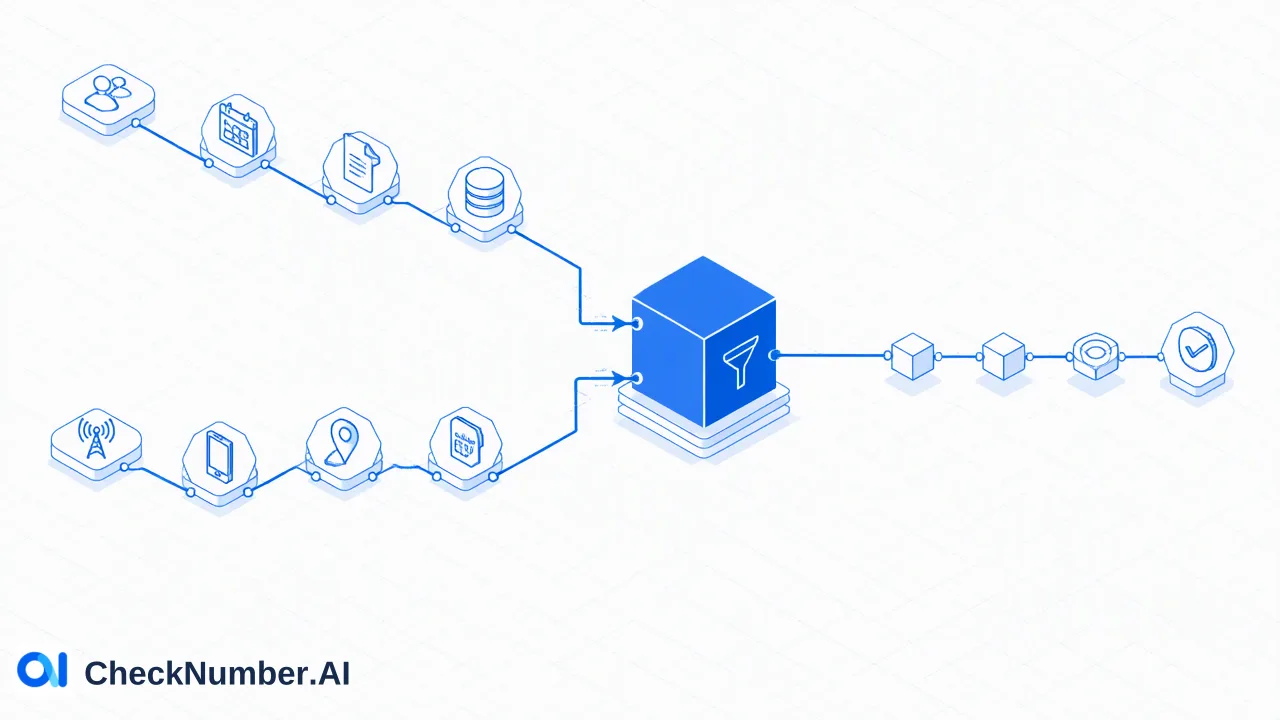
Integrating platform activity signals into CRM workflows helps organizations refine audience segments by identifying current reachability on specific communication channels. By applying these signals as dynamic filters rather than static customer attributes, teams can improve targeting precision and uncover re-engagement opportunities—such as identifying lapsed customers who remain reachable on specific platforms—without altering the underlying structure of their primary customer database.
The Role of Platform Signals in Modern CRM Strategy
Customer relationship management systems are designed to store foundational business data. Core CRM data describes the business relationship, including purchase history, account creation dates, lifecycle stages, and support interactions. These attributes represent historical facts accumulated through direct customer engagement. In contrast, platform activity signals describe current reachability on external communication networks at check time. While initial contact hygiene often relies on format or normalization checks to verify syntax against standard numbering plans, platform signals indicate whether a phone number or email is associated with an active account on a specific messaging service. Because external reachability changes over time, treating these signals as dynamic layers rather than permanent database fields helps teams separate transactional customer history from transient communication channel context.
Maintaining Data Integrity: Filtering vs. Redefining
A common operational mistake is redefining core customer segments whenever new channel data is gathered. Modifying primary records with transient platform data introduces data bloat and complicates database management. Platform activity status should be added as a filter to existing segments rather than redefining the segments themselves. Separating platform signals from core CRM attributes prevents data bloat and preserves the structural integrity of the customer database. Instead of rewriting lifecycle categories, teams can apply platform indicators as secondary filters:
| Data Layer | Primary Function | Typical Fields | Update Frequency |
|---|---|---|---|
| Core CRM Attributes | Define customer relationship and lifecycle state | Lifecycle stage, order history, contract status | Triggered by business interactions |
| Dynamic Platform Filters | Determine channel reachability for outreach | Platform account presence, recent activity signal | Evaluated at check time prior to campaigns |
| Using this layered approach, an organization retains its baseline audience definitions—such as active subscribers, high-value accounts, or churn risks—while applying channel filters dynamically to guide outreach routing. |
Identifying New Opportunities for Re-engagement
Treating platform presence as an audience filter creates practical opportunities for re-engagement. In many CRM workflows, contacts who stop opening emails or completing purchases are classified into lapsed or inactive segments. Standard outreach often continues across exhausted channels or halts altogether. A contact can be a lapsed customer in the CRM but still return an active status on a social or messaging platform, creating a new opportunity for re-engagement. By checking platform account presence across lapsed segments, marketing and support teams can identify alternate channels where that customer maintains an account. Teams should use these signals alongside consent management and compliance policies to inform multi-channel campaigns responsibly.
Scaling Segmentation with Bulk Verification
Applying platform signals manually is impractical for growing databases. CheckNumber.AI provides bulk checking of supported phone-number and email lists, helping organizations verify large volumes of contact records efficiently. Bulk verification allows teams to apply this platform-specific context across thousands of records efficiently. Bulk workflows support CSV or TXT list uploads and REST API access, giving organizations flexible operational paths:
- List-Based Processing: Teams can export static CRM segments as CSV or TXT files, run bulk list checks to identify platform registration or activity signals, and upload the resulting filters back into their marketing automation tools. * Automated API Integration: Teams can connect customer pipelines to REST API endpoints to evaluate reachability signals periodically or prior to scheduled messaging campaigns. Specialized checkers provide distinct signals depending on the channel. For instance, the Number Active Checker provides phone-number validity and recent-activity signals for list prioritization, while the iMessage Checker identifies iMessage-registered numbers in bulk to support iOS ecosystem audience segmentation and outreach planning. Keeping platform checks separate from foundational records ensures lists remain structured, targeted, and easy to maintain.
FAQ
How do platform activity signals differ from core CRM attributes?
Core CRM attributes record an organization’s direct relationship and historical interactions with a customer, such as purchase history and lifecycle stages. Platform activity signals provide external reachability and account presence context on a specific messaging or social platform at check time, serving as operational filters rather than permanent customer properties.
Can platform signals replace existing customer lifecycle data?
Platform signals should not replace customer lifecycle data. Lifecycle stages reflect the commercial relationship, whereas platform signals indicate channel-specific reachability. Overwriting CRM records with transient platform signals risks data bloat and impairs the stability of the primary customer model.
How does bulk verification support CRM segmentation workflows?
Bulk verification supports segmentation by evaluating phone-number or email lists across thousands of records via CSV or TXT file uploads or REST API access. This lets teams check platform reachability across large audiences and append dynamic filters to CRM segments before launching outreach campaigns.