CheckNumber.AI
 · 4 min read
Beyond the Raw List: A Framework for B2B Contact Data Hygiene
A comprehensive guide to B2B contact list hygiene, detailing how bulk verification workflows, carrier intelligence, and platform-specific signals support accurate audience segmentation and operational efficiency.
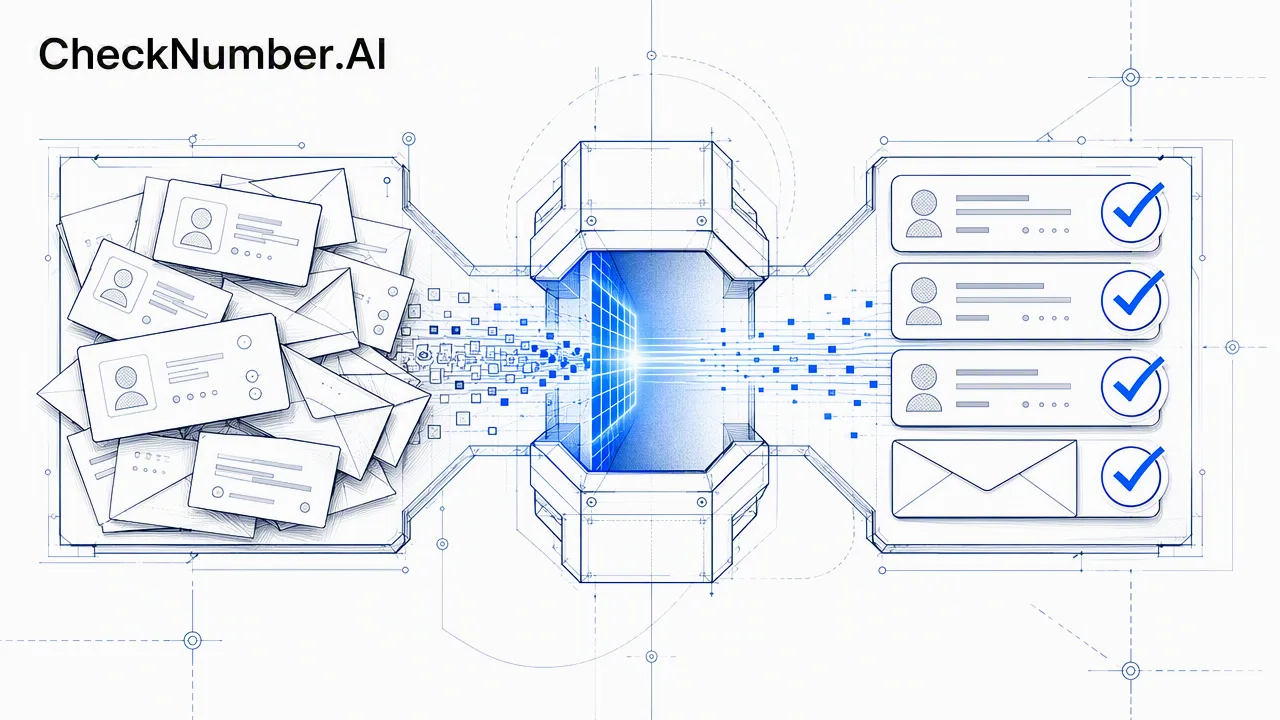
Effective B2B contact list hygiene requires moving beyond raw, unverified data to actionable contact intelligence. By utilizing bulk verification workflows—such as CSV or TXT list uploads and REST API integration—organizations can systematically process large datasets. Applying carrier intelligence and platform-specific signals helps teams refine their outreach planning. This framework ensures that contact lists are segmented accurately, supporting more precise communication strategies and overall operational efficiency.
The Challenge of Raw Contact Data
Unverified B2B contact lists often contain outdated, misclassified, or improperly formatted information that hinders outreach efficiency. When teams rely on static data without systematic hygiene processes, they risk directing resources toward unsegmented or unreachable contacts. This lack of clarity can disrupt CRM workflows and complicate reporting metrics. Moving beyond the raw list means implementing a structured approach to evaluate each contact point before initiating a campaign. A robust B2B contact list hygiene strategy supports internal decisions by adding necessary context to phone numbers and emails, allowing operations managers and technical leads to prioritize their efforts effectively and maintain cleaner database records.
Implementing a Bulk Verification Workflow
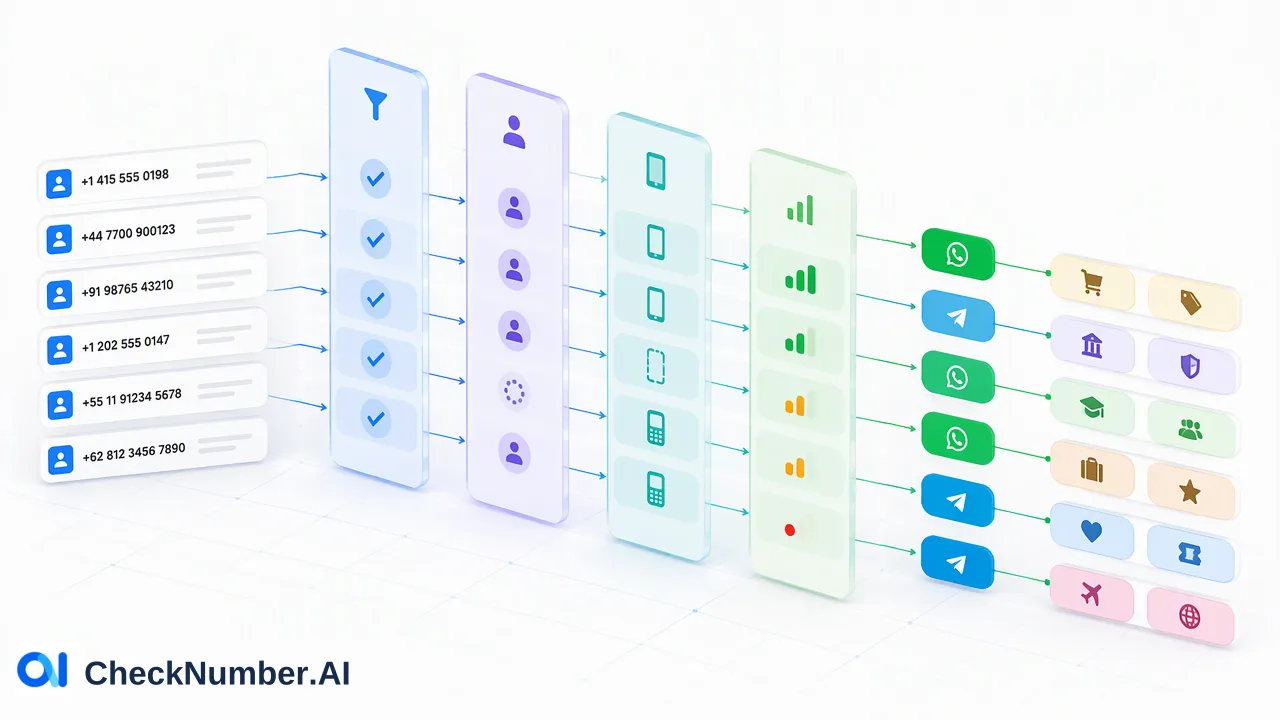
Transitioning from manual list cleaning to an automated system requires the right technical foundation. The core workflow for CheckNumber.AI involves the bulk checking of supported phone-number or email lists. This systematic processing allows organizations to handle large volumes of contact data efficiently, replacing slow, error-prone manual lookups with standardized data evaluation. Bulk workflows support CSV or TXT list uploads, providing a straightforward method for operations teams to process existing datasets without complex engineering requirements. For technical teams looking to embed these checks directly into their internal systems, REST API access is available. Integrating these bulk checking capabilities into a data pipeline helps teams maintain continuous hygiene. This ensures that contact intelligence is updated systematically rather than relying on ad-hoc manual reviews, creating a more reliable foundation for downstream business processes.
Leveraging Carrier Intelligence for Segmentation
Understanding the underlying infrastructure of a phone number is a critical component of B2B contact list hygiene. Carrier intelligence provides regional and line-type context for phone numbers, which informs how a contact should be categorized within a database. CheckNumber.AI offers specific tools to gather this context. The Global Carrier Checker identifies the carrier, line type, country, and regional context for phone numbers across supported countries. For North American datasets, the Advanced US Carrier Checker identifies the carrier, line type, and regional context specifically for United States and Canada phone numbers. By incorporating these location and carrier signals, data analysts can segment lists based on line type (such as mobile versus landline) or geographic region. This segmentation supports more tailored outreach strategies and helps teams allocate resources appropriately based on the structural reality of the contact data.
Refining Outreach with Platform-Specific Signals
Beyond carrier data, understanding platform presence adds another layer of intelligence to contact lists. Platform-specific signals indicate whether a phone number is registered on a particular communication network, which can be a valuable input for channel-preference planning. For example, the CheckNumber.AI iMessage Checker identifies iMessage-registered numbers in bulk. This capability allows for iOS and Apple ecosystem audience segmentation. Knowing which contacts are registered on this platform supports iMessage-focused outreach or support planning. While a platform registration signal confirms account presence rather than guaranteeing message delivery or user response, it serves as a highly effective decision-support tool.
Building a Sustainable Data Hygiene Strategy
Establishing a framework for B2B contact list hygiene is not a one-time project but an ongoing operational requirement. A sustainable strategy integrates bulk verification workflows directly into the data lifecycle, ensuring that new contacts are evaluated upon entry and existing lists are periodically refreshed to capture changes in carrier or platform status. By combining carrier intelligence with platform registration signals, organizations build a multi-dimensional view of their contact data. Ultimately, moving beyond the raw list empowers technical leads and operations managers to build resilient, intelligence-driven communication workflows that adapt to the evolving landscape of B2B data management.
FAQ
How does bulk verification differ from manual list cleaning?
Bulk verification systematically processes large datasets using automated workflows, whereas manual cleaning relies on ad-hoc, individual reviews. CheckNumber.AI bulk workflows support CSV or TXT list uploads and REST API access, allowing teams to evaluate supported phone-number or email lists efficiently at scale.
Why is carrier intelligence important for B2B contact segmentation?
Carrier intelligence provides essential regional and line-type context for phone numbers. Tools like the Global Carrier Checker and Advanced US Carrier Checker identify the carrier, line type, and location signals, which helps data analysts segment lists accurately and supports targeted outreach planning.
Can platform-specific signals improve outreach planning?
Yes, platform-specific signals inform channel-preference strategies by confirming account presence on specific networks. For instance, identifying iMessage-registered numbers in bulk allows for iOS and Apple ecosystem audience segmentation, which supports dedicated iMessage outreach or support planning.