CheckNumber.AI
 · 5 min read
How to Build a Reliable WhatsApp Verification Workflow
Learn how to build a reliable WhatsApp contact verification workflow for bulk outreach using CSV uploads, REST API access, and advanced activity signals.
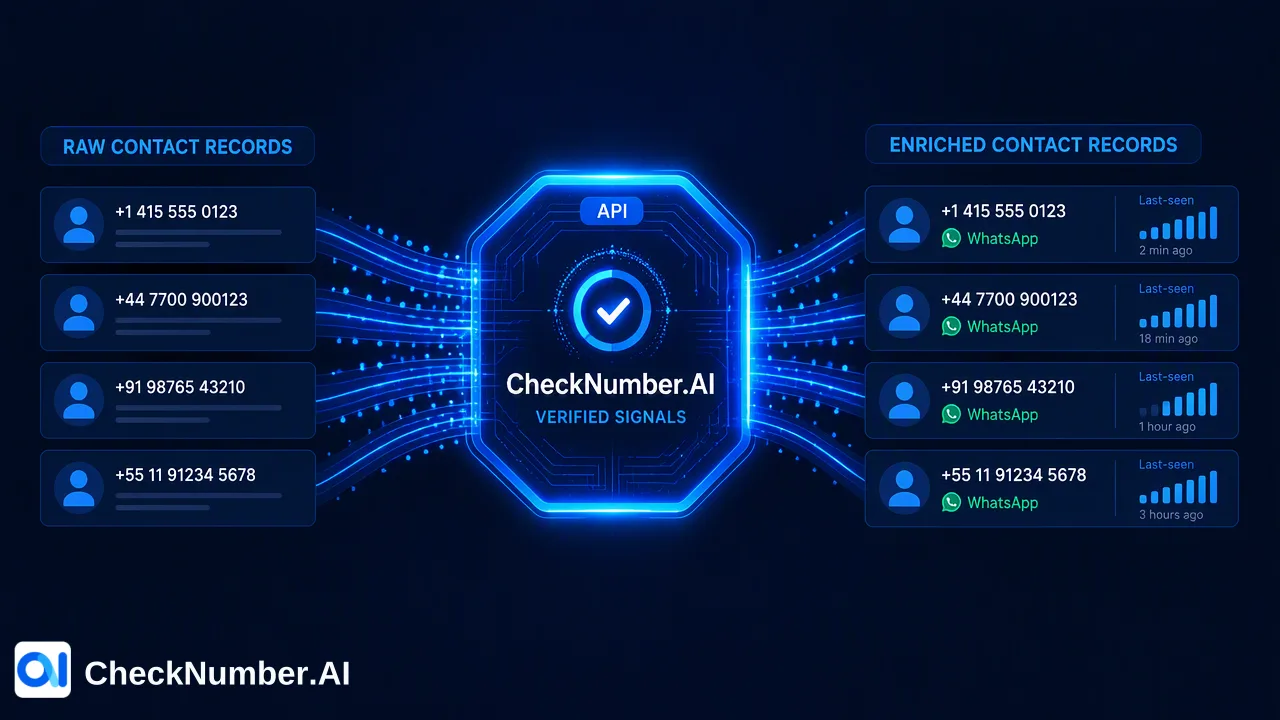
A reliable WhatsApp contact verification workflow involves pre-screening phone number lists to identify platform account presence before initiating bulk outreach. By integrating platform registration signals, activity context, and business profile data, teams can filter out invalid numbers and prioritize contacts with recent activity signals. This pre-send step helps reduce messaging costs and supports sender reputation management by avoiding high-frequency messaging to non-existent accounts. Implementing this workflow through bulk CSV uploads or REST API integrations helps businesses clean their CRM data efficiently and focus their communication efforts on registered numbers.
The Role of Verification in Modern Messaging
Bulk messaging requires a clean contact list to remain cost-effective and operationally efficient. Sending messages to unverified lists often results in wasted resources on unregistered numbers. A dedicated WhatsApp contact verification workflow helps organizations identify which numbers are currently registered on the platform. By filtering out invalid numbers before launching a campaign, businesses can significantly reduce messaging costs. Furthermore, attempting to message non-existent accounts at a high frequency can negatively impact sender reputation. Integrating a verification step supports reputation management by informing outreach systems about which numbers are actually present on the platform. This approach supports better resource allocation and provides teams with the context needed to manage large-scale communication pipelines effectively. When organizations prioritize list hygiene, they build a more sustainable messaging strategy that respects platform guidelines and optimizes marketing budgets.
Choosing Your Verification Approach
Organizations must choose a verification method that aligns with their data volume and technical infrastructure. Different verification methods serve different business scales. For smaller teams or ad-hoc checks, manual tools may suffice, but bulk outreach requires automated, high-throughput solutions. The core workflow for enterprise operations involves bulk checking of supported phone-number lists. CheckNumber.AI supports these bulk workflows through CSV or TXT list uploads, helping marketing and sales teams process large datasets without writing code. This file-based approach is ideal for periodic list cleaning before major campaign launches. For engineering teams looking to embed verification directly into their own applications, REST API access provides a programmatic way to query account presence. An API integration supports continuous data hygiene, checking numbers at the point of capture or during automated CRM routing. Whether utilizing file uploads for batch processing or integrating an API for real-time checks, selecting the right approach helps streamline the overall messaging pipeline.
Beyond Existence: Leveraging Advanced Signals
While a basic registration check confirms if a phone number is tied to a WhatsApp account, advanced verification provides deeper context to inform outreach strategies. The CheckNumber.AI WhatsApp Days Checker goes beyond simple account presence. It provides available activity or last-seen context, alongside available business-account and profile context. These advanced signals—including platform registration signals, activity signals, profile enrichment, and business profile signals—support better prioritization of outreach. For example, knowing the last-seen context can help teams segment their lists based on recent platform activity, helping them focus immediate efforts on contacts with recent activity signals. Additionally, business profile signals can inform B2B outreach planning by identifying which numbers belong to registered business accounts. By leveraging these enriched data points, organizations can tailor their messaging approach, prioritize high-value leads, and make more informed decisions about when and how to engage their audience.
Integrating Verification into Your CRM Pipeline
To maximize the benefits of list cleaning, verification should be a standard pre-send step in any CRM or messaging pipeline. Rather than treating verification as an afterthought, teams can build workflows where new leads are automatically or periodically checked before being added to campaign segments. When using bulk upload tools, exporting the verification results as a CSV file supports seamless integration into existing marketing platforms, CRM systems, or data warehouses. Teams can map the returned platform signals and activity context to custom fields within their CRM, supporting dynamic list segmentation. For instance, a CRM workflow could be configured to route numbers with recent activity signals to a high-priority outreach queue, while numbers lacking platform registration are flagged for alternative communication channels like email or SMS. This systematic integration helps maintain data hygiene over time, supports ongoing messaging efficiency, and provides a reliable foundation for all future bulk outreach initiatives.
FAQ
Why should I verify WhatsApp numbers before sending messages?
Verifying numbers helps reduce messaging costs by filtering out invalid or unregistered contacts before you send a campaign. It also supports sender reputation management by avoiding high-frequency messaging to non-existent accounts, helping focus your outreach on valid platform users.
What is the difference between a basic registration check and an activity check?
A basic registration check only confirms if a phone number has a platform account. An activity check, such as the WhatsApp Days Checker, provides additional context, including available activity or last-seen data, as well as business-account and profile context, which helps teams prioritize outreach based on recent engagement.
How can I integrate WhatsApp verification into my existing CRM?
Verification can be integrated into a CRM pipeline by making it a standard pre-send step. You can process lists via bulk CSV or TXT uploads and export the results to update your CRM records, or you can use REST API access to programmatically check numbers and update contact profiles.