CheckNumber.AI
 · 4 min read
How to Segment Your Messaging Lists by Account Activity: A Practical Framework
Learn how to segment messaging lists using platform activity signals. Discover practical frameworks for categorizing high-intent, warm, and inactive contacts to improve list hygiene.
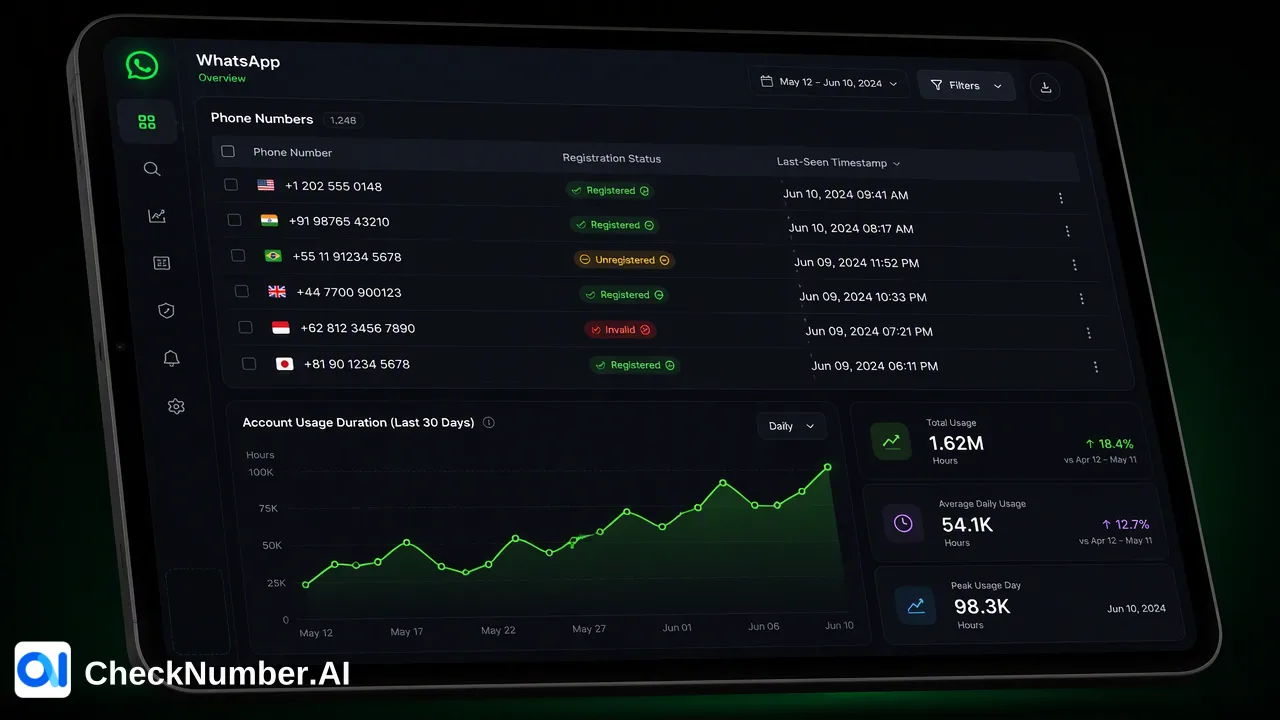
Effective messaging outreach requires segmenting contacts by their actual platform activity rather than relying solely on basic registration status. By utilizing activity signals—such as last-seen timestamps and account usage duration—teams can categorize lists into high-intent, warm, and inactive segments. This approach reduces resource waste, supports prioritization for outreach planning, and helps direct efforts toward the most responsive audiences. While a platform registration signal confirms that a phone number is associated with an account at the time of the check, activity signals provide additional context to inform internal decisions and improve overall list hygiene.
The Limitations of Static List Management
Many organizations build their contact databases using basic format validation or simple registration checks. While a platform registration signal confirms that a specific phone number is associated with an account on a messaging platform, it does not equate to active engagement. A user may have registered an account years ago but no longer uses the application. Relying exclusively on static lists often leads to wasted resources, as teams expend effort messaging dormant accounts. Furthermore, treating all registered numbers as equal ignores the reality of user behavior. Distinguishing between merely registered accounts and those with recent activity is critical for maintaining list hygiene and optimizing messaging ROI. Without this distinction, organizations risk diluting their outreach efforts across low-value segments.
Defining Activity-Based Segmentation
To move beyond static list management, organizations can implement an activity-based segmentation framework. This involves categorizing users based on metadata such as last-seen timestamps or account usage duration.
- High-intent users: These contacts show recent activity on the platform. They represent the most immediate opportunity for engagement and should be prioritized in outreach planning.
- Warm users: These contacts have interacted with the platform within a specific window, such as the last 30 days. While not as immediately active as the high-intent group, they remain viable candidates for standard messaging campaigns.
- Low-value users: These contacts are inactive or dormant. They may still possess a registered account, but the lack of recent activity suggests a lower likelihood of interaction. Segmenting lists into these distinct tiers helps teams allocate resources more effectively, focusing high-touch efforts on the most active segments while applying different strategies—or suppressing outreach entirely—for dormant contacts.
Leveraging Platform Signals for Smarter Outreach
Modern messaging workflows require more context than basic format validation can provide. Platform-specific signals offer deeper insights into account presence and activity. For example, the WhatsApp Days Checker provides a platform registration signal alongside available activity or last-seen context, as well as profile enrichment and business profile signals. Similarly, the Viber Days Checker supplies account presence, activity context, and internal account-identifier signals. By integrating these data points, teams gain a clearer picture of their audience’s platform usage. Because manual checking is highly inefficient for large databases, automated screening workflows are necessary to maintain list hygiene at scale. Automated bulk screening helps organizations process extensive contact lists systematically, extracting the necessary activity context without manual intervention.
Implementing a Segmentation Workflow
Transitioning to an activity-based model requires a structured workflow. The core process involves bulk checking supported phone-number lists to retrieve platform registration and activity signals.
- Data Ingestion: Teams can initiate bulk workflows using CSV or TXT list uploads, or integrate directly via REST API access. This flexibility supports both one-off list cleansing and continuous, automated screening.
- Signal Retrieval: The system processes the list against the target platform to determine account presence and retrieve available activity context.
- List Filtering: Based on the retrieved signals, the contacts are filtered into the predefined segments: high-intent, warm, and inactive.
- Tailored Outreach: Organizations can then tailor their outreach strategies based on the identified activity tier. High-intent segments might receive time-sensitive offers, while inactive segments might be excluded from the current campaign to conserve resources. By systematically applying this workflow, teams can align their messaging strategies with current platform activity, ultimately supporting more efficient and targeted communication efforts.
FAQ
Why is account activity more important than registration status?
A platform registration signal only confirms that a phone number is associated with an account at the time of the check. It does not indicate whether the user actively engages with the platform. Account activity provides context on recent usage, which helps teams prioritize outreach and avoid wasting resources on dormant accounts.
How can organizations automate the process of segmenting large contact lists?
Teams can automate segmentation by utilizing bulk checking workflows. These workflows support CSV or TXT list uploads and REST API access, helping organizations process large volumes of phone numbers efficiently and retrieve platform registration and activity signals without manual intervention.
What is the difference between a registration signal and an activity signal?
A platform registration signal confirms account-related presence on a specific messaging platform. An activity signal provides additional metadata, such as last-seen timestamps or account usage duration, offering context on how recently the user interacted with the platform.