CheckNumber.AI
 · 5 min read
Phone Verification Best Practices: A Strategic Framework
Discover phone verification best practices, from data normalization and carrier intelligence to platform registration signals and bulk processing workflows.

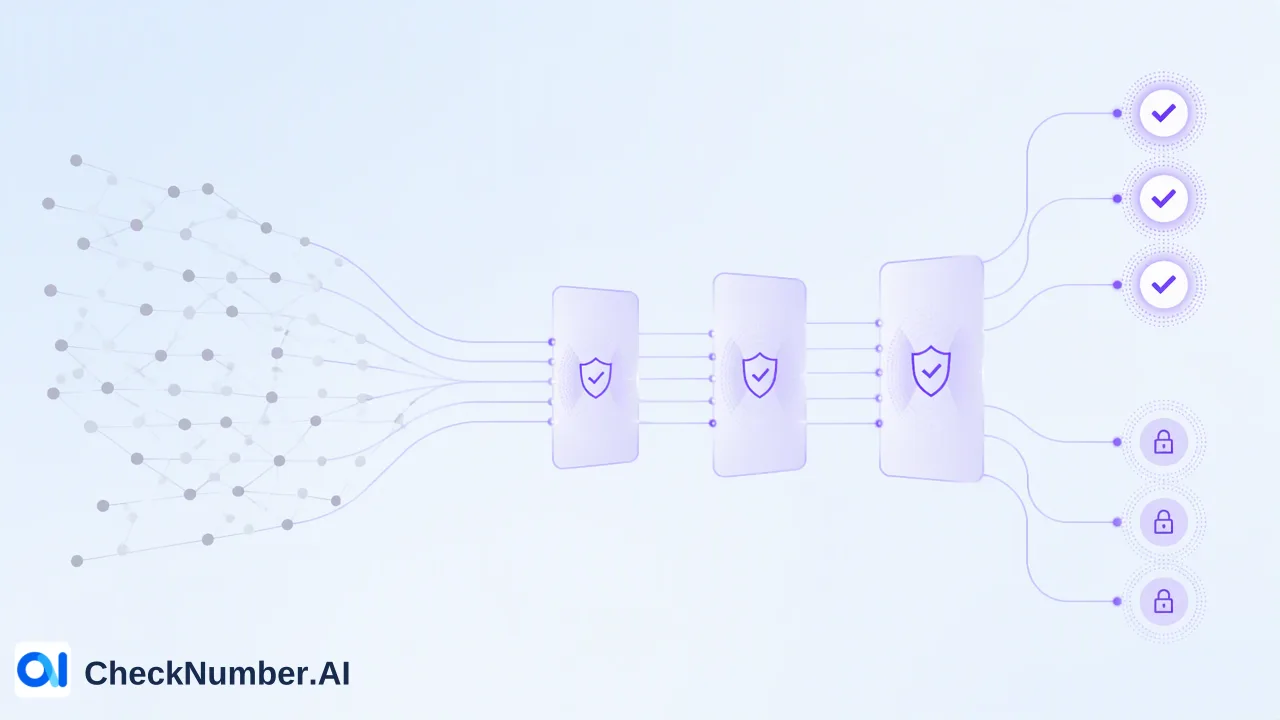
Effective phone verification best practices rely on a layered strategy that moves beyond basic formatting. A robust workflow begins with data normalization to ensure consistency, followed by carrier intelligence to identify line types and regional context. The final layer incorporates platform-specific registration signals to support audience planning for rich messaging campaigns. By applying these distinct checks in a structured, bulk-processed workflow, organizations can maintain cleaner contact lists, reduce formatting errors, and make more informed decisions regarding their communication strategies. Implementing this multi-tiered approach helps teams systematically evaluate contact data quality before initiating outreach.
Phone Verification Best Practices: Data Normalization
Establishing a baseline of consistent data is the first step in any contact management workflow. Data normalization involves structuring phone numbers into a standardized format, such as E.164, which includes the country code, area code, and subscriber number without spaces or special characters. This process resolves inconsistencies caused by manual data entry, disparate lead capture forms, or legacy database migrations. While normalization ensures that a number is syntactically correct and formatted for international dialing, it is distinct from active validation or carrier lookups. A properly formatted number does not confirm whether the line is active, what type of device is attached to it, or which carrier services it. Therefore, formatting checks should be treated as a prerequisite step that prepares datasets for more advanced intelligence gathering. By standardizing inputs first, organizations reduce the likelihood of routing errors and ensure that subsequent API requests or bulk uploads process smoothly.
Leveraging Carrier Intelligence for Context
Once contact data is normalized, organizations can apply carrier intelligence to gain deeper context about the numbers in their database. Carrier checks are distinct from platform registration signals; they focus on the underlying telecommunications infrastructure rather than specific application accounts. Using tools like the Global Carrier Checker or the Advanced US Carrier Checker, teams can identify the specific carrier, line type (such as mobile, landline, or VoIP), and regional context associated with a phone number. The Advanced US Carrier Checker specifically supports United States and Canada phone numbers, while the global variant covers a broader range of supported countries. Understanding the line type helps teams tailor their outreach methods. For example, identifying a number as a landline informs decisions about SMS routing, as text messages sent to traditional landlines typically fail. Similarly, regional context and country identification support compliance workflows and time-zone appropriate scheduling. Integrating carrier intelligence into the verification process provides a critical layer of operational context that basic formatting cannot supply.
Utilizing Platform Registration Signals
The third layer of a comprehensive verification strategy involves checking platform-specific registration signals. A platform registration signal identifies whether a phone number is associated with a specific messaging service or application. This check confirms account-related presence on the named platform, which is highly valuable for audience segmentation and campaign planning. For instance, an RCS Checker identifies phone numbers that support RCS (Rich Communication Services) or Google Messages. Knowing which contacts have registered accounts on these platforms supports audience planning for rich-messaging campaigns. Teams can segment their lists to route rich-media content, interactive buttons, and high-resolution images specifically to numbers that support RCS, while falling back to standard SMS for non-registered numbers. It is important to note that a platform registration signal only confirms that an account exists on that specific service. However, as an input for workflow routing, it significantly helps organizations optimize their messaging strategies.
Optimizing Workflows with Bulk Processing
Applying normalization, carrier intelligence, and platform signals to millions of records requires efficient operational workflows. The core workflow for managing large datasets relies on bulk checking capabilities rather than manual, one-by-one queries. Bulk workflows support CSV or TXT list uploads, allowing teams to process extensive contact lists asynchronously. This approach is ideal for periodic database cleansing, onboarding new lead lists, or preparing segments ahead of a major campaign. For organizations requiring automated, programmatic access, REST API integration allows developers to embed these checks directly into their internal systems. When utilizing REST API access, teams must account for rate limits that restrict requests per minute and manage concurrency appropriately. Directing automated systems to respect these limits ensures stable and continuous processing. By combining bulk CSV or TXT uploads for static lists with REST API access for dynamic data entry, organizations can scale their verification workflows to match their operational demands.
FAQ
What is the difference between carrier intelligence and platform registration?
Carrier intelligence identifies the underlying telecommunications provider, line type (such as mobile or landline), and regional context of a phone number. In contrast, a platform registration signal checks if the phone number is associated with a specific messaging service, such as RCS or Google Messages. Carrier checks inform general routing and line capabilities, while platform signals support audience planning for specific rich-messaging applications.
When should organizations re-check phone numbers?
Organizations should re-check phone numbers periodically because telecommunications data changes over time. Numbers can be reassigned, ported to different carriers, or disconnected. Implementing a routine schedule for bulk checking via CSV or TXT uploads helps maintain data accuracy. Re-checking is also recommended before launching major outreach campaigns to ensure that carrier intelligence and platform registration signals reflect the most current account presence and line type.
How does bulk verification improve data management?
Bulk verification improves data management by allowing teams to process large contact lists efficiently without manual intervention. By utilizing CSV or TXT list uploads, organizations can apply carrier intelligence and platform registration checks across thousands of records simultaneously. This method streamlines database maintenance, supports automated REST API workflows, and provides teams with the necessary context to segment audiences and plan communication strategies at scale.