CheckNumber.AI
 · 4 min read
Building a High-Conversion Messaging Database: A Practical Guide to Hygiene and Segmentation
Learn how continuous data hygiene and platform-specific registration signals help organizations segment audiences and optimize messaging database workflows.
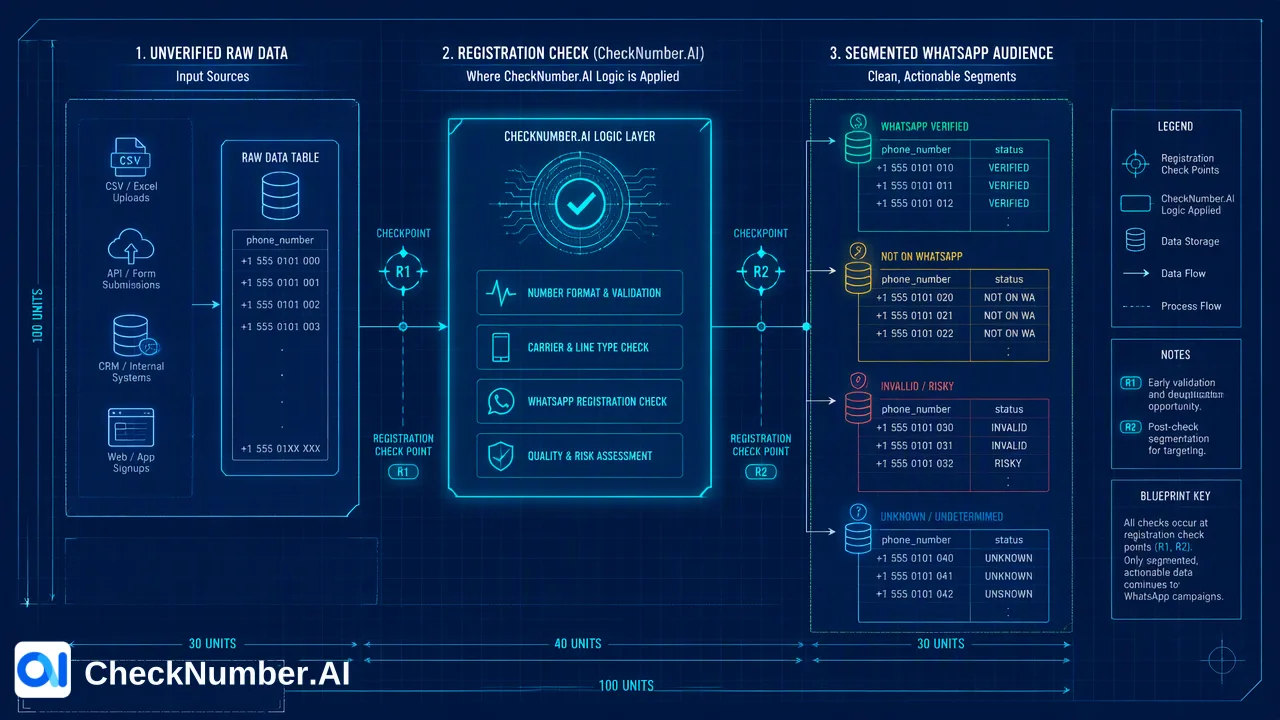
A high-conversion messaging database requires moving beyond raw contact lists to a foundation of verified, segmented data. By implementing continuous messaging database hygiene and segmentation—such as deduplication and platform-specific registration checks—organizations can filter out invalid formats and prioritize audiences based on account-related presence. Platform-registration signals indicate whether a contact is associated with a specific messaging service at the time of the check.
The Foundation of Messaging Success: Data Quality
A high-quality messaging database is not just about the total number of contacts collected over time. Instead, it relies heavily on the accuracy, segmentation, and ongoing maintenance of verified, platform-specific user data. Organizations often accumulate raw contact lists from various touchpoints, which can quickly become outdated or contain formatting errors. Moving from these raw lists to a refined, segmented messaging audience is a critical step for operational efficiency. When teams rely on unverified data, they risk directing resources toward numbers or emails that lack an associated account on their target platforms. Establishing a baseline of data quality involves standardizing formats and removing duplicates before applying more advanced checks. This foundational hygiene ensures that subsequent segmentation efforts are built on accurate inputs, allowing organizations to focus their outreach planning on contacts with confirmed account presence.
Why Data Hygiene is a Continuous Process
Maintaining an accurate contact list is an ongoing operational requirement. Data hygiene is a continuous process rather than a one-time task, as contact status and platform registration change over time. Users frequently change phone numbers, abandon email addresses, or delete messaging application accounts. A database that is perfectly accurate today will naturally degrade as these external changes occur. Continuous data hygiene involves regularly scheduled cleaning, deduplication, and validation cycles. By systematically re-evaluating contact lists, organizations can identify which numbers no longer return a platform-registration signal and adjust their CRM records accordingly. This ongoing maintenance prevents the accumulation of outdated records and ensures that audience segmentation remains based on current account-related presence. Implementing a routine validation workflow helps teams maintain a clear view of their database health and supports more informed internal decisions regarding outreach prioritization.
Leveraging Platform-Specific Signals for Segmentation
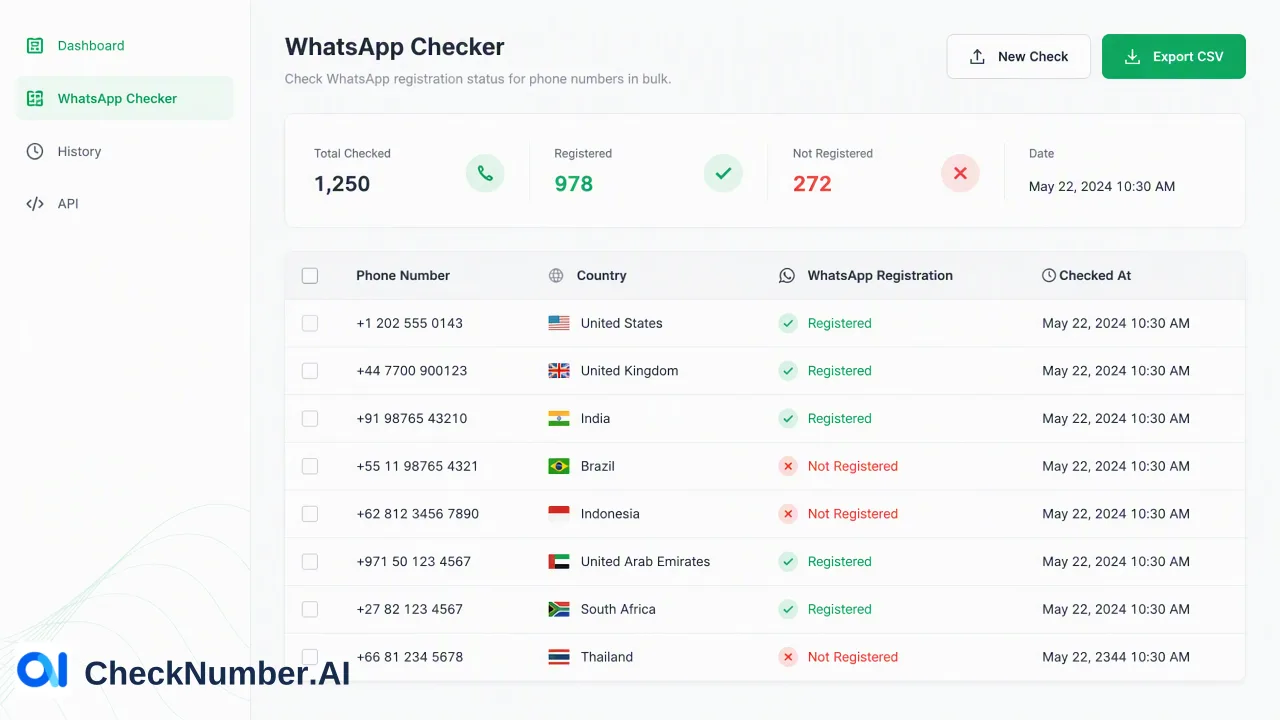
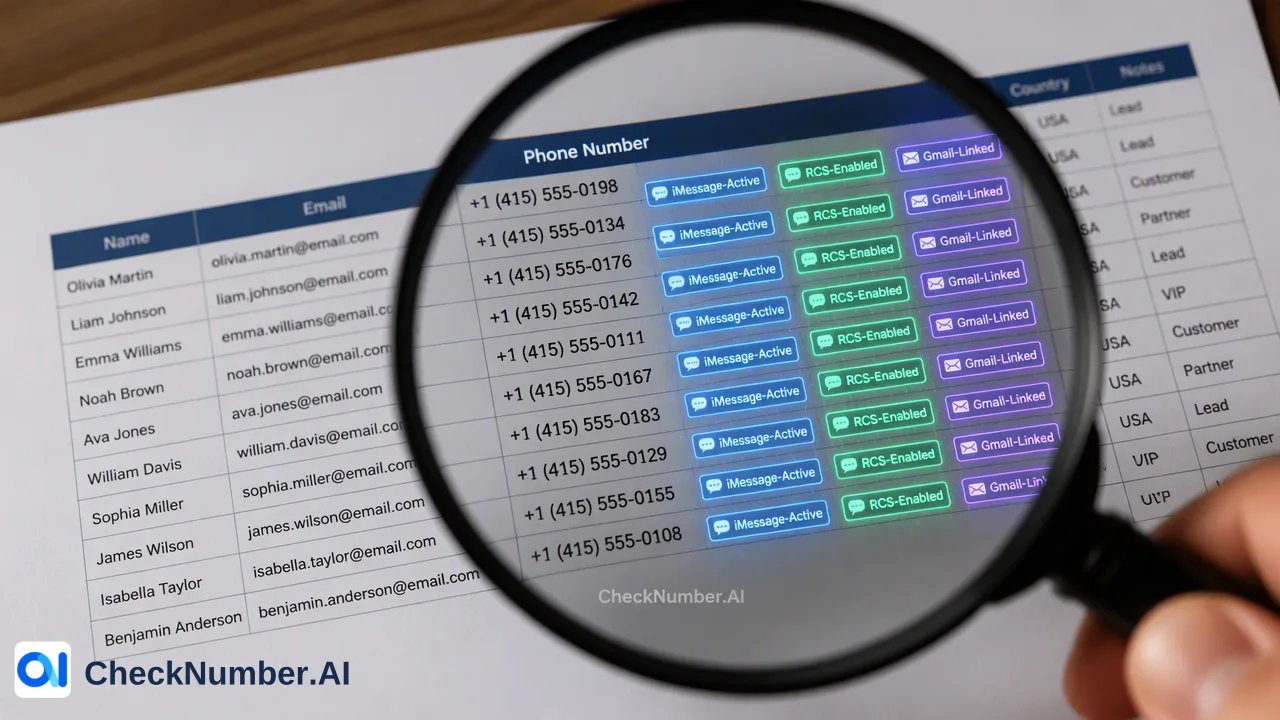
Once basic formatting and deduplication are complete, organizations can apply platform-specific checks to categorize their audiences. Platform-specific signals, such as registration status, allow teams to segment audiences based on where their contacts maintain an account presence. A platform-registration signal describes account-related presence at the time of the check and serves as a valuable input for customer-defined review. For example, utilizing an iMessage checker allows teams to identify iMessage-registered numbers in bulk. This specific signal supports iOS and Apple ecosystem audience segmentation, which informs iMessage outreach or support planning. Similarly, checking WhatsApp account presence can provide available activity or last-seen context, alongside available business-account context, to help teams understand the composition of their lists. For email campaigns, email validation checks registration signals across supported email providers. Instead, they function as decision-support tools that help organizations tailor their messaging strategies to the platforms where contacts are confirmed to have registered accounts.
Operationalizing Your Database Strategy
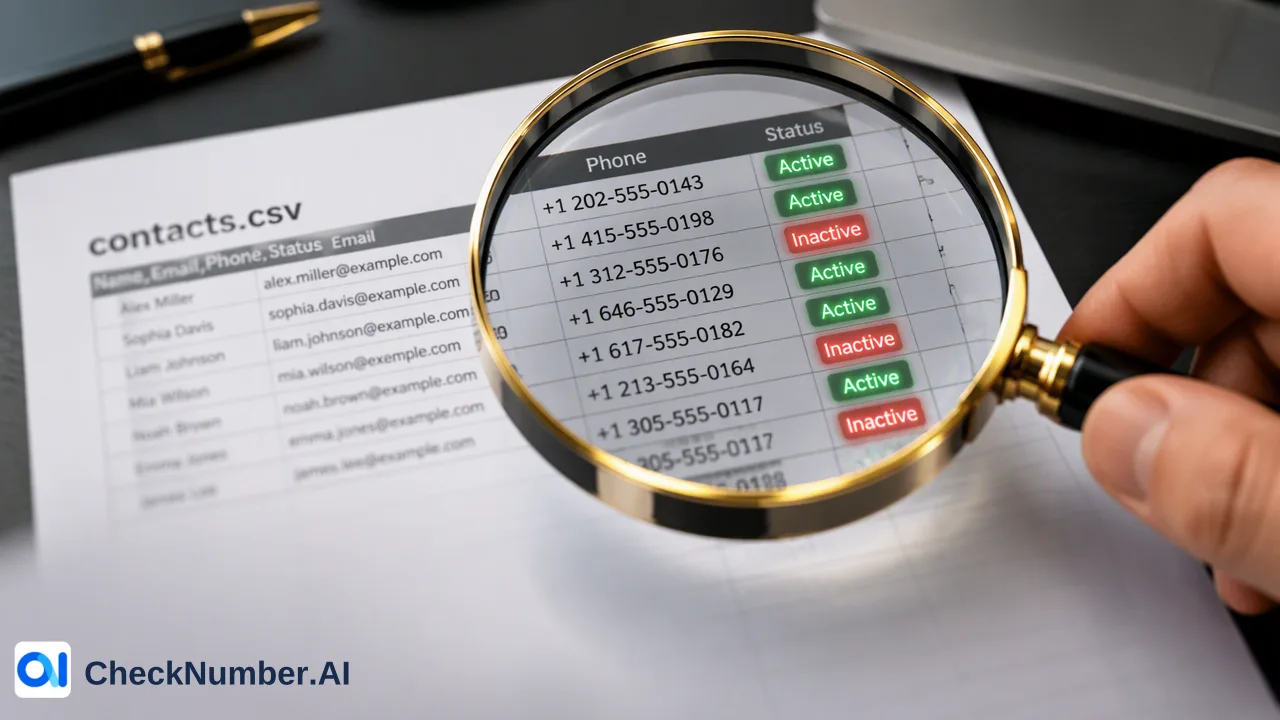
Translating data quality principles into daily operations requires structured workflows and the right technical approach. Aligning contact data with business goals reduces waste and improves return on investment by ensuring that outreach efforts are directed efficiently. To achieve this, organizations can implement bulk verification workflows that process large volumes of contact data systematically. The core workflow for maintaining database hygiene involves the bulk checking of supported phone-number or email lists. These bulk workflows support CSV or TXT list uploads, allowing non-technical teams to process exported CRM segments directly. For automated environments, REST API access enables developers to integrate these checks directly into their data pipelines or customer onboarding sequences. By operationalizing these checks, teams can efficiently filter out contacts lacking account presence before initiating large-scale outreach. This systematic approach to messaging database hygiene and segmentation ensures that internal resources are focused on validated segments, supporting better prioritization and more strategic campaign execution.
FAQ
How often should messaging databases be cleaned?
Data hygiene is a continuous process rather than a one-time task. Because contact status and platform registration change over time as users change numbers or close accounts, organizations should implement regular validation cycles. The frequency depends on the organization’s outreach volume and data collection methods, but continuous maintenance is necessary to ensure segmentation relies on current account-related presence.
What is the difference between generic phone validation and platform-specific registration checks?
Generic phone validation typically includes format or normalization checks to ensure a number follows standard structures. In contrast, a platform-specific registration check determines whether that specific phone number or email address is currently associated with an account on a particular messaging service, such as WhatsApp or iMessage, at the time of the check.
Can registration signals predict if a user will respond to a message?
No. Platform-registration signals indicate account-related presence at check time only.