CheckNumber.AI
 · 4 min read
Optimizing CRM Data Hygiene with CheckNumber.AI Bulk Verification
Learn how to build a CRM contact verification workflow using bulk checks and platform signals to support audience segmentation and outreach planning.
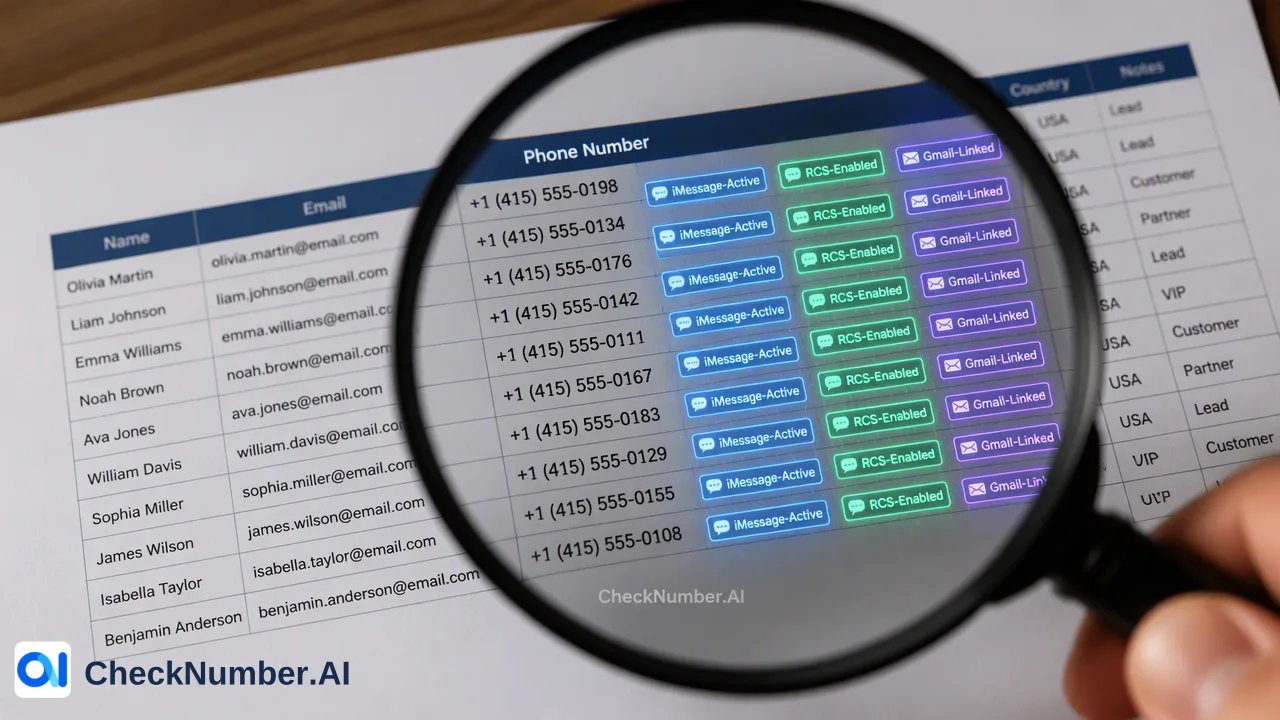
Maintaining clean CRM records requires a consistent CRM contact verification workflow that incorporates bulk checking of contact identifiers. By using CheckNumber.AI to identify platform-specific registration signals—such as iMessage, RCS, or Gmail account presence—organizations can better segment their audiences and plan outreach strategies. This workflow supports cleaner data by confirming account-related presence at the time of the check, helping teams align their communication efforts with the technical capabilities of their contact lists.
The Importance of Data Hygiene in CRM Management
Stale or unsegmented contact data complicates outreach planning and resource allocation. Clean CRM data is essential for effective audience segmentation. A structured CRM contact verification workflow helps organizations review their records and categorize contacts based on documented platform capabilities. This process informs internal decisions, ensuring that data operations teams can organize lists effectively before initiating campaigns. By establishing a baseline of account-related presence, organizations can support more precise audience planning.
Structuring the Verification Workflow
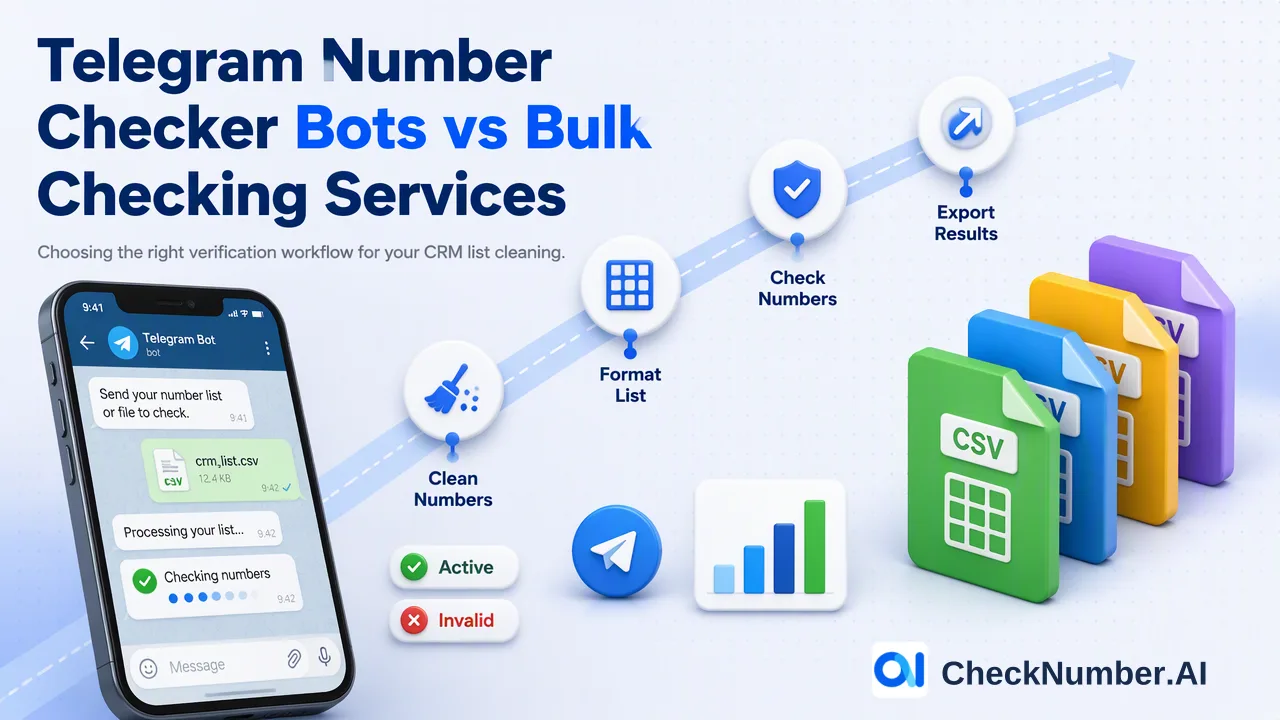
An effective CRM contact verification workflow operates on a clear trigger, action, and result model. The trigger often occurs when new contact lists are imported into the CRM or during scheduled database audits. The action involves exporting these identifiers and utilizing CheckNumber.AI for bulk checking. The core workflow is the bulk checking of supported phone-number or email lists to retrieve specific platform-registration signals. Finally, the result is the re-importation or programmatic updating of the CRM records with these new data points. This end-to-end process provides teams with the context needed to segment audiences based on platform capabilities rather than relying solely on basic contact information.
Integrating Bulk Verification Methods
Organizations can integrate CheckNumber.AI into their data operations through multiple supported methods, depending on their technical requirements. Bulk workflows support CSV or TXT list uploads, which provides a straightforward solution for marketing or operations teams handling static lists. For teams requiring automated or programmatic access, the platform supports REST API access. This allows developers to build integrations that send batches of phone numbers or emails for verification and automatically route the resulting platform signals back into the CRM’s custom fields. Both methods focus strictly on the bulk checking of identifiers to streamline list management.
Leveraging Platform Signals for Smarter Segmentation
Different products expose different high-level capabilities to support audience segmentation.
- iMessage Checker: This tool identifies iMessage-registered numbers in bulk. This signal supports iOS and Apple ecosystem audience segmentation and informs iMessage outreach or support planning.
- RCS Checker: This product identifies phone numbers that support RCS or Google Messages. This rich-messaging capability signal helps teams with rich-messaging audience planning.
- Gmail Avatar Checker: For email lists, this tool checks whether email addresses are Gmail accounts and retrieves available avatar data. This contact intelligence signal supports email-based segmentation. Each capability must remain scoped to its specific product and cannot be transferred to sibling checkers.
Best Practices for Periodic List Maintenance
CRM data hygiene is an ongoing process rather than a one-time event. Periodic checks help ensure that CRM data remains aligned with current platform registration status. Because platform presence can change over time as contacts migrate between services, running bulk checks on a regular schedule supports accurate, up-to-date audience segmentation. Teams can incorporate CSV uploads or REST API triggers into their monthly or quarterly data review cycles. This consistent workflow contributes to cleaner records and provides teams with the necessary context for long-term outreach planning, ensuring that segmentation rules rely on current account-presence data.
FAQ
How does platform signal checking differ from standard format validation?
Standard format or normalization checks typically verify that a phone number follows a recognized structure. In contrast, a platform-registration signal checks for account-related presence on a specific platform, such as iMessage or RCS, at the time of the check.
How do organizations integrate CheckNumber.AI into CRM workflows?
Organizations can integrate CheckNumber.AI bulk workflows using CSV or TXT list uploads for manual list processing, or through REST API access for programmatic bulk checking of supported phone-number or email lists.
What types of contact identifiers can be checked in bulk?
The core workflow supports bulk checking of phone numbers and email addresses to identify specific platform-registration signals, such as iMessage, RCS, or Gmail account presence.
What does a platform-registration signal indicate?
A platform-registration signal indicates account-related presence on a designated platform at the time of the check.
Can capabilities be combined across different checkers?
No. Different products expose different high-level capabilities, and a capability must not be transferred from one product to another. Each signal remains scoped to its specific platform.