CheckNumber.AI
 · 5 min read
Choosing the Right Bulk Verification Workflow: A Guide to Platform Signal Accuracy
Learn how to select a bulk verification workflow by matching API or CSV architectures to your data volume, and discover how platform-specific signals support list hygiene.

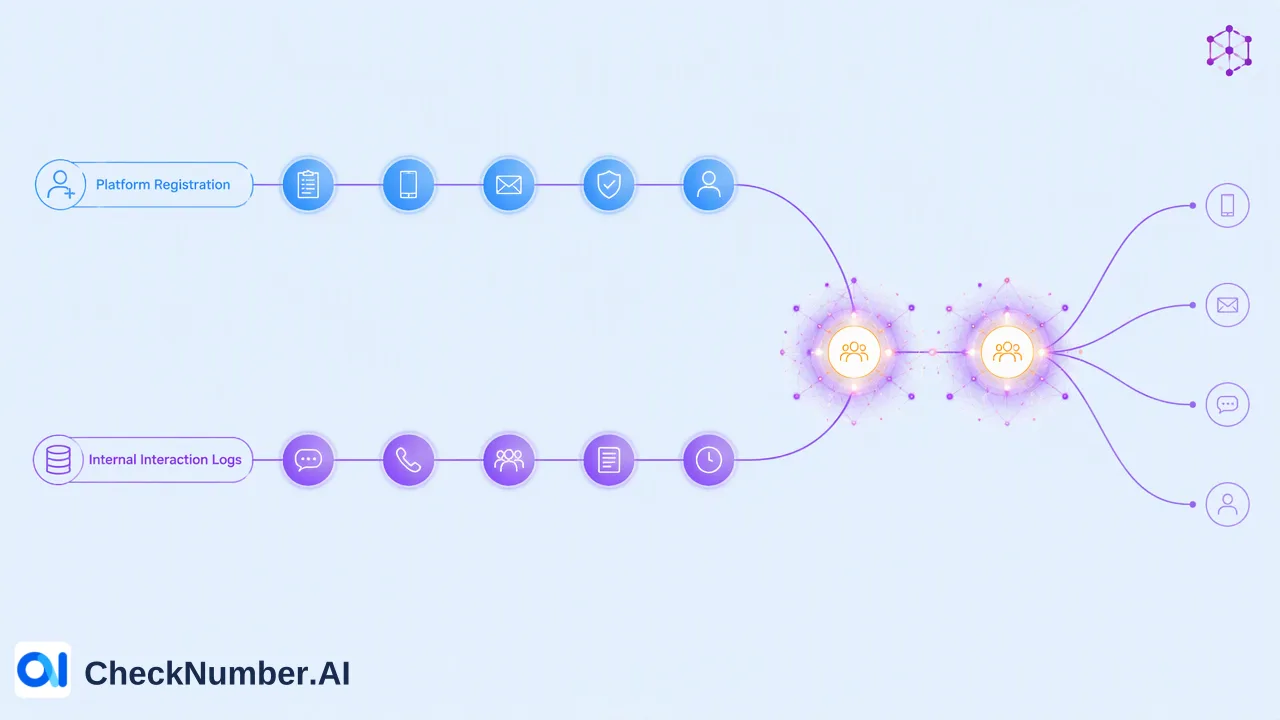
Selecting an effective bulk verification workflow requires matching your technical architecture to your specific data volume and privacy needs. The core workflow involves the systematic bulk checking of supported phone-number or email lists against platform databases. Organizations typically choose between REST API access for automated data pipelines and no-code CSV or TXT list uploads for manual batch processing. Prioritizing tools that offer platform-specific signals—such as registration presence or activity status—helps teams segment contact lists accurately before outreach. By aligning the integration method with operational requirements, teams can maintain standardized data pipelines that include formatting, deduplication, and status verification.
The Strategic Importance of List Hygiene
Pre-campaign list hygiene is a foundational step for operational efficiency when managing large-scale contact databases. Before initiating outreach, organizations must process their contact lists through a standardized data pipeline that includes formatting, deduplication, and status verification. Processing these lists through a bulk verification workflow helps teams identify which phone numbers or emails are actively associated with specific platforms. Implementing systematic list hygiene supports cost management and helps organizations avoid platform-side account restrictions. By verifying platform registration signals beforehand, teams can filter out invalid identifiers. This proactive approach to data hygiene informs internal decisions about which contacts to prioritize, ultimately supporting more efficient resource allocation during outreach or support planning.
Matching Architecture to Your Workflow
Selecting the appropriate architecture for a bulk verification workflow depends heavily on an organization’s data volume, integration needs, and operational cadence. Bulk workflows support CSV or TXT list uploads as well as REST API access, providing flexibility for different technical environments. For teams managing periodic campaigns or working without dedicated developer resources, no-code browser-based tools offer a practical solution. Users can upload CSV or TXT files directly, supporting manual batch processing of contact lists. This approach is highly effective for one-off list cleaning or smaller, segmented campaigns where immediate technical integration is unnecessary. Conversely, cloud-based REST API integrations are designed for automated, high-volume data pipelines. An API architecture supports continuous verification, which supports programmatic checking of identifiers as they enter a database. While the API has rate limits that restrict requests per minute and limited concurrency, it provides the necessary infrastructure for seamless, ongoing list hygiene. Organizations must evaluate their internal technical capacity and processing frequency to choose the architecture that best supports their workflow.
Understanding Platform-Specific Signals
A critical component of a bulk verification workflow is the depth of the data retrieved. Platform-specific signals provide distinct data points that go beyond basic formatting checks, offering valuable context for audience segmentation. These signals generally fall into two categories: registration signals and activity signals. A platform registration signal confirms whether a specific phone number is associated with an account on a particular platform. For example, the iMessage Checker identifies iMessage-registered numbers in bulk. This specific platform registration signal supports iOS and Apple ecosystem audience segmentation, which informs iMessage-focused outreach or support planning. Activity signals provide additional context regarding the account’s presence. The Viber Days Checker checks Viber account presence and provides available activity or last-seen context, alongside available internal account-identifier context. Similarly, the Telegram Avatar, Age, Gender & Others Checker checks Telegram account presence and provides available profile, demographic, and activity enrichment, as well as membership signals. Utilizing these distinct capabilities helps teams tailor their communication strategies based on platform-specific presence and available profile enrichment.
Testing for Accuracy and Data Depth
When evaluating a bulk verification workflow, testing the accuracy of the platform signals is a necessary step before full-scale implementation. Accuracy and data depth—such as the ability to distinguish between a basic registered status and an enriched activity signal—are critical factors that inform workflow efficiency. To properly assess a tool’s performance, organizations should conduct tests using a control group of known-valid and known-invalid numbers. By processing this control group through the selected architecture, teams can verify that the outputs align with expected results. This testing phase helps confirm that the CSV upload process or REST API integration correctly parses the input data and returns the appropriate platform registration or activity signals. Evaluating the results from the control group also provides insight into how the tool handles edge cases, such as numbers that are formatted correctly but lack platform registration. Establishing this baseline accuracy ensures that the standardized data pipeline will function as intended during live operations.
FAQ
What is the difference between a registration signal and an activity signal?
A platform registration signal confirms whether a specific phone number or email is associated with an account on a particular platform, such as identifying iMessage-registered numbers for iOS ecosystem segmentation. An activity signal provides additional context beyond basic account presence. For instance, checking Viber account presence can provide available activity or last-seen context, while checking Telegram can yield available profile, demographic, and activity enrichment.
Should I use an API or a no-code upload for my bulk verification?
The choice between an API and a no-code upload depends on your operational requirements. Bulk workflows support CSV or TXT list uploads, which are ideal for manual batch processing and periodic list hygiene without requiring developer resources. REST API access is better suited for automated data pipelines, supporting systems to programmatically check identifiers on an ongoing basis.
How does platform-specific verification improve campaign performance?
Platform-specific verification helps teams segment their contact lists accurately before initiating outreach. By utilizing tools that identify platform registration—such as the iMessage Checker for Apple ecosystem audience segmentation—organizations can tailor their support planning to the specific platforms their contacts use. This targeted approach supports operational efficiency and helps avoid platform-side account restrictions associated with unverified lists.
How can organizations test the accuracy of a bulk verification tool?
Organizations can test tool accuracy by processing a control group of known-valid and known-invalid numbers through the platform. Whether using a CSV upload or a REST API integration, comparing the tool’s output against the known status of the control group helps verify that the platform correctly identifies registration presence and retrieves available activity or profile enrichment data.