CheckNumber.AI
 · 5 min read
Registration vs. Activity: A Framework for Messaging Contact Verification
Learn the difference between basic registration checks and advanced activity signals to optimize your messaging contact verification and bulk list workflows.

Effective messaging contact verification requires choosing the right signal for your specific workflow goal. A registration check confirms whether a contact exists on a specific platform, while activity signals—such as last-seen status or profile enrichment—provide deeper context for prioritizing outreach. By matching the verification method to your messaging or risk-screening workflow, teams can improve list quality and operational efficiency.
Understanding the Verification Hierarchy
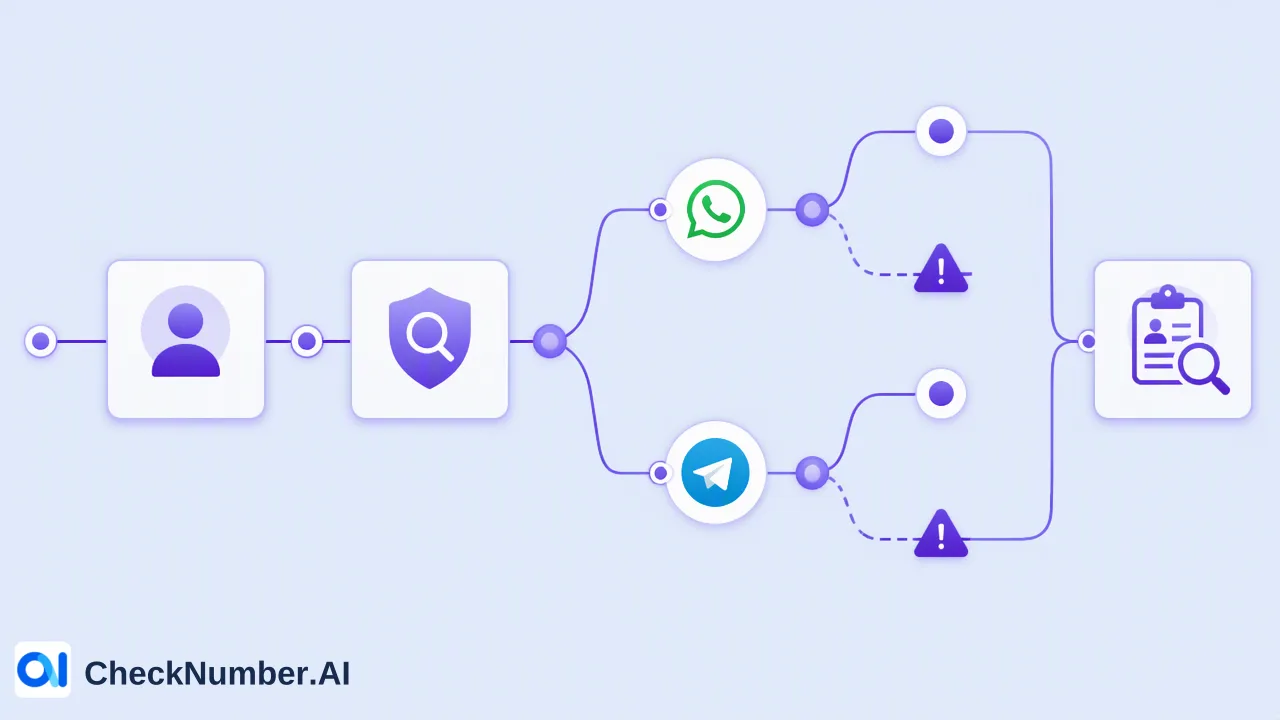
When evaluating lists for outreach, organizations often rely on messaging contact verification to understand their audience. The foundation of this process involves distinguishing between basic registration and advanced activity signals. A registration check is the process of verifying whether a specific phone number or email address is associated with an account on a designated platform. It answers a simple binary question: is this contact present on the network? While registration checks confirm account presence, activity signals provide additional context. An activity signal includes data points indicating recent account usage, such as last-seen timestamps or account age. This distinction forms a verification hierarchy. At the base, teams establish platform presence. At the higher levels, teams incorporate activity and profile data to inform internal decisions. Understanding this hierarchy helps teams select the appropriate check for their specific operational requirements, ensuring that resources are directed toward the most relevant contacts.
When to Use Registration Checks
Basic registration checks serve as the starting point for many bulk verification workflows. These checks are ideal for cleaning CRM lists by identifying which phone numbers are associated with specific messaging platforms. Because different audiences prefer different communication channels, knowing whether a contact is registered on a specific network supports better channel routing. For example, a registration check can confirm if a contact is present on a platform, helping teams segment their lists accordingly. A number may be registered but inactive, or the user may have uninstalled the application. Therefore, registration checks are best utilized as a preliminary filter to remove numbers that have no presence on the target platform, streamlining the list before applying more resource-intensive outreach strategies.
Leveraging Activity and Profile Signals
For workflows that require more than basic presence validation, activity and profile signals offer granular data to support prioritization. Different platforms expose different high-level capabilities, and these signals can be integrated into audience planning. The Viber Days Checker, for instance, checks Viber account presence and provides available activity or last-seen context, plus available internal account-identifier context. This activity signal helps teams prioritize contacts based on recent platform engagement. Similarly, the Telegram Avatar, Age, Gender & Others Checker provides available profile, demographic, and activity enrichment alongside basic account presence. This demographic enrichment supports better audience segmentation, giving teams context for tailoring their messaging strategies. Beyond user activity, platform capabilities also inform outreach planning. The RCS Checker identifies phone numbers that support RCS or Google Messages. This rich messaging capability signal informs rich-messaging planning, helping organizations determine which contacts can receive advanced message formats. By leveraging these specific signals, businesses can refine their messaging contact verification processes to align with their strategic goals.
Implementing a Bulk Verification Workflow
Applying these verification concepts at scale requires a structured approach to list processing. The core workflow for messaging contact verification involves the bulk checking of supported phone-number or email lists. Organizations can implement these checks using flexible input methods designed for different technical requirements. Bulk workflows support CSV or TXT list uploads, which is useful for teams processing static CRM exports or periodic list reviews. For automated environments, REST API access supports integration directly into existing systems and risk-screening workflows. By utilizing the REST API, technical teams can programmatically submit lists for registration or activity checks, retrieving the specific platform signals needed to inform internal decisions. When implementing these workflows, it is crucial to match the selected checker to the required capability. Because different products expose different high-level capabilities, a capability must not be transferred from one product to another. A workflow designed for RCS audience planning must use the RCS Checker, while a workflow requiring Telegram demographic enrichment must use the specific Telegram checker. This targeted approach ensures that the bulk verification workflow remains accurate and aligned with the documented capabilities of each signal.
FAQ
What is the difference between a registration check and an activity check?
A registration check verifies whether a specific phone number or email address is associated with an account on a designated platform, confirming basic account presence. An activity check goes further by providing data points that indicate recent account usage, such as last-seen timestamps or account age, which helps teams prioritize outreach.
Can I verify contacts in bulk?
Yes, the core workflow involves the bulk checking of supported phone-number or email lists. Bulk workflows support CSV or TXT list uploads for manual processing, as well as REST API access for programmatic integration into existing systems.
How do I choose the right verification signal for my business?
Choosing the right signal depends on your specific messaging or risk-screening workflow. If your goal is simply to clean a CRM list, a basic registration check is appropriate. If you need to prioritize contacts or plan rich-messaging campaigns, you should use specific tools like the Viber Days Checker for activity context or the RCS Checker for rich-messaging capability signals.